
Introduction to Janus v. AFSCME
In 2018, the U.S. Supreme Court ruled on Janus v. AFSCME, establishing that government employees cannot be forced to financially support a union as part of their employment.
Since then, the enforcement of this principle has been questioned, with the court remaining largely inactive on the issue.
Laws Targeting the Freedom Foundation
Recently, Oregon and New York enacted laws targeting organizations like the Freedom Foundation. Their outward intent is to prevent fraudulent impersonation of labor unions. However, these laws primarily aim at the Freedom Foundation, which informs government employees of their right to opt out of union membership.
Oregon’s law penalizes the false impersonation of union representatives with statutory damages. The Freedom Foundation challenged this law, arguing that it inhibits free speech. After the case was dismissed by a federal district court, it was appealed to the 9th Circuit Court of Appeals.
New York enacted Civil Service Law Section 216, allowing the Attorney General to act against communications deemed misleading. Violations can result in fines, prompting a lawsuit from the Freedom Foundation.
Impact on Free Speech
These laws pose a constitutional problem: they affect speech before prosecution occurs. Union backers have not provided evidence of misleading actions by the Freedom Foundation.
Such laws impose risks on organizations communicating rights to workers, chilling free speech and making it hazardous to share information about opting out.
Post-Janus Challenges
Since Janus, unions have developed methods to hinder opting out of membership. The Freedom Foundation has represented numerous workers seeking to sever union ties, requesting Supreme Court intervention in related disputes.
The court’s reluctance to address these appeals has encouraged actors to test limits of the Janus decision. Oregon and New York’s laws exemplify these challenges.
Significance and Call to Action
These cases go beyond the Freedom Foundation, affecting the broader scope of speech rights. The organization has challenged both states’ statutes in federal court, potentially reaching the Supreme Court.
If faced with Oregon or New York’s legislation, the Supreme Court should reinforce the message from Janus. A constitutional right burdened by governments is a compromised right. The court must stand firm on its previous ruling.
Jeff Rhodes is vice president of news and information at the Freedom Foundation.
Copyright 2026 Nexstar Media Inc. All rights reserved. This material cannot be published, broadcast, rewritten, or redistributed.
 Challenges and Advocacy in Construction: LIUNA’s Stand
 Democratic Sweep: Control of Congress and Historic Election Results
 Democrats Triumph with Historic Wins and Shifts in U.S. Politics
 Trump Faces Backlash in Midterm Elections as Democrats Surge
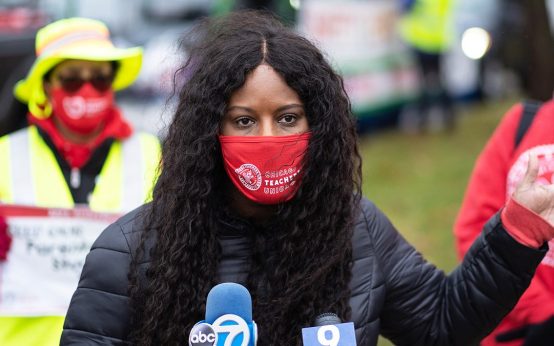 Pay Increase for Teachers Union Leader Amid Student Struggles
 Democratic Party’s Historic Wins: Analysis and Implications