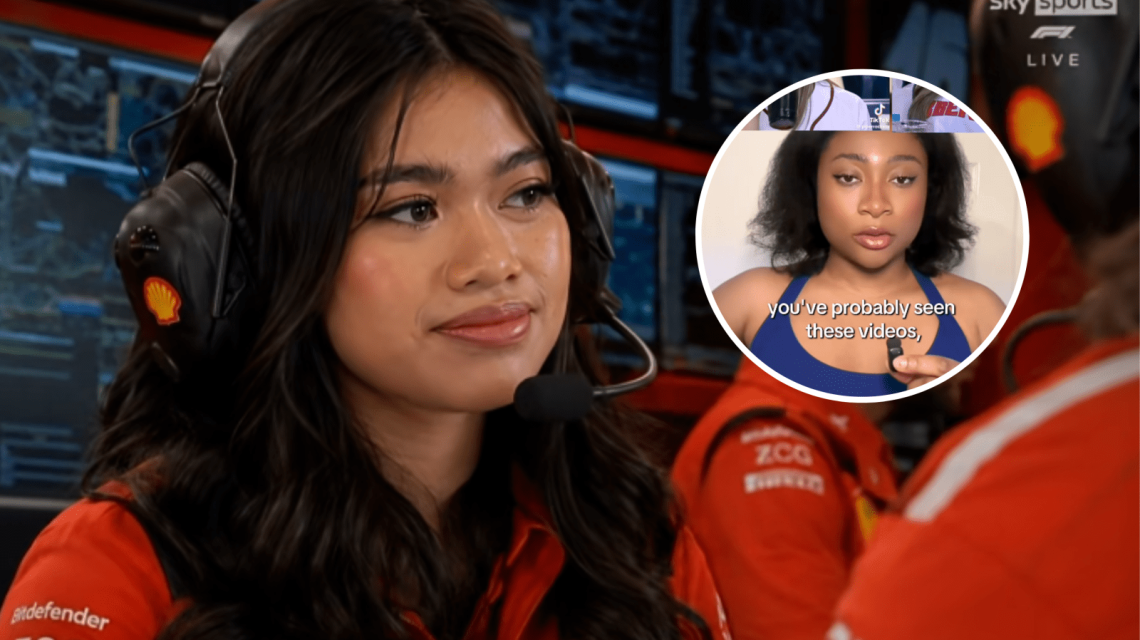
On Instagram and TikTok, you may come across striking videos of young women at elite sports events. They might appear courtside at NBA games, inside Formula One paddocks, or backstage at high-profile events. These clips appear authentic, resembling professional sports coverage. However, none are real.
These are AI-generated videos, where users place themselves into luxurious sports and celebrity scenes. This trend has rapidly gained popularity, merging fantasy, aspiration, and internet identity.
AI Sports Fantasy Videos Go Viral
The videos generally follow a pattern: high-quality footage initially captured by broadcasters, with users digitally inserted. Some depict users in Ferrari garages during Formula One events, at NBA games, or among celebrities at major sports events.
Newsweek interviewed Franell Mauricio, a 24-year-old who shared an AI-generated video on TikTok, showing herself inside a Ferrari paddock. The clip convincingly mimics Formula One footage. Mauricio’s AI self wears Ferrari gear and interacts naturally in the scene.
“I’m a huge Formula One fan,” Mauricio said. She explained that the trend allows fans to visualize themselves in roles they typically only dream about.
Mauricio believes this trend appeals to younger audiences by enabling them to experience lifestyles usually seen only online.
The Rise of ‘WAG Fantasy’ Culture
Despite its popularity, this trend faces some criticism. Detractors describe the videos as trivial or a reflection of problematic social media norms. Others question the choice to simulate elite experiences instead of attending events directly.
Proponents argue that the trend encompasses more than AI novelty.
Creator Naya, 24, discussed this trend in a TikTok video on May 20. She acknowledged some critiques but noted the trend’s broader appeal in terms of fantasy and aspiration. Naya described it as a “modern fairytale” involving celebrity and luxury themes.
Why Formula One and Tennis Dominate the Trend
Over ten years, the term WAG, meaning wives and girlfriends of athletes, has evolved. Initially used in tabloid discussions, it now represents a cultural archetype in sports like Formula One, soccer, and tennis. Partners of athletes like Lewis Hamilton and Jannik Sinner attract media attention and significant online followings.
Formula One teams often highlight these figures, blending elite sports, celebrity culture, and fashion. Estelle Keeber from Immortal Monkey explained that understanding this context is essential to grasp why the AI trend is impactful.
“It’s a really interesting mix of aspiration, identity and internet culture colliding,” she said.
For Gen Z, AI edits have become a digital form of role-play. Earlier, users polished their lives using Instagram filters. Now, AI lets them immerse in admired lifestyles directly.
Escapism, Not Deception
Keeber argued that users don’t intend to deceive. Rather, these videos are a form of escapism rewarded by social media platforms. Audiences usually recognize the AI-generated nature but engage due to the aspirational content.
AI has removed financial and social barriers of luxury aesthetics online.
“AI tools have accelerated that by removing the financial and social barriers,” Keeber explained.
Gen Z and the ‘Curated Identity’ Era
Keeber noted a broader shift among younger users regarding online identity. Social media is evolving from a place depicting experiences to one where users create idealized lives.
This trend coexists with criticism, as many Gen Z users voice concerns about AI’s environmental and ethical impacts but use the tools for an emotional payoff.
“The internet has always rewarded aspiration and fantasy, and AI makes that faster, cheaper, and more immersive,” Keeber concluded.
 Small Business Tech and Innovation Updates
  AI Coaches: A New Approach to Workplace Challenges
  Trump Reveals AI-Driven America.gov Initiative
  Potential Threats and Promise of Artificial Intelligence Explored in New Book
  The Frustrations of Self-Checkout at Supermarkets
  The Future of America’s Military: Balancing Tradition and Innovation