In the depths of the ocean, life thrives near hydrothermal vents despite the cold and dark conditions. This raises a significant question: How did life start on Earth? The origins of life remain a profound scientific mystery, actively explored by researchers.
Regina G. Barber, host of the discussion, emphasizes that Earth’s abundant water likely played a crucial role in life’s beginnings. Scientists propose that life may have originated in deep sea hydrothermal vents or tide pools. This focus on water also guides the search for life beyond Earth, particularly on Jupiter’s and Saturn’s moons, which are considered potential ‘water worlds.’
The episode explores two main hypotheses linking water to life’s origin on Earth and what they might imply about extraterrestrial life possibilities. Researchers continue to examine hydrothermal vents as a possible birthplace of Earth’s life and consider similar environments when studying moons within our solar system.
For those interested in other scientific mysteries, feedback is welcomed at [email protected]. NPR also offers a sponsor-free listening experience through Short Wave+, accessible via Spotify and Apple Podcasts.
This episode’s production involved Hannah Chinn and Berly McCoy, with editing by Rebecca Ramirez and fact-checking by Tyler Jones. Robert Rodriguez served as the audio engineer.
 Winter Weather Forecasts for 2026-2027
 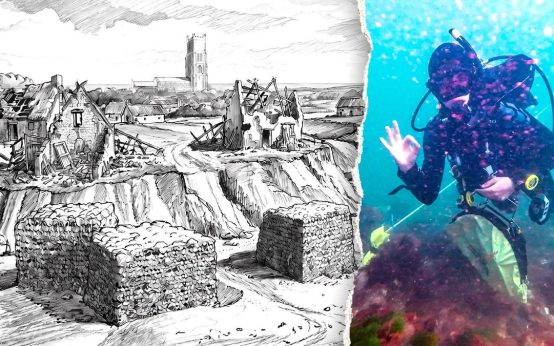 Underwater Discoveries: Exploring the Lost Town of Shipden
  Virginia Tech Researchers Investigate Black Bear Hibernation
 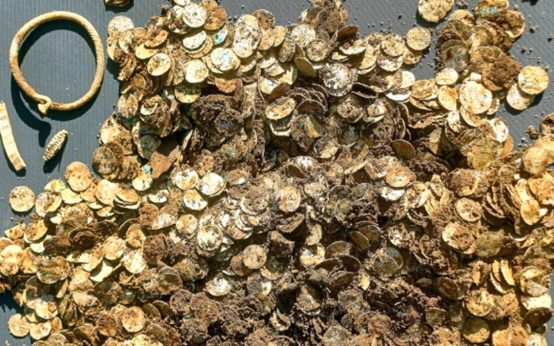 Significant Viking Age Silver Hoard Discovered in Finland
  Dogs Use Similar Language Recognition Techniques as Human Infants
  Discovery of Tilcayo Tiger Cat, a New Wild Cat Species in Bolivia