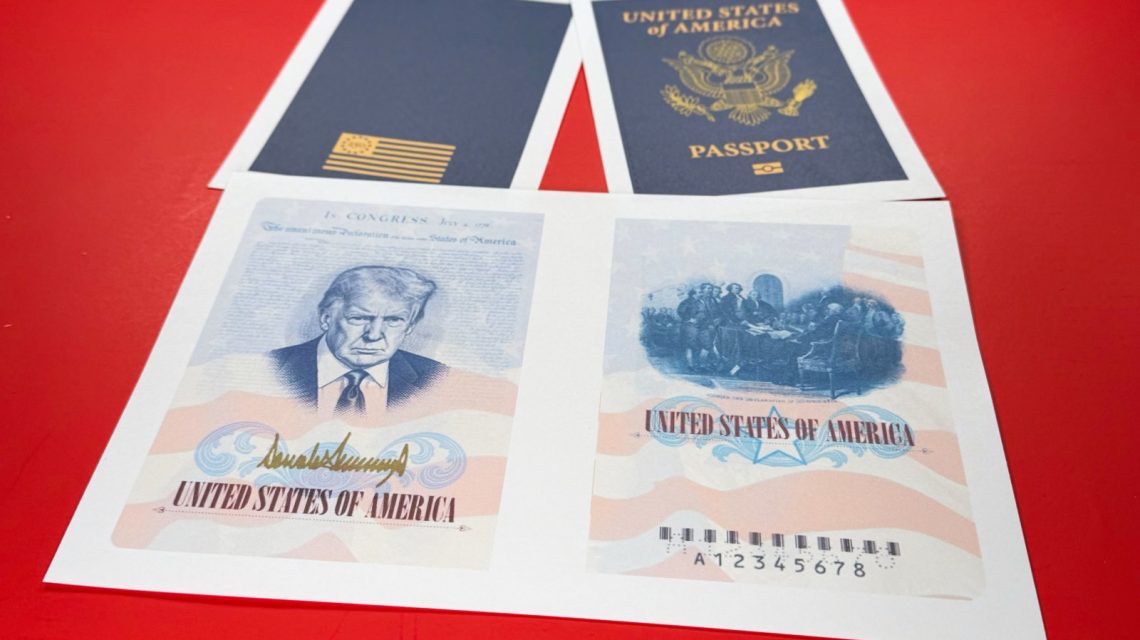
The Trump administration is evaluating a new requirement for passport applications. Parents may need to provide proof of their U.S. citizenship or immigration status when applying for passports for their children. This potential policy represents a shift in how the State Department manages certain passport applications, aligning with President Donald Trump’s goals to tighten access to birthright citizenship.
Potential Changes in Application Process
Under this proposed policy, parents might have to supply documents like passports, birth certificates, or immigration papers to verify their citizenship or legal status. While the administration has not finalized the proposal, State Department spokesperson Tommy Pigott emphasized that protecting American citizenship values remains a priority. He stated that the passport process should align with these standards. Pigott also noted that the department refrains from validating or pursuing leaked documents.
Implications and Concerns
The proposal has sparked questions about whether the passport process could restrict children who, under the Constitution, hold U.S. citizenship. The 14th Amendment affirms birthright citizenship for individuals born in the U.S. and subject to its jurisdiction. Recent Supreme Court decisions have opposed efforts to limit this right.
Policy Details
The Department will require parental information and evidence of parental citizenship or immigration status as part of its determination whether the applicant is subject to EO 14418, the State Department draft guidance reads, according to Reuters.
Currently, parents applying for passports for U.S.-born children provide proof of the child’s citizenship, their relationship to the child, and photo identification. They do not typically submit proof of their own citizenship or immigration status.
Legal Expert Opinions
Legal experts express differing views. Former Palm Beach County State Attorney Dave Aronberg warns of constitutional concerns if parental documentation impacts the child’s citizenship or passport eligibility. He highlights the broad interpretation of the 14th Amendment by the Supreme Court.
Neama Rahmani, former federal prosecutor and president of West Coast Trial Lawyers, agrees that parental documentation alone is not unconstitutional. However, denying a U.S.-born citizen a passport due to a parent’s immigration status poses a significant issue. Rahmani pointed out that undocumented parents may avoid applying for passports for fear of deportation.
Context of Birth Tourism Executive Order
President Trump signed an executive order on August 6, 2026, targeting “birth tourism.” This practice involves foreign nationals entering the U.S. on temporary visas to give birth. The order seeks to prevent such entries and revokes visas of those engaged in “birth tourism.” Humanitarian exceptions exist. The order does not remove birthright citizenship but addresses visa misuse.
Future Developments
The State Department continues to review the proposal. It could proceed without congressional input in alignment with Trump’s executive order on birth tourism. Legal challenges are anticipated as courts adjudicate the broader efforts to limit birthright citizenship.
 Joe Rogan Critiques Trump’s Lake Ontario Renaming Amid Iran Conflict
  Alexandria Ocasio-Cortez Discusses Egg Freezing and Future Plans
  Massachusetts Rep. Stephen Lynch Wins Over Progressive Challenger
  Ed Markey’s Victory Highlights Progressive Momentum in Democratic Politics
  Joshua Wong Pleads Guilty to Conspiracy Under Hong Kong Security Law
  Ed Markey Triumphs in Massachusetts Primary