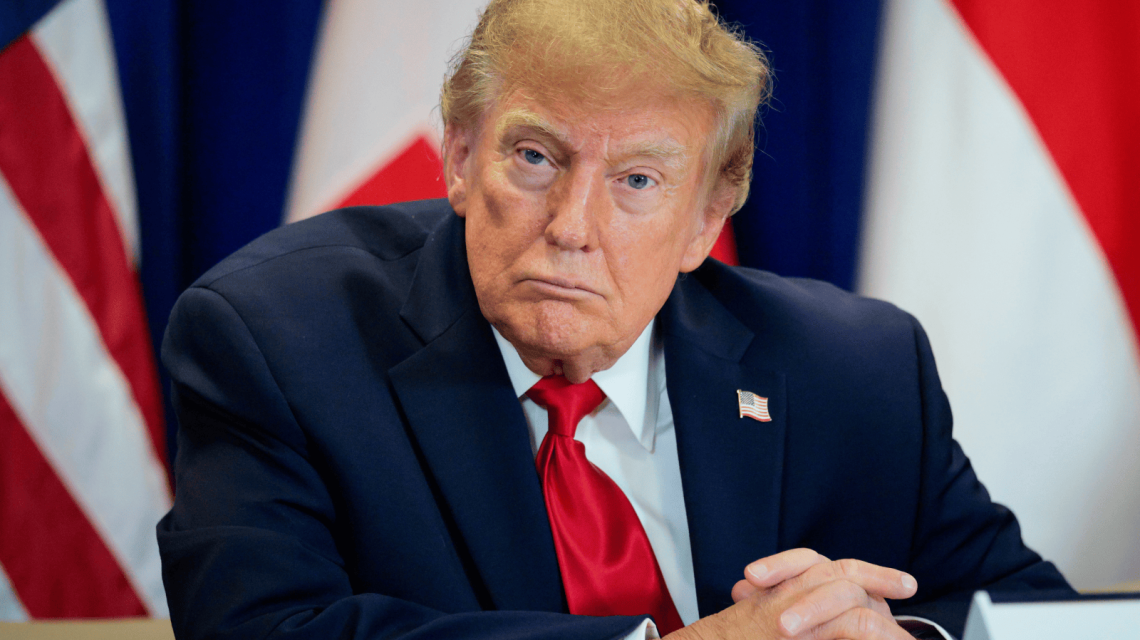
One month ahead of the November midterm elections, polling reveals President Donald Trump faces declining approval ratings in 39 states, including all major battlegrounds. The data stems from Civiqs’ rolling online tracker, which gathered responses from 133,869 registered voters between January 20, 2025, and October 2, 2026.
National approval for Trump stands at 34 percent while disapproval hits 60 percent, resulting in a net approval rating of -26.
Current State of Battlegrounds
Major battleground states show significant disapproval: Georgia leads with a rating of -25, followed by Michigan and Nevada at -24, and Pennsylvania at -22. Kentucky experienced a dramatic decline since early 2025, dropping from +23 to -10, a decrease of 33 points.
Wyoming retains the highest approval for Trump at +18, with North Dakota following at +15. Younger voters, independents, and postgraduates show the most pronounced opposition.
Impact on Midterms
Though presidential approval is not a direct prediction of election outcomes, it frames the environment for candidates. With congressional control at stake on November 3, Trump’s low ratings may influence Republican turnout, campaign strategies, and competitive races.
States with Positive Approval
Trump holds positive ratings in ten Republican-leaning states. Wyoming is at +18, North Dakota at +15, and West Virginia at +12. Other states include Arkansas (+9), Idaho (+8), Alabama (+6), South Dakota (+5), Oklahoma (+4), Kansas (+3), and Utah (+2). Montana shows equal approval and disapproval at 46 percent.
Positive ratings have declined since early 2025; Wyoming fell from +47 to +18, North Dakota from +34 to +15, West Virginia from +35 to +12.
Demographic Insights
Among those aged 18 to 34, 20 percent approve while 73 percent disapprove, showing a gap of 53 points. In the 35 to 49 age group, 26 percent approve, and 66 percent disapprove.
Older voters are less negative; 44 percent of those aged 50 to 64 approve, with 51 percent disapproving. Among those 65 and older, 44 percent approve and 52 percent disapprove.
Independents show 65 percent disapproval versus 27 percent approval. Republicans are more supportive, with 78 percent approval. Women disapprove by 65 to 29 percent, whereas men show a 54 to 39 percent disapproval split.
In educational demographics, Trump’s approval is 24 percent among postgraduates, 32 percent among college graduates, and 37 percent among non-graduates. All groups show higher disapproval.
Black, Hispanic, and white voters disapprove of Trump by 90 percent, 70 percent, and 52 percent, respectively.
Battleground States Negatively Impacted
Net ratings in key battlegrounds: Arizona (-18), Florida (-16), Georgia (-25), Michigan (-24), Nevada (-24), North Carolina (-15), Ohio (-17), Pennsylvania (-22), Wisconsin (-18). Florida shifted from +9 to -16, Ohio from +8 to -17, and Nevada from neutral to -24. North Carolina dropped from neutral to -15.
State-Specific Declines
Trump’s net approval decreased in every state since January 2025. Kentucky’s 33-point drop from +23 to -10 marks the largest. Other significant declines are seen in Wyoming, Oklahoma, Tennessee, Texas, Idaho, Alaska, Ohio, Florida, Montana, and Nevada.
Deep Blue States
Trump performs worst in Democratic areas. Hawaii records -58, Maryland -52, Vermont -51, California and Massachusetts both at -47, Connecticut at -46, Washington at -42, New York -39, and Oregon, Rhode Island both -38.
White House Position
The White House dismisses polling significance, citing Trump’s 2024 win as a true mandate of public support. Spokesperson Davis Ingle highlights the nearly 80 million voters behind Trump as evidence of his agenda’s acceptance, emphasizing jobs creation, inflation reduction, and housing affordability as key focuses.
Newsweek contacted the White House for additional comments.
Newsweek utilized Martyn, an AI assistant, to assist in producing this story.
 Texan Voters Concerned About Paxton’s Ties to Trump, Fox News Poll Reveals
  Controversy Surrounds Texas Senate Nominee’s Use of Faith in Political Agenda
  Record Number of Native American Candidates in Elections
  Unexpectedly Competitive Senate Race in New Hampshire
  Judicial Rulings Challenge Presidential Authority Over U.S. Attorneys
  Former U.S. Rep. David Rivera Sentenced to 10 Years for Secret Lobbying