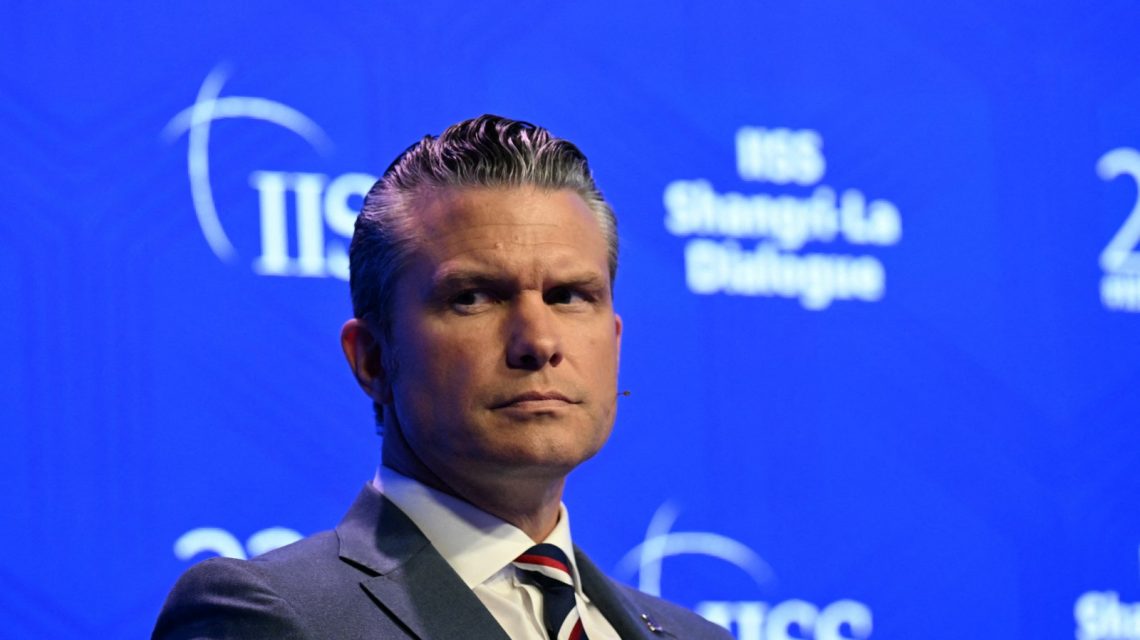
Defense Secretary Pete Hegseth has urged Asian allies and partners to increase their defense spending, making U.S. support seem increasingly conditional. Traditionally, the region has depended on a power balance maintained by American military strength. Hegseth stated that allies should allocate 3.5% of GDP toward security. During his speech at the Shangri-La Dialogue in Singapore, he noted that countries showing commitment to U.S.-led regional defense would receive benefits like expedited arms sales, industrial collaboration, and expanded intelligence sharing.
Hegseth’s remarks imply a shift toward a more conditional approach to U.S. security commitments in the Indo-Pacific. This move comes as tensions rise in the region. China has increased its military spending and is escalating pressure in territorial disputes with countries such as Japan and the Philippines.
U.S. Support Tied to Defense Spending
Hegseth’s comments reflect President Donald Trump’s earlier concerns that the U.S. carries an excessive share of the defense burden. Trump motivated NATO members to agree to a goal of 5% of GDP on defense by 2027. Hegseth’s target of 3.5% is a significant hike for most Asian allies. Current spending by major partners does not meet this benchmark. Singapore and South Korea spend approximately 2.8% to 3% and 2.8% of GDP, respectively. Japan is nearing 2%, while Australia is at about 2%.
Philippines as a Burden Sharing Example
Hegseth cited the Philippines as a successful example of burden sharing, noting its deepening defense ties with the U.S. and hosting of extensive military exercises. Despite a roughly 12% increase in defense spending last year, the country’s military budget remains below the 3.5% target. Philippine Defense Secretary Gilberto Teodoro highlighted the challenge for agricultural economies to reach the target compared to industrial nations with established military structures. He noted that with a large archipelago, investing in infrastructure, education, and healthcare takes precedence.
Economic Constraints in Malaysia
For Malaysia, increasing defense spending is equally challenging. The country maintains economic ties with Beijing but has close security relations with Washington. Malaysian Defense Minister Mohamed Khaled Nordin emphasized the importance of the U.S. as a strategic partner in the Indo-Pacific. However, he stressed that higher defense spending might harm development in other areas, affecting overall stability.
 Far-Left Groups Allegedly Organize Protests in Austin
  Michigan Senate Nominee Abdul El-Sayed Criticized for Remarks on Reproductive Rights
  Alan Ritchson Faces Backlash Over Political Remarks
  Poll Reveals Voter Preferences Between Socialist Democrats and MAGA Republicans
  Challenges of Electing a Female President: Insights from ‘The View’
  Himalayan Pilgrimage: A Couple’s Narrow Escape and Lingering Questions