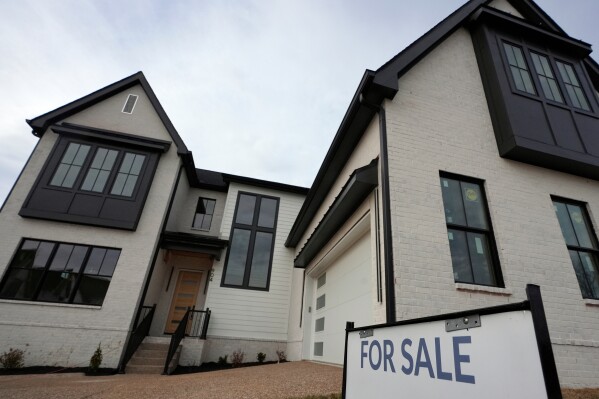
Sales of existing homes in the United States picked up last month, reaching the highest speed since December. This change in homebuying activity follows a slow beginning to the spring season. According to the National Association of Realtors (NAR), sales of previously owned homes climbed by 3.2% in May compared to the previous month, hitting a seasonally adjusted annual pace of 4.17 million units. There was also a 3.2% rise in sales compared to May of the previous year.
Regionally, home sales increased in the Midwest, South, and West, but declined in the Northeast, as reported by NAR. These sales figures surpassed the 4.07 million pace that economists, based on FactSet data, had anticipated. Over the past year and a half, home sales have fluctuated around a 4-million annual pace, significantly below the historical norm near 5.2 million.
Last month’s sales escalation occurred even as mortgage rates mostly continued on an upward trajectory this spring. Nonetheless, these rates are still lower than where they were a year ago. Nationally, home prices have continued to rise, with the U.S. median sales price increasing by 1.3% in May compared to a year earlier, reaching a record high for any May since NAR data began in 1999. Home prices have seen an annual rise for 35 consecutive months.
Despite rising home prices, the pace of price growth is lagging behind income growth in many locales. This situation, combined with mortgage rates holding beneath last year’s levels, is enhancing affordability and providing momentum to the housing market, as explained by Lawrence Yun, NAR’s chief economist. Yun notes that continued market improvement might depend on the average 30-year mortgage rate dropping closer to 6%.
Since 2022, as mortgage rates rose from pandemic-era lows, the U.S. housing market entered a slump. Sales of previously owned homes were mostly flat last year, marking a 30-year low, and have remained weak this year. They were stagnant in April after showing declines in the initial months of the year. High home prices from the start of the decade, coupled with ultra-low mortgage rates that stimulated buying surges, have kept many potential homeowners out of the market. A national shortage of homes, exacerbated by years of below-average new home construction, keeps prices elevated despite reduced sales figures.
“I cannot definitively say if home sales are truly coming out of the slump, because we know that there’s still uncertainty related to the oil prices or how the mortgage rates will move,” Yun stated.
Homes purchased in May likely went under contract in March and April, when the average rate on a 30-year mortgage varied from 6% to 6.46%, per Freddie Mac figures. The average rate recently stood at 6.48%, below 6.85% from a year prior. Although the average mortgage rate remains below last year’s, it has been trending higher, driven by escalated oil prices arising from global events impacting crude oil transport and fueling inflation. This inflation impacts long-term bond yields that guide mortgage rate pricing, causing rates to increase.
“If not for the war-related spike in inflation, the average 30-year fixed mortgage rate could well be in the mid-to-upper 5’s,” noted Ted Rossman, principal analyst at Bankrate.
In spite of mortgage rate uncertainties, first-time buyers represented 35% of the market last month, the largest share since June 2020. Historically, they form 40% of home sales. Buyers able to purchase at current rates benefit from favorable trends. In May, median listing prices were down 2.4% from the previous year, as per Realtor.com, marking the biggest decrease since 2017. Buyers have more options now, although inventory levels remain below historical averages. At the end of May, there were 1.55 million unsold homes, a 3.3% increase from April and a 0.6% increase from May of the previous year. However, this figure is still beneath the pre-COVID-19 norm of roughly 2 million homes available for sale.
The month’s end inventory translates to a 4.5-month supply at the current sales pace. Typically, a balanced market between buyers and sellers equates to a 5- to 6-month supply.