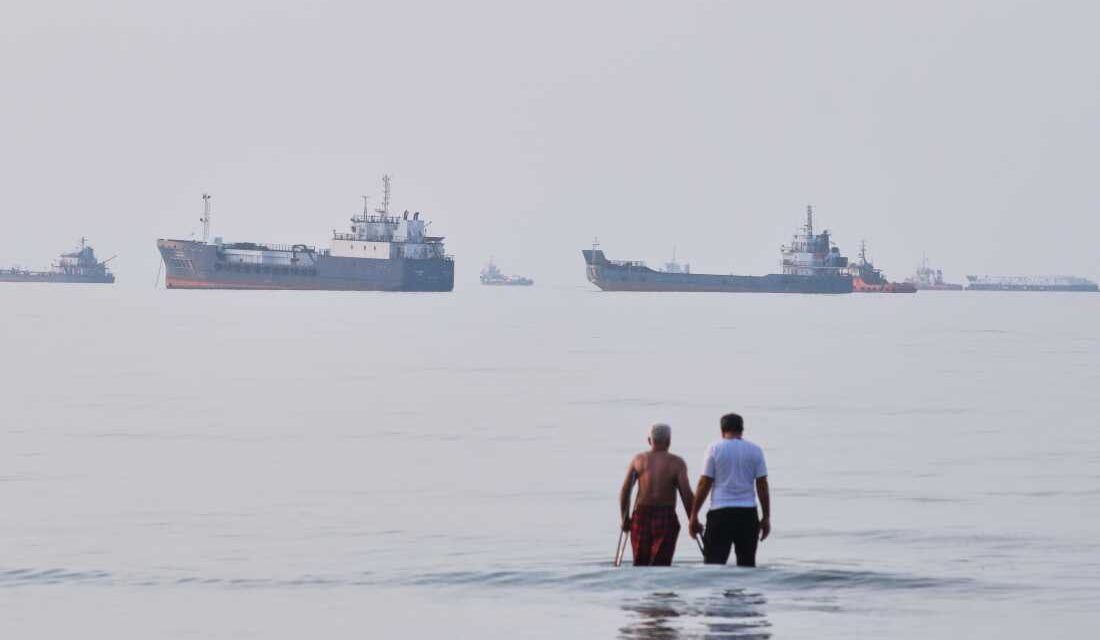
Two men navigate the waters of the Strait of Hormuz near Bandar Abbas, Iran, with anchored vessels visible in the distance, on Sunday, July 12, 2026. Efforts to resume negotiations for a ceasefire are ongoing as the United States and Iran halt hostilities for the second consecutive day. The pause follows a period marked by U.S. strikes on Iranian coastal areas, prompted by Iran’s aggression towards ships in the Strait.
Though the Pentagon has not provided clarity on the decision to pause, the White House conveyed a preference for diplomacy. Steven Cheung, the White House communications director, emphasized President Trump’s desire for a diplomatic resolution, yet signifying readiness to act if Iran persists in harmful activities.
In reciprocity, Iran has also ceased military actions, confirmed by its army spokesperson through state media. Recent Iranian counterattacks targeted U.S. military bases in the region, with fatalities reported at a Jordanian base.
A regional official recognized the pause in strikes as a ‘positive signal,’ aiding diplomatic efforts aimed at de-escalating tensions.
With the 60-day ceasefire period initiated upon the signing of an interim agreement in mid-June now in its latter stages, unresolved topics such as Iran’s nuclear agenda continue to challenge negotiators.
Efforts concentrate on a compromise surrounding vessel transit through the Strait of Hormuz. This initiative seeks to alleviate restrictions, with Iran possibly overseeing maritime activities within the strait.
Meanwhile, surrounding waterways now raise alarms, particularly the Bab al-Mandeb strait. Iranian-backed Houthi rebels have hinted at obstructing Saudi navigation, further destabilizing global energy supply chains.
Iran remains engaged in dialogue with Oman to ensure secure passage through the Strait of Hormuz, indicating progress per Foreign Ministry spokesperson Esmail Baghaei. Discussions regarding the strait’s condition persist unchanged, with Iran asserting its management rights under the current agreement with the U.S.
The U.S. military maintains a naval blockade against Iran, redirecting or engaging several commercial vessels as officials assert readiness and vigilance.
Israeli Prime Minister Benjamin Netanyahu plans to meet President Trump imminently to discuss strategies concerning Iran. With U.S.-Iran tensions having catalyzed regional conflicts, Israeli engagement aims to diminish Iran’s influence without rekindling intense military conflict.
Netanyahu reaffirms support for Trump’s strategy against Iran’s nuclear ambition, stating military confrontation should be avoided if possible. A warning endures; Israel will retaliate if provoked by Iranian forces or allies.
 Ontario Synagogue Shooting During Yom Kippur Leaves One Officer and Shooter Injured
  Pope Leo XIV’s Upcoming Visit to Latin America: An Overview
  Ukraine Deploys Ground Robots in ‘Operation Vivaldi’
  Understanding AI’s Impact Compared to Historical Threats
  State Department Alerts on Middle East Travel Amid Rising Tensions
  Iran’s Attacks on Bahrain: The Impact on Military Families