Political Change and Historical Ties
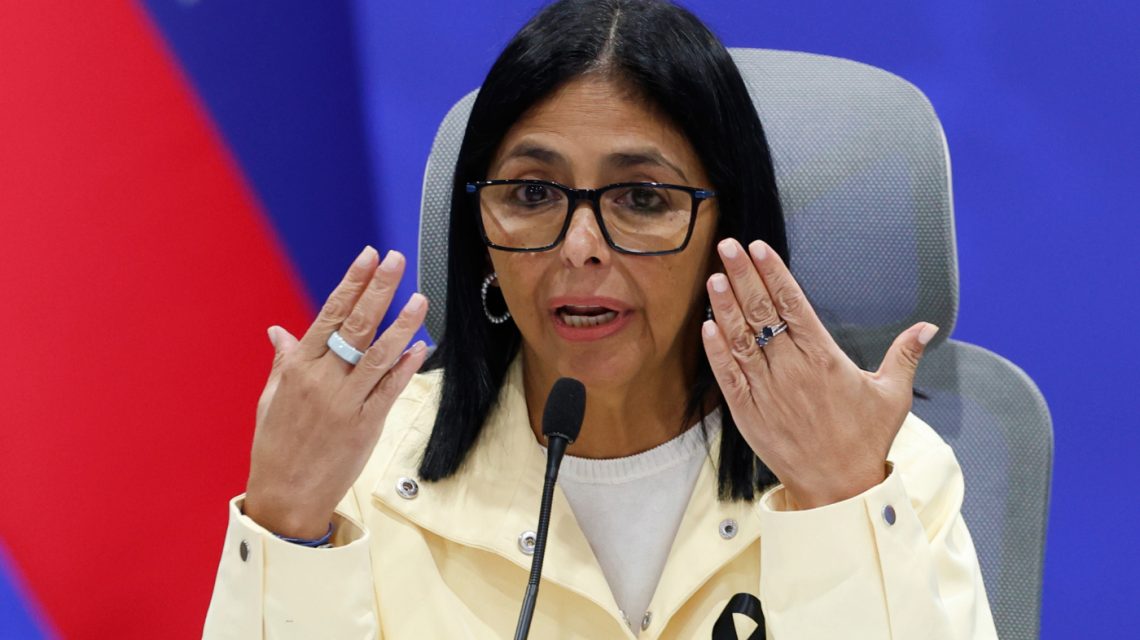
Venezuela’s acting President Delcy Rodríguez recently addressed the government’s response to consecutive earthquakes during a press conference in Caracas. Her words come amid notable shifts in Venezuela’s international relations. This change starkly contrasts past accusations by Venezuelan President Hugo Chavez against Israel in 2010, where he condemned the nation in strong terms. Chavez’s rhetoric was deeply rooted in Venezuela’s communist ideology, now seemingly abandoned by current leaders.
Shift in Ideology and Diplomacy
The Venezuelan leadership redirected its diplomatic allegiances starting last January, after Nicolás Maduro was removed from power. For decades, Venezuela maintained close ties with the Iranian regime. However, the current regime has shifted to embrace the Israeli government, reflected in a congratulatory message sent by Delcy Rodríguez for Passover in April, emphasizing peace and religious freedom.
An unmistakable sign of this shift was Venezuela’s lack of high-level representation at Ayatollah Ali Khamenei’s funeral, distancing itself from Tehran. The capture and extradition of Ali Zaki Jalil, a Hezbollah agent wanted for decades, further strains previous alliances with Iran. The regime also apprehended Alex Saab, accused of facilitating financial networks for terrorist groups linked to Iran.
Resource Security and International Cooperation
Critical to this transformation was Venezuela’s surrender of highly enriched uranium, previously a global security concern. The removal of uranium involved collaboration between the U.S., the U.K., and Venezuela, assisted by the International Atomic Energy Agency.
Israel’s role grew in importance during recent crises. Following June’s earthquakes, Israeli teams arrived to assist with recovery efforts. Through connections established by Venezuela’s Jewish community, these experts offered invaluable support. Israeli Defense Forces presented a national rehabilitation plan, working alongside Venezuelan authorities to conduct structural assessments.
“You are rebuilding ruins, and you are rebuilding relations,” Israeli Prime Minister Benjamin Netanyahu commented, acknowledging the contributions of Israeli teams to Venezuela.
Domestic Implications and Challenges
Despite these interactions, Venezuela’s interim government seeks to strengthen ties with Israel more out of pragmatism than genuine ideological change. They aim for greater legitimacy and access to influential circles, potentially facilitated by close relations with Tel Aviv.
However, underlying national issues remain unresolved. Calls for freedom for political prisoners, unrestricted returns for exiled Venezuelans, and transparent elections are ongoing. These demands must be addressed to establish a stable and just foundation for Venezuela’s future.
The narrative controlled by the interim government appears to manipulate circumstances, including earthquake relief efforts, in favor of maintaining influence without genuine reform.
Arturo McFields offers insight into these developments as an exiled journalist and former diplomat, with extensive experience in international relations and leadership.
 Ukraine Deploys Ground Robots in ‘Operation Vivaldi’
  Understanding AI’s Impact Compared to Historical Threats
  State Department Alerts on Middle East Travel Amid Rising Tensions
  Iran’s Attacks on Bahrain: The Impact on Military Families
  United Russia’s Dominant Election Result: Implications for Putin’s Ukraine Policy
  Canada’s Tariff Reduction on Chinese EVs Raises Security Concerns