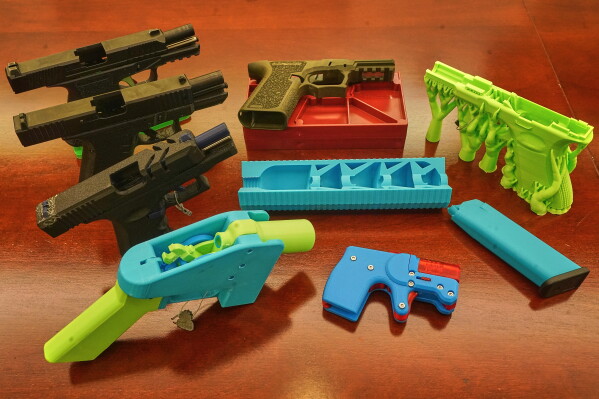
A groundbreaking law in New York aims to prevent 3D printers from producing firearms by requiring blocking technology. This initiative, also under review in California, seeks to combat the rise of “ghost guns” in criminal activities. However, questions remain about the technology’s effectiveness and potential impacts on privacy and constitutional rights.
Current State Regulations
About one-third of U.S. states have already taken action against build-it-yourself firearms without serial numbers and background checks. The unique aspect of this new law is its focus on the equipment used, rather than the individuals creating firearms.
Potential Industry Impact
The proposed blocking technology in populous states like New York and California could set standards for the 3D printing industry. It may influence other Democratic-led states with existing gun regulations, such as bans on certain semiautomatic weapons and temporary firearm confiscations.
Growth of 3D Printing
3D printers have become widely available since 2012, with over 3 million devices globally. The industry now values around $26 billion annually. Besides making everyday items, these printers can produce firearms or their components, leading to increased use in crimes.
Ghost Guns and Crime
The U.S. Department of Justice reports a rise in privately made guns involved in crimes, from about 1,600 in 2017 to nearly 27,500 in 2023. Though it’s unclear how many were made with 3D printers, a notable New York case involved the use of a 3D-printed gun.
Implementation of Blocking Technology
New York and California are directing expert panels to develop standards for firearm blueprint detection algorithms. These would analyze 3D print designs against a digital library of firearm parts. The requirement for printers to have blocking technology may begin in 2029 or later.
Challenges of Technology and Privacy
Experts like those at Physna describe the technology as mature, capable of geometric analysis to identify weapon parts. However, skeptics argue that criminals might evade detection by altering designs or moving projects. The blocking mechanism might also incorrectly label and reject non-firearm items, raising concerns about censorship and privacy.
Constitutional Concerns
Gun safety advocates highlight the risk of 3D printing providing an alternative firearm source for those unable to purchase legally, such as minors or felons. While some states have implemented restrictions, debate continues over the balance between safety and constitutional rights, with organizations like the NRA critiquing the policy as overly restrictive for law-abiding citizens.
 AI Safety Debate Heats Up as Tech Leaders Call for Regulation
  Fraud Prevention Efforts in Obamacare Enrollment
  Samuel Alito: A Justice’s Journey and Impact
  Debate Over Direction of Democratic Party Intensifies
  Latino Voters Shift Away from Trump and Republicans Ahead of Midterm Elections
  Rep. Tom Emmer’s Campaign Efforts and Critique of Democratic Party