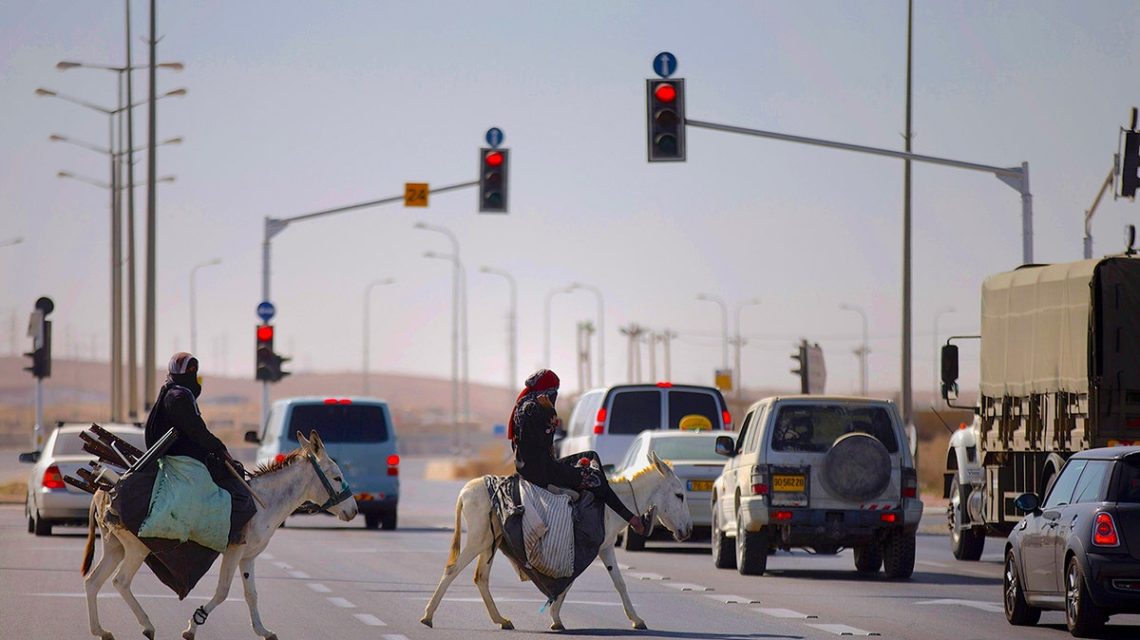
Israel has designated Route 60, spanning from Nazareth in the north to Beersheba in the south, as the ‘Biblical Highway.’ This pathway tracks Israel’s central mountain ridge, passing historical and religious sites. The Israeli government approved this designation as part of a broader initiative to offer a Route 66-style experience for Bible enthusiasts, students, and tourists.
The Biblical Highway has existed for millennia. It starts in Beersheba, a desert city connected to Abraham’s narrative of faith. The route is rich with biblical history. David Parsons, from the International Christian Embassy Jerusalem, stated that understanding the Bible helps combat antisemitism by revealing the Jewish people’s historical and spiritual ties to the land.
“The Bible is not just stories but an accurate account of a people and a land contributing universal ideas and values,” Parsons emphasized.
From Beersheba, the route continues to Hebron, home to the Cave of the Patriarchs, associated with Abraham, and a significant site linked to King David’s early reign. It also passes through Bethlehem before reaching Jerusalem, Israel’s capital and home to Mount Moriah and the First and Second Temples.
The highway extends north through Bet El, where Jacob experienced a significant vision, and travels to Shiloh, a spiritual center for centuries. It also reaches Shechem, a site linked to Joshua and Joseph. Further along, the route passes Mount Tabor and Megiddo, before ending in Nazareth, known as Jesus’ hometown.
Yishai Fleisher, a spokesman for the Jewish community of Hebron, has advocated for the biblical designation, likening it to famous themed roads worldwide. He cited roads like Germany’s Romantische Straße and America’s Route 66 as inspirational models, emphasizing the educational and tourism value of Route 60.
“This acknowledges historical truths. Naming it ‘Biblical Highway’ strengthens Israel’s ancient identity,” Fleisher remarked.
The initiative is a response to efforts by the Palestinian Authority to dispute Jewish historical connections to certain sites. It aims to reaffirm Israel’s cultural and historical roots.
Ze’ev Orenstein, from the City of David, highlighted the initiative’s role in making biblical history accessible through geography. “It’s an invitation to see the Bible as living geography,” he said.
Israel’s Tourism Ministry supports the initiative, planning to integrate ‘The Biblical Highway’ into national marketing. This will include visitor centers, observation points, and signage. The project is compared to efforts in Jordan, where similar historical roads are recognized.
 Federal Appeals Court Decision Against Trump’s ‘Third-Country’ Deportation Policy
  Ed Sheeran’s Philadelphia Concert Amid Controversy
  U.S. Secures Strategic Control Over Greenland
  U.S. Security Agreement in Greenland Sparks Optimism and Concerns
  Impact of Gender-Based Violence in South Africa
  UNIFIL Operations in Southern Lebanon Amidst Ceasefire Challenges