
World stock markets showed mixed signals on Friday, with U.S. futures declining amid uncertainties about the U.S.-Iran agreement to end hostilities. This deal faced setbacks as planned talks focusing on Iran’s nuclear program and the resumption of oil shipments through the Strait of Hormuz were postponed. As the U.S. markets remained closed for Juneteenth, global investors watched developments closely.
Negotiations between Iran and the U.S., aimed at a lasting peace, encountered delays in Switzerland. Meanwhile, Israel launched overnight military strikes in southern Lebanon, with Hezbollah confirming intense combat activities. Bas van Geffen from RaboResearch commented on the situation, indicating that while outward calm exists, deeper tensions remain, jeopardizing the fragile nature of the peace effort.
In Europe, Germany’s DAX increased by 0.2% to 25,079.30, whereas France’s CAC 40 remained stable at 8,467.75. The UK’s FTSE 100 experienced a slight dip of 0.2%, closing at 10,376.64. U.S. stock futures also saw a decrease, with the S&P 500 and Dow Jones down by 0.2%. In Asia, Tokyo’s Nikkei 225 experienced fluctuations but ended the day 0.3% higher, reaching a new record of 71,250.06. Japanese consumer prices, excluding fresh food, stayed stable, yet analysts forecast an increase due to higher energy costs.
South Korea’s Kospi fell slightly by 0.1%, while Australia’s S&P/ASX 200 dropped 0.9% to 8,828.70. India’s Sensex decreased by 0.8%. Markets in Hong Kong, Shanghai, and Taiwan were closed for the Dragon Boat Festival.
In U.S. trading on Thursday, stocks rebounded, offsetting previous losses due to gains in large tech companies. The Dow rose by 0.1%, the S&P 500 by 1.1%, and the Nasdaq recorded a significant increase of 1.9%. Technology shares led the advance; Intel surged 10.6% following President Donald Trump’s announcement of the company’s new chip manufacturing deal for Apple. Nvidia and Micron Technology also reported gains of 3% and 8.7%, respectively. Conversely, SpaceX’s stocks fell again, dropping by 3.6% after an initial 4.9% decline.
Oil prices fluctuated following the tentative U.S.-Iran peace agreement. Brent crude, the global benchmark, briefly fell before settling 0.4% higher at $79.85 per barrel, though it dropped slightly to $79.50 early Friday. U.S. benchmark crude stabilized at $75.85 per barrel. Although current oil prices exceed $70 per barrel, they remain under the $100 mark from weeks prior. Rising energy costs continue to exert pressure on inflation, with gasoline prices in the U.S. dipping below $4 per gallon yet still exceeding last year’s rates by 25%.
This week’s Federal Reserve decision to maintain interest rates gave rise to speculation of rate hikes by year’s end to combat ongoing inflation. Lower interest rates traditionally encourage borrowing, aiding economic growth but potentially fueling inflation.
In currency trading early Friday, the U.S. dollar weakened against the Japanese yen, falling to 161.31 from 161.38 yen, while the euro remained steady at $1.1458.
 Twitch Streamer Hasan Piker Discusses Controversial Commentary
  A Shifting Political Landscape: The Decline of Autocratic Power
  Trump Delivers Warning to Iran, Cuba at UN General Assembly
 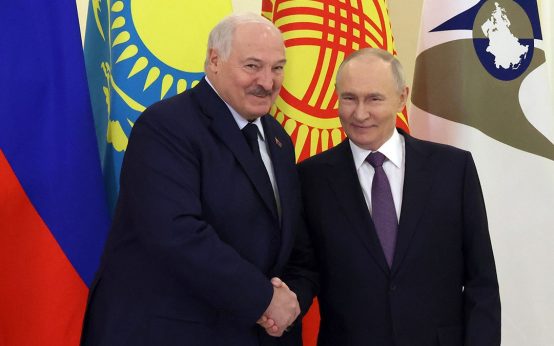 Lukashenko and Putin’s Unique Relationship and Belarus’ Strategic Role
  Alan Ritchson Faces Backlash Over Political Remarks
  Himalayan Pilgrimage: A Couple’s Narrow Escape and Lingering Questions