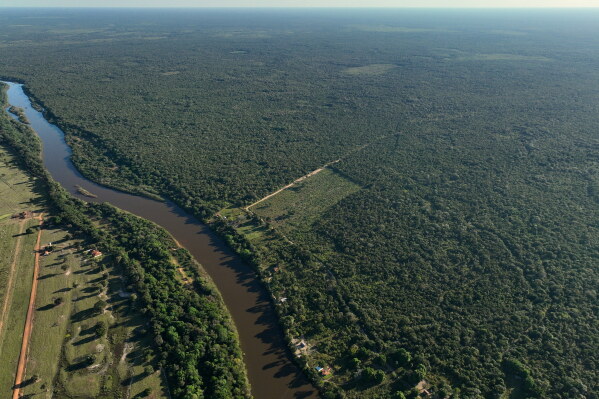
In northern Brazil, a complex debate over cattle and conservation unfolds on Bananal Island, the world’s largest river island. Last year, federal authorities ordered the removal of cattle herds from this protected Indigenous territory. The land is reserved for Indigenous peoples and intended for conservation efforts. Authorities argued that cattle from external ranchers were illegal and harmful to the environment.
More than 100,000 cattle were driven off the island when river levels permitted. However, this action disrupted income for Indigenous residents who relied on leasing land to ranchers. The situation highlights the difficulty of balancing conservation, Indigenous needs, and pressures from Brazil’s influential agribusiness sector.
Brazil leads in global beef production, comprising 20% of worldwide output, and contributes 6% to the nation’s GDP. Deforestation remains a significant issue, with cattle ranching being the primary cause. Ranchers frequently clear forests to create grazing land. Data from MapBiomas indicates Tocantins state, home to Bananal Island, was among the highest in deforestation levels in 2025.
Deforestation not only threatens biodiversity but also replaces pollutant-absorbing trees with methane-emitting cattle, worsening global warming. Protecting Indigenous territories can effectively curb such deforestation.
Brazilian law restricts commercial activities on Indigenous lands, permitting cattle raising solely for subsistence. Yet, Bananal Island had leased portions for decades. Ranchers paid village leaders a nominal fee, significantly lower than rates outside the island. With high cattle numbers, monthly revenue reached substantial amounts, benefiting Indigenous chiefs and local associations.
Chief Cleiton Javae of Txuiri village noted cattle revenues covered community expenses like education and medicine. However, not all residents benefited. Complaints arose about unequal resource distribution, with poverty and malnutrition reported in some areas.
The law requires consultation and shared benefits,” said Leandro Milhomem, chief of IBAMA, Brazil’s environmental agency in Tocantins, adding that some chiefs amassed resources, while others in the community struggled.
Incidents involving wranglers restricting access to farming areas occurred, though leaders supporting land agreements claimed these were isolated. Yet, increasing cattle numbers created unsustainable conditions, necessitating removal. Environmental authorities later seized hundreds of cattle after false ownership claims.
Environmental impacts included soil acidification and wildfires, managed with fire by ranchers. These practices raised concerns over sustainable land management.
Bananal Island hosts the Javae, Karaja, and Ava-Canoeiro Indigenous groups. The Javae have interacted closely with ranchers, with some marrying into Indigenous communities. This led to complex social and economic dynamics on the island.
Efforts are underway to rethink these models. The Javae are collaborating with The Nature Conservancy to create a comprehensive land management plan. Lessons are being drawn from the Macuxi in Roraima, who successfully integrated cattle raising with land rights protection after facing external pressures. Today, the Macuxi collectively own a significant cattle number and advocate for tailored solutions for each Indigenous community.
These Indigenous experiences in Brazil reflect a wider discourse on balancing economic activities with environmental and rights protection.
 A Family’s Journey Through Cancer and Loss
  The Unlikely Intrigue of a 1990 NBA Trading Card
  Celebrating Day of the Dead: Students Craft Calaveras in Pilsen
  Cold Weather Alerts and El Niño Influence
  Turning Home Food Waste into Compost: A Guide
  Family Conflict over Sentimental Necklace