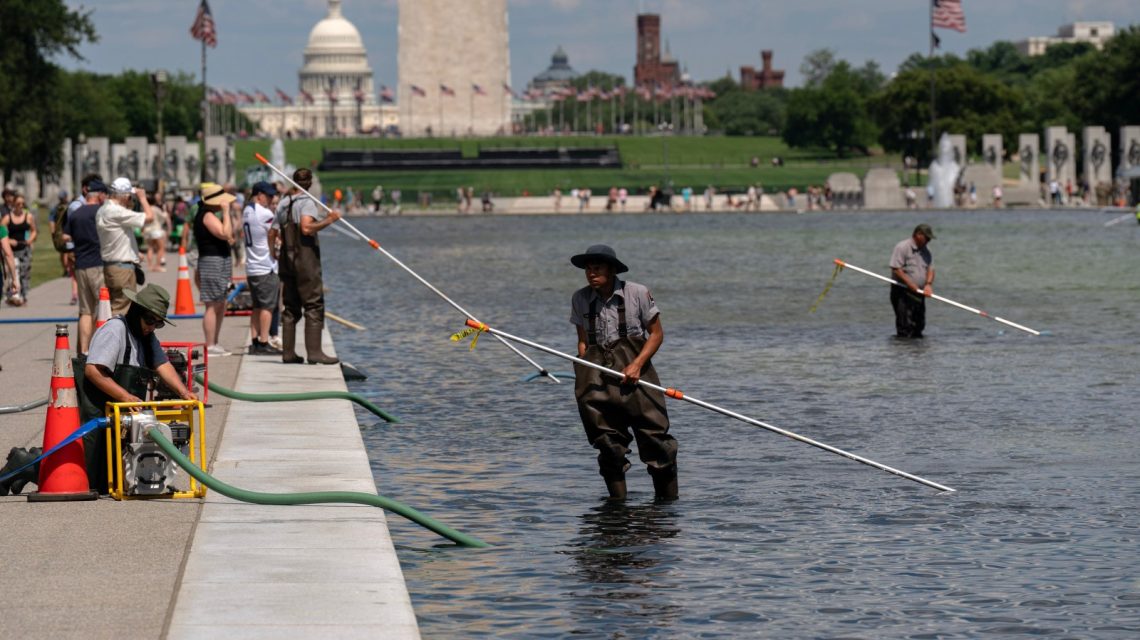
A viral photograph of a dead duck floating in the Lincoln Memorial Reflecting Pool has intensified scrutiny surrounding the landmark’s recent $14 million renovation. This image, viewed over 620,000 times on X as of Sunday, serves as a focal point for critics who argue the pool’s rapid decline warrants attention.
The duck’s cause of death remains unknown, but environmental concerns are rising. Observers warn the current water conditions might threaten the wildlife inhabiting the national monument. Newsweek reached out to the White House and the National Park Service for comments.
Viewer discretion advised: Some may find the photo upsetting.
Reflecting Pool Controversy
The wildlife fatality occurs within broader debates concerning the Reflecting Pool’s state post-renovation. The expensive project included repainting the basin in a shade called ‘American Flag Blue,’ marking the nation’s 250th anniversary.
However, algae blooms turned the water murky green, and parts of the coating started peeling off, necessitating chemical treatments like hydrogen peroxide. The rapid degradation has drawn criticism from visitors and environmentalists alike.
Officials have different explanations. Environmental factors like heat and stagnant water are cited. President Trump has claimed, without evidence, that deliberate vandalism is to blame. He mentioned arrests linked to vandalism and announced efforts to fix the damage.
Emma Nicholson from CBS News reported in a Sunday afternoon X post about multiple police reports concerning vandalism. She noted several arrests and federal citations issued.
What We Know About the Dead Duck
Social media images show a dead duck in the pool, appearing days after chemical treatments began. Photos from the previous week depict a mother duck with ducklings in the basin.
Online speculation ties the death to hydrogen peroxide treatments, but there’s no evidence supporting this. Experts clarify that hydrogen peroxide is a common treatment that breaks down quickly, though high concentrations risk wildlife safety.
How Algae Has Impacted the Reflecting Pool
The lack of concrete answers regarding the duck’s death has sparked online debate, fueled by images of murky water, debris, and distressed wildlife. Cyanobacteria, or blue-green algae, is suggested as a possible cause due to their ability to thrive in sunlight and stagnant conditions.
Experts explain that maintaining water quality in large open-air monuments presents challenges. Fresh water in stagnant situations quickly turns green, according to John Wilson Jr., a water systems specialist.
Engineer Tyler Dailey points out that reflecting pools lack standard filtration systems, complicating algae control.
 Helicopter Crash Claims Lives of Two Firefighting Pilots in Yosemite
  Remembering Chris Spatola: ESPN Analyst and Former Army Guard
  Controversy Surrounds Massachusetts’ Proposal for Nurse Home Visits
  Protests Emerge Following ICE Shooting of Venezuelan Man in Austin
  Cold Weather Alerts and El Niño Influence
  Turning Home Food Waste into Compost: A Guide