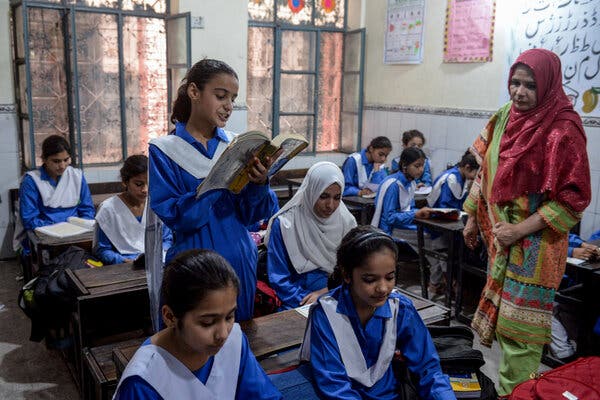
Activists have emphasized the need for further action to address the broader issue of menstrual hygiene in Pakistan. Currently, only 12 percent of Pakistani women and girls use safe, commercially made menstrual products. In Pakistan, many women and girls struggle to afford pads and tampons, with UNICEF estimating that taxes constitute approximately 40 percent of these products’ cost.
Pakistan is set to eliminate a sales tax on menstrual pads and tampons starting in July. This initiative aims to make these products more accessible in a nation where menstrual hygiene knowledge and access are limited.
Pakistan’s finance minister, Muhammad Aurangzeb, announced the decision to abolish the 18 percent sales tax this month. He described menstrual pads and tampons as essential for women’s health, dignity, and participation in social activities.
Women and rights activists have praised the plan as a triumph for menstrual health rights. It follows a nationwide conversation initiated last year when an activist challenged the government in court over taxes on sanitary pads and tampons.
Despite being the fifth most populous country globally, only about 12 percent of menstruating girls and women in Pakistan use commercially produced sanitary pads, according to UNICEF. In comparison, 36 percent do so in neighboring India.
Activists argue that additional efforts are required to help girls and women access menstrual products and combat the stigma surrounding menstruation. In rural areas and conservative households, well-worn rags and unhygienic cloth pieces are often the sole options. UNICEF estimates that one in five Pakistani girls misses school due to her menstrual cycle.
Mahnoor Omer, a 25-year-old activist and lawyer, described the situation as a “period poverty crisis” in Pakistan. She sparked the discussion last year by filing a petition in a high court to classify sanitary pads and tampons as essential items. The court is expected to deliver a ruling in the final quarter of the year. Mahnoor Omer was honored as one of Time magazine’s “women of the year” for her advocacy.
 Federal Appeals Court Decision Against Trump’s ‘Third-Country’ Deportation Policy
  Family Files Lawsuit Following Tierra Walker’s Death Due to Preeclampsia
  Ed Sheeran’s Philadelphia Concert Amid Controversy
  U.S. Secures Strategic Control Over Greenland
  U.S. Security Agreement in Greenland Sparks Optimism and Concerns
  Concussions Increase Alzheimer’s Risk in Older Adults