Thousands of neglected oil and gas wells are scattered across southern Illinois, remnants from a period when the state ranked high among U.S. oil producers. These wells dot farm fields, hide in forests, and border waterways. Many are labeled as “orphans,” abandoned by owners who are deceased or untraceable, and companies that have gone bankrupt due to the volatile nature of the oil industry, marked by booms and busts.
Unplugged, these wells pose environmental risks, leaking harmful chemicals deep underground, potentially contaminating groundwater, and releasing methane gas, which contributes to climate change. They also allow brine—a liquid much saltier than seawater—to spill over farmlands, destroying crops and leaving behind barren soil that takes years to remedy.
The Chicago Tribune investigates the role of Illinois regulators in failing to control the spread of abandoned wells. The report delves into how oil operators sidestep their legal duties to seal non-producing wells, shifting millions in cleanup expenses to taxpayers and exposing communities to environmental risks.
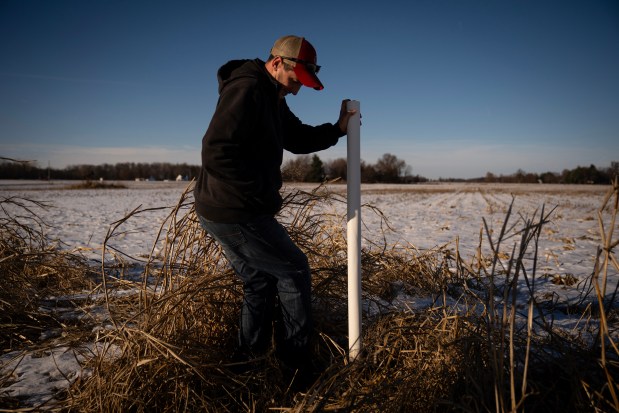
Jon Rosborough examines an abandoned well drilled in 1916 on his family’s farm in Crawford County, showing the legacy issue Illinois faces.
In the past, Illinois was a top oil producer. Now, this legacy has become a $160 million issue. While oil firms are meant to mitigate risks by sealing inactive wells, there are nearly 4,000 unplugged abandoned wells. These are left for the Illinois Department of Natural Resources to manage, a task the state has not met effectively. The Tribune uncovered this after extensively reviewing public records and speaking with farmers, industry representatives, scientists, and environmental advocates.
The investigation revealed mismanagement of millions from operator fees that were meant to prevent orphan wells from becoming issues. The state has also not adequately tracked the number of abandoned wells.
An abandoned well near Casey points to the ongoing challenges Illinois faces in managing these environmental hazards.
One case involves Fireball Production Inc., which abandoned 603 wells, leaving Illinois with a $24 million cleanup burden. A four-month inquiry by the Tribune, utilizing unreleased records and interviews, exposed how the company dodged its obligations, impacting communities with contaminants while escaping financial responsibility.
On a farm in Assumption, a pump jack and other equipment lie abandoned, illustrating the widespread nature of the issue.
In Illinois, getting operators to cover cleanup costs often takes decades. For example, nearly 200 wells were run by Duncan Oil Co., embroiled in a long-lasting legal dispute over failures to seal wells. The Illinois Department of Natural Resources and attorney general’s office sued Duncan Oil, a move that halted the transfer of wells to Dix Oil Co. Both firms share an address and leadership in Salem. The department highlights this ongoing case as how it blocked wells from becoming state responsibilities.
 Cold Weather Alerts and El Niño Influence
  Turning Home Food Waste into Compost: A Guide
  Chicagohenge: When Sunlight Aligns with City Streets
  Fat Bear Week 2026: A Look at the Contest and Its Competitors
  California Governor Declares Statewide Emergency Ahead of El Niño Storms
  EPA Rollbacks and the Impact on Indiana Communities