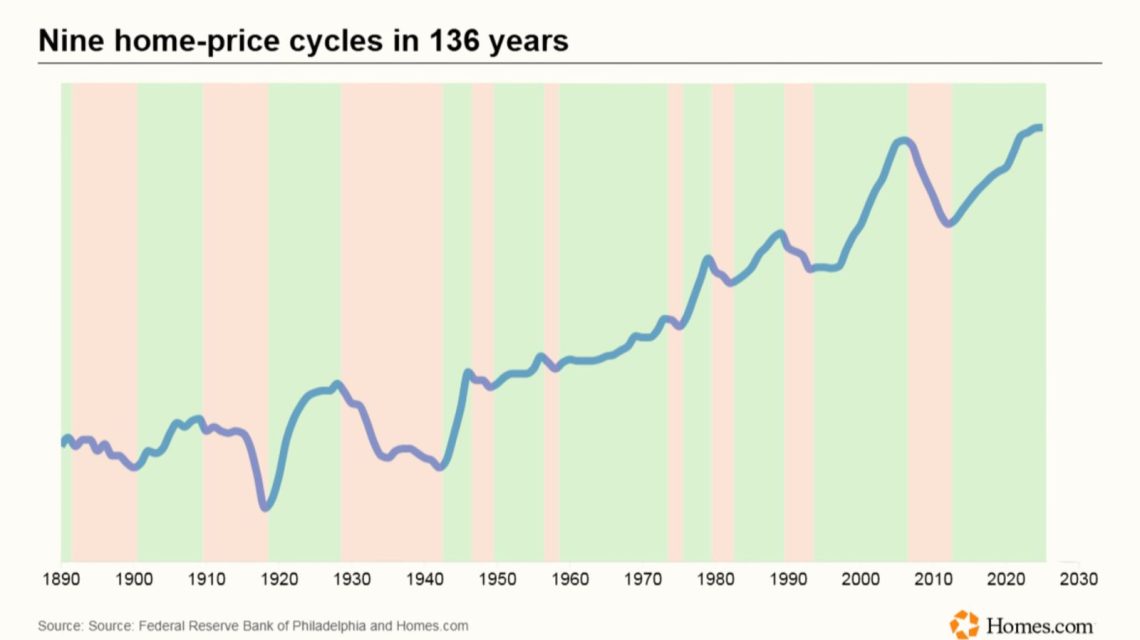
The U.S. housing market faces challenges not seen in its 250-year history. Experts note a significant gap between wages and home prices, making homeownership difficult for many Americans. Since COVID-19 began, home prices have surged by about 60% according to JP Morgan data. Mortgage rates are high and have been since 2022. Census data shows the U.S. homeownership rate dropped to 65%, its lowest since 2019.
Current Market Dynamics
Redfin’s chief economist, Daryl Fairweather, described the situation as unprecedented, with historical high home prices. Although not reaching the peaks of 1981, mortgage rates are higher than a decade ago. This especially impacts young people entering the market. Property ownership has deep historical roots in America, connected to core values like life, liberty, and property protection.
Thomas Jefferson and Andrew Jackson emphasized landownership in democracy’s foundation. The Homestead Act of 1862 even formalized claims on seized lands, promoting the idea that land defines American identity. However, Fairweather believes that historical systems are faltering in today’s market conditions.
Historical Context and Change
Historically, policymakers have promoted homeownership as a means of building wealth and strengthening the middle class, according to Realtor.com’s senior economist, Joel Berner. Housing acts as a wealth store, providing economic stability across generations. This has been disrupted as the current affordability crisis stems from both housing shortages and the practice of treating homes as investments.
Brad Case from Homes.com suggests that home prices escalated beyond inflation rates when mortgage rates fell after the 1980s. This shift turned houses into investment opportunities rather than living spaces, leading to imbalances in policy and market dynamics.
Current Housing Market Issues
The post-pandemic housing market is in uncharted waters. Mortgage rates dropped to 3% during the pandemic, triggering a buying spree amid limited inventory, and prices rose. Now, mortgage rates have doubled, creating a stuck market. People holding homes with low rates remain reluctant to sell, further limiting new buyer options.
Fairweather notes that this mismatch between sellers not ready to meet buyer expectations hinders transactions, keeping prices stubbornly high. Berner believes the issue is a structural challenge, not an acute collapse even as buyer and seller dynamics are misaligned.
Future Outlook
Hope remains for more affordability in the market. Wages might align with home price growth as rates stabilize. The baby boomer generation, owning many homes, might release properties into the market soon. However, maintenance costs and insurance are expected to rise due to climate impacts. While some regions will see price adjustments, building affordable housing remains essential, especially in high-demand areas.
Overall, while housing might become more affordable, efforts to balance the market will persist. Brad Case suggests income growth as a key solution, cautioning against viewing homes as investments rather than living spaces.
 Understanding Real Estate Fees
  Homeowners’ Guide to Home Equity Loans: Costs and Considerations
  Trump’s Childhood Home Renovated and Sold for Nearly $2 Million
  Luxury Five-Bedroom Home for Sale in Edgewater, Chicago
  Skokie Trustees Revise Short-Term Rental Regulations
  U.S. Housing Market Trends: Opportunities and Challenges for Homebuyers