Chicago’s Austin community is frequently highlighted through statistics like crime rates and poverty measures, which often depict the area as troubled. While these challenges exist, there is another side to Austin, exemplified by engaged residents, community gardens, mentoring programs, and opportunities created by locals. Rev. Dollie Sherman has dedicated decades to fostering this positive change, one block at a time.
Having lived on Chicago’s West Side for nearly 50 years, Sherman’s efforts began with summer gatherings and school supply drives in the 600 block of Lorel Avenue. These activities evolved into the Vessels Unto Honor block club, a grassroots movement focused on beautification, youth involvement, and neighborhood support for over a decade.
“The block club has turned our block into a community,” Sherman shared. “We’re building it ourselves, not waiting for external help.” Her leadership mirrors a growing trend where Chicagoans and neighborhood organizations take on challenges that governmental entities haven’t resolved.
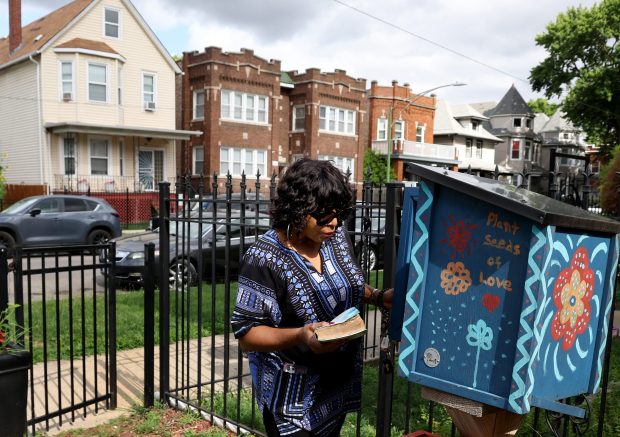
Linda Williams, a local resident, organizes books in a free library box in the neighborhood. Her actions reflect a commitment to the community, highlighted during Memorial Day weekend when residents participated in a job fair facilitated by the Center for Poverty Solutions. Several employers conducted interviews and connected residents to career opportunities, enabling many to access employment they might not otherwise find.
Today, the block is known for safety, cleanliness, and community involvement, validating the impact of block club leadership on not just physical spaces but neighborhood culture.
The job fair produced immediate outcomes; over a dozen attendees received job offers, and 50 more gained interview opportunities. The event emphasized an often overlooked message: when individuals receive meaningful opportunities, they blossom and can support themselves, changing their neighborhood’s narrative.
“Engaging youth in productive activities helps prevent crime and vandalism,” Sherman noted. Meaningful work adds stability, purpose, and dignity. Statistical data supports this: over 97% of employed full-time Chicagoans live above the poverty line, compared to 80% of part-time workers and only 68% of unemployed residents.
Sherman consistently aids young people dealing with homelessness, insecure housing, or limited job prospects by offering pathways to work. “Many youth are homeless, staying with friends,” she explained. “But they earn something after work and leave with pride.”
While a single job fair won’t eradicate poverty or stop violence, each career opportunity represents progress towards self-sufficiency. Young people choosing employment over street life mark victories, reducing crime likelihood.
Sherman has long recognized this truth, which community leaders should prioritize: reducing poverty and enhancing public safety are interconnected missions. Establishing work pathways enriches economic outcomes and revives hope, a potent transformational force in neighborhoods.
Eddie Kornegay, Ph.D., serves as executive director of the Center for Poverty Solutions, developed by the Illinois Policy Institute.
Submit a letter of up to 400 words to the editor at [email protected].
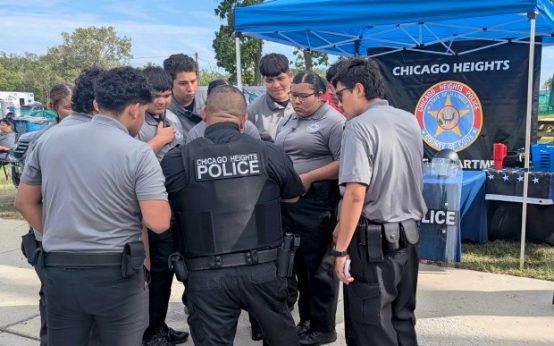 Youth Program Shapes Future Policemen
  Cindy Crawford’s Son Presley Gerber Dies at 27
  Navy Veteran Generald Wilson Reflects on Emotional National Anthem Performance
  Fat Bear Week: A Unique Annual Tradition at Katmai National Park
  Monday Screencaps: Musings and Sports Insights
  Examining the Impact of the War on Poverty Initiatives