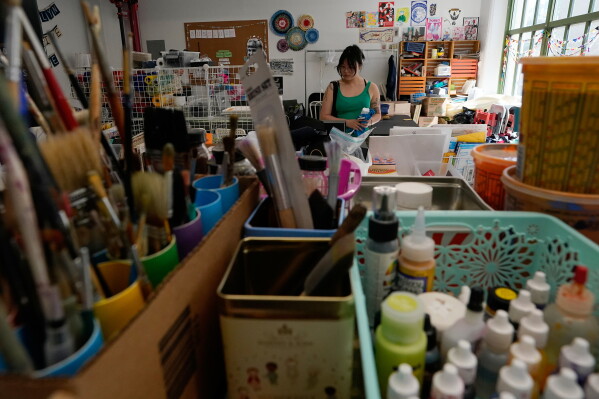
Charlene Catalano sought a green-and-white yarn for this year’s winter scarf. Instead of visiting a big-box store, she turned to Brooklyn Creative Reuse. Alongside gently used crochet kits, hooks, and labels, her purchase totaled just $6.
“Nowadays, art is popping off, so things are more expensive,” Catalano noted. “It has the perfect amount of what I need.”
The Brooklyn store is part of a network of creative reuse centers. They aim to keep art supplies from landfills by pricing donated materials affordably. These centers function like thrift stores for art, allowing crafters to buy materials in smaller quantities.
Art supplies are often packaged in bulk. This can lead to waste, as some materials outlast their intended projects. When disposed of, they add to landfill waste and can release harmful chemicals.
By reusing supplies, we can minimize waste. Some centers divert thousands of pounds of materials from landfills monthly. Julian Silverman, a materials scientist from FIT, emphasized that creative reuse allows for innovative discovery.
How Reusing Art Supplies Makes a Difference
Brooklyn Creative Reuse prices most supplies at $3 a pound. Some items are individually priced. Reducing the demand for new supplies also conserves water and energy. Producing one gallon of paint requires about 13 gallons of water, according to Silverman.
Material packaging is another consideration. Many supplies come with excessive packaging, such as markers in plastic casings. Some materials, like paint, are sensitive and need added protection.
In Atlanta, Scraplanta Creative Reuse centers collect about 7,000 pounds of supplies monthly. They cater to a diverse range of users including teachers, parents, and students. Executive director Jonelle Dawkins highlighted the value of partially used paint or glue.
Synthetic materials in art supplies, like plastic paint handles, can take centuries to decompose. Paints can also produce microplastics and harmful metals over time.
Environmental scientist Zoie Diana advises artists to focus on manageable factors. While paint pollution exists, it’s significantly less than other larger sources.
Sustainable Art Practices at Home
Sustainability in art starts at home. Purchase only necessary materials and consider donation instead of disposal. Cleaning methods for paintbrushes also matter. Use cloths to wipe waste rather than washing paint into drains, thus reducing microplastic spread.
Programs are available for recycling paint as well. Artists should explore options to reuse household items creatively. Silverman suggests brewing onion skins and beets as natural dyes, and repurposing old makeup for art purposes.
Artist Rosina Morelli was inspired by Brooklyn Creative Reuse to reassess her inventory. “What I’m most happy for is my chance to donate stuff, not buy stuff,” she remarked, encouraging sharing over discarding.
Brooklyn Creative Reuse and similar initiatives reflect a commitment to environmental responsibility within art communities.
The Associated Press Health and Science Department benefits from funding by entities like the Howard Hughes Medical Institute and the Robert Wood Johnson Foundation, yet retains editorial control over its content.
 Fat Bear Week 2026: A Look at the Contest and Its Competitors
  California Governor Declares Statewide Emergency Ahead of El Niño Storms
  EPA Rollbacks and the Impact on Indiana Communities
  The Impact of Battery Innovations on Renewable Energy
  Challenges in California’s Home Insurance Market
  Race Against Time: Preserving Quinhagak’s Archaeological Heritage