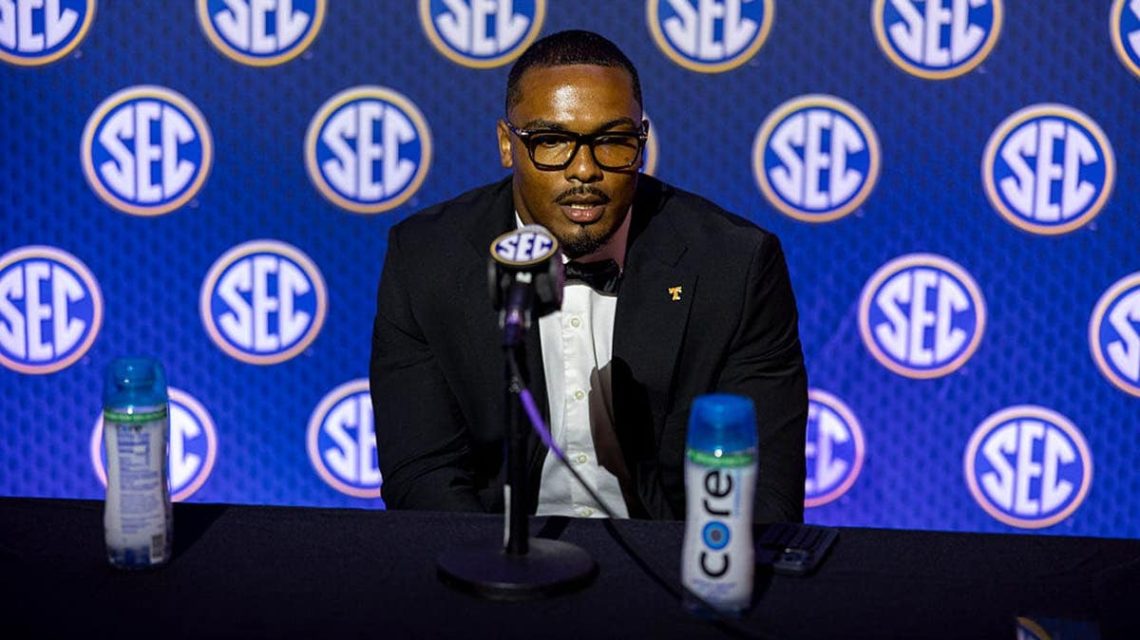
In Knoxville, Tennessee, a debate has arisen following the NCAA’s decision to suspend Arion Carter, a linebacker for the Volunteers, for the first two games of the upcoming season. The suspension stems from Carter’s pursuit of an NFL career after the 2025 season. He declared for the draft and hired an agent, which led to a loss of his collegiate eligibility under existing NCAA rules.
Carter accepted a $427 plane ticket from his agent to attend a training camp. This is where he discovered a foot injury threatening his draft prospects. The injury could have cost him millions. Faced with this setback, Carter chose to return to college instead.
After repaying the $427, Tennessee self-reported this incident to the NCAA. As he considered his future, Carter also explored the transfer portal but ultimately returned to Tennessee.
Tennessee’s head coach, Josh Heupel, expressed strong disagreement with the NCAA’s two-game suspension at a press briefing before fall camp. “He’s done everything the right way,” Heupel emphasized. He criticized the ruling as “outdated,” expressing disappointment over the consequences for both Carter and the team.
The NCAA maintained their stance, citing established rules that prohibit student-athletes from signing with agents for NFL draft intentions. They uphold that violations result in athletes being declared ineligible, with stipulations for reinstatement including repayments or suspensions from games.
“NCAA rules are clear: student-athletes may not sign with agents to pursue NFL Draft opportunities, and this student-athlete knowingly violated those longstanding rules.”
The NCAA’s decision highlights a larger issue. Current rules lack provisions for athletes who, after declaring for the draft, get injured before entering professional camps. This adds a layer of difficulty for athletes like Carter, who then seek to return to college sports.
Heupel continues to support Carter, underscoring the irony of the situation where schools can use agents within legal loopholes to offer substantial financial incentives, while athletes face penalties for minor infractions.
At present, college athletes contribute significantly to their institutions’ and the NCAA’s earnings. Yet, outdated rules can keep players like Carter from gaining national exposure opportunities.
“At the end of last year, AC chose to enter the NFL Draft process before the final declaration deadline,” Heupel said. “He discovered he needed surgery and made the correct decision to return to college. He has been transparent and responsible in all his actions.”
Despite his leadership role within the team, Carter will miss the start of the 2026 season. Some argue he might have challenged the NCAA’s decision in court, with a strong chance of success. However, Carter continues to prepare for the new season, dealing with the situation composedly.
Many, including Tennessee’s administration, disagree with the NCAA’s upholding of the suspension, a sentiment shared by college football enthusiasts.
 Kurt Angle Reflects on His TNA Wrestling Career
  Analyzing NFL Teams After Two Weeks
  Seattle Seahawks Coach Mike Macdonald’s Strategic Approach
  Massachusetts Youth Hockey Player Suspended Indefinitely After Slashing Incident
  Chicago Bears Face Quarterback Changes Amid Injuries
  Kevin Durant Chooses to Focus on WNBA Success Amid Gender Debate