
Scientists have obtained detailed images of the sun’s surface, revealing its intricate and dynamic nature. Looking directly at the sun without proper protection can be dangerous, but researchers succeeded using the National Science Foundation’s Daniel K. Inouye Solar Telescope. This facility is situated on Maui, Hawaii.
The initial goal was to test and refine the telescope’s capabilities. However, the images revealed the sun’s luminous outer shell with unprecedented clarity. Among the discoveries were unusual, feathery patterns across the surface.
Solar physicist Ruizhu Chen from Stanford University, who was not part of the study, compared the patterns to Van Gogh’s The Starry Night. These ripples are caused by magnetized plasma moving at varying speeds, similar to wind blowing over water—a known phenomenon influencing fluid dynamics. While seen on Earth, Jupiter, and Saturn, such detail had not been observed on the solar surface before.
Study co-author Friedrich Wöger from the National Solar Observatory noted this level of observation as a first for solar studies. The findings were published in the journal Nature.
Understanding the sun’s inner operations is crucial for predicting coronal mass ejections. These energy bursts can impact Earth by causing solar storms that may disrupt GPS signals and create auroras.
The Associated Press Health and Science Department is supported by the Howard Hughes Medical Institute’s Department of Science Education and the Robert Wood Johnson Foundation. Responsibility for content remains with the AP.
 NASA’s New Space Telescope Launch: A Breakthrough in Cosmic Exploration
  Trump’s Call with ISS Astronauts and Honors at NASA
  Anticipated Northern Lights Due to Solar Activity
  NASA’s Nancy Grace Roman Telescope Prepares for Launch
 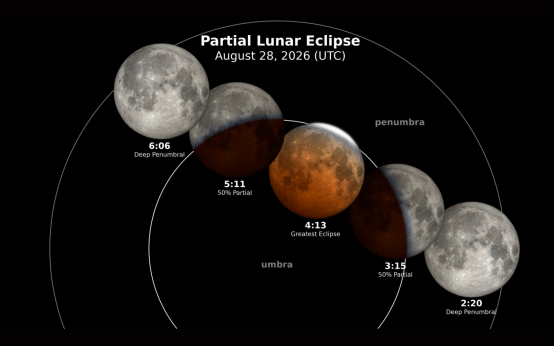 Rare Deep Partial Lunar Eclipse Visible Across the U.S.
  China Delays Chang’e-7 Lunar Mission Plans