
Angie Nixon, a state representative from Jacksonville and a member of the Democratic Socialists of America (DSA), achieved a significant victory in Florida’s Democratic Senate primary. She triumphed over retired Army Lieutenant Colonel Alex Vindman, surprising many in both political parties.
If Nixon is successful in the upcoming November election, she will become the first DSA member elected to the U.S. Senate. Her win marks a notable development in a state historically defined by resistance to socialist ideologies. Nixon’s candidacy places a democratic socialist on the ballot in a state with a significant population of Cuban Americans, many of whom oppose the ideology their families fled.
Campaigning in Miami’s Little Havana neighborhood, Nixon connected with the Cuban community, a group known for its conservative leanings due to historical experiences. Her opponent in the general election will be Republican Senator Ashley Moody, appointed to the position in 2025 after Marco Rubio left to serve as Secretary of State. Moody has already positioned herself against Nixon by sponsoring legislation aimed at restricting Cuban officials.
Controversy Over the U.S. Embargo on Cuba
Nixon opposes the U.S. embargo on Cuba, labeling it a failure that leads to hardships for ordinary Cubans. She advocates for a return to the diplomatic engagement policies of the Obama administration. Despite her critique of Cuba’s regime, she calls for changes that empower Cuban citizens. Meanwhile, she accuses Moody of using Department of Homeland Security resources to increase deportations of Cubans.
Polls and Election Forecasts
Polling data prior to the primary showed Moody leading Nixon by 8 points, with a notable portion of undecided voters. Election forecasters have categorized the race as leaning safely Republican following Nixon’s primary win.
Cuban American Perspectives on Socialism
Nixon’s performance in Miami-Dade County, home to the highest concentration of Cuban Americans, shows that her message resonated in precincts dominated by Puerto Rican populations. However, Vindman found more support in counties with larger retiree communities, aligning with the Democratic Party’s older faction.
The larger political landscape in Florida complicates Nixon’s position. The Republican party holds significant voter-registration advantages in most counties. Cuban American political power further underscores this, with a majority of Cuban American congress members from Florida identifying as Republican.
Adapting Democratic Strategy
Political analyst Eduardo Gamarra from Florida International University (FIU) casts doubt on Nixon’s chances of winning the Senate seat. However, he highlights how her campaign reveals valuable insights about the Democratic base in Florida. By focusing on popular DSA proposals like Medicaid for all, Nixon taps into issues with bipartisan appeal.
Gamarra argues that Nixon’s win does not necessarily signify a shift toward socialism among Florida voters. Instead, her success suggests that campaign platforms addressing widely resonant issues like healthcare and economic opportunity can gain traction.
Challenges for Democrats in Florida
Despite Nixon’s primary win, Florida remains a challenging state for Democrats. The last Democratic governor was elected over three decades ago, emphasizing the GOP’s electoral strength. Cuban American influence in Washington reflects similar trends, with most Cuban American lawmakers identifying as Republican.
Nationally, opinions on socialism indicate it remains a contentious label. Polls reveal mixed views, with many Republicans viewing socialism negatively. Even among Democrats, there is division over capitalism.
The Path Forward
Andrea Pringle of the March On PAC believes Nixon’s primary victory demonstrates a demand for candidates willing to challenge powerful interests and advocate for working people. Yet, the general election poses a different challenge.
Looking ahead, Gamarra cautions against marginalizing DSA-aligned figures. He emphasizes the importance of focusing on economic issues that resonate with a broad electorate, rather than internal party activism. The broader question remains whether Nixon’s primary coalition can be sustained for future elections.
 Political Frustrations and Key Primaries Impacting Midterms
  CIA Informant Faces Deportation Amid Legal Battle
 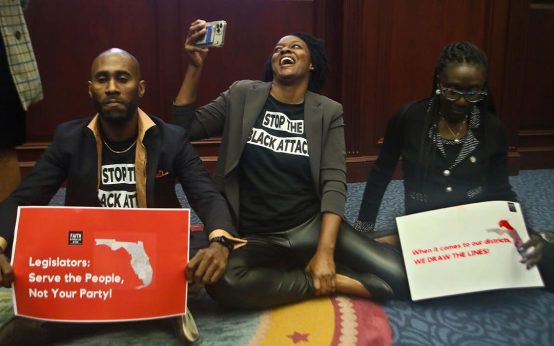 Democratic Socialist Angie Nixon Triumphs in Florida Primary
  Trump’s Approval Hits Record Low Amid Iran Conflict and Rising Gas Prices
  Controversial Census Bureau Report Linked to Trump-Aligned Think Tank
  San Diego County Ends Training for Federal Immigration Authorities at Local Firing Range