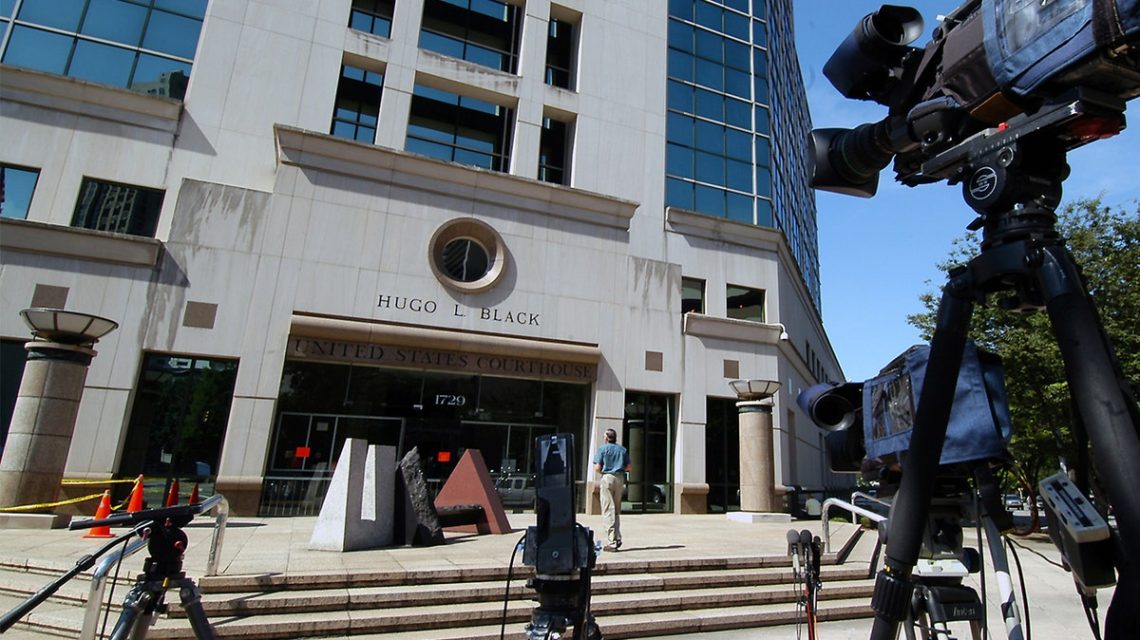
The General Services Administration (GSA) opposes a new bill that would grant the judiciary branch more control over U.S. courthouse properties. The GSA argues that the judiciary has a history of mishandling its building management, costing taxpayers millions of dollars.
The bill, known as the Judicial Space and Facilities Management Effectiveness Act, was introduced on July 30 by Senators Dick Durbin, Kevin Cramer, and John Boozman. It proposes transferring real property authority from the GSA to the judiciary in up to 10 federal judicial districts. Supporters claim that courts would better maintain their facilities.
Historical Challenges
The GSA points to a 1988 pilot program as evidence of potential problems with judiciary oversight. In this program, three courthouses came under judiciary control. Due to unforeseen repair expenses, two courthouses ended their participation. Only the Hugo Black Federal Courthouse in Birmingham, Alabama, remained, and it faced significant deterioration, with $57.7 million in unpaid maintenance costs.
An evaluation report from 2024 indicated that the Hugo Black courthouse required nearly $19 million in repairs. Approximately 83% of these costs were priority repairs needing immediate attention. The GSA cites poor maintenance as a reason for these issues.
Operational Strains
Though responsible for courthouse management, the judiciary often sought technical help from the GSA, using its service contract templates to handle complex repairs. According to a Management Analysis and Review System report, the courthouse suffered from corrosion and hazardous conditions requiring extensive maintenance.
During a 2013 budget hearing, Judge Julia S. Gibbons described repair responsibilities as a significant financial burden on the judiciary’s budget, detracting from its core mission.
Alternative Solutions
The GSA highlights its successful completion of a new U.S. courthouse in Huntsville, Alabama, in 2024. The project finished $7 million under budget and features modern security and operational technology.
GSA Administrator Edward Forst argues that outdated congressional funding and approval processes are central issues, not judiciary management. He emphasizes efforts to update federal building management and improve the Federal Buildings Fund with support from cabinet members and agency heads.
Forst claims the GSA is highly experienced in federal building management and warns that splitting their system would increase fragmentation and costs while reducing accountability and safety. The Government Accountability Office supports this view, saying that funding constraints contribute to deferred maintenance and that the judiciary lacks the resources to manage buildings effectively.
Defending the Judiciary
An Administrative Office spokesperson defends the judiciary’s capabilities, arguing that maintaining facilities is integral to their work. They assert that starting with the pilot program, the judiciary can make property management decisions that benefit the public and the courts.
 Angel Dad Joins ICE to Support Victims of Illegal Alien Crime
  Atlanta Mayor Faces Criticism Over Response to Transportation Concerns
  Economic Concerns Influence Undecided Voters in Iowa and Georgia
  Duffy Questions Harvard’s Influence on Students’ Beliefs
  Continuing Tensions Between the U.S. and Iran
  Analyzing Voter Concerns on Economy in Key Senate Races