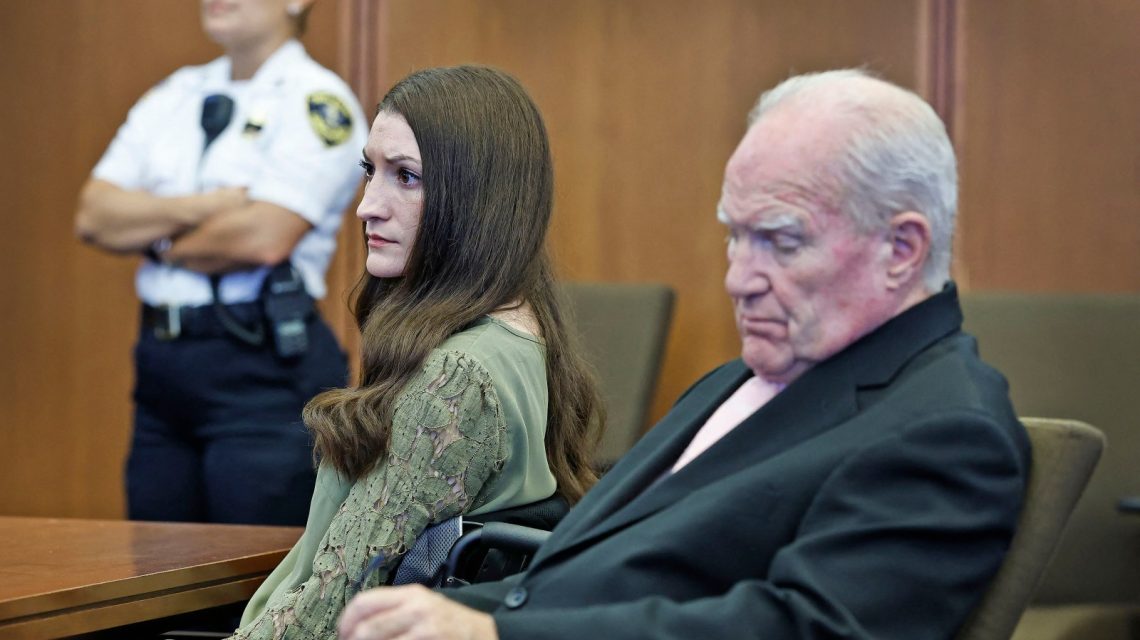
The attorney representing the sole holdout juror in the Lindsay Clancy trial has strongly opposed calls for an investigation into the juror’s actions. Michael Desronvil was the only juror who voted to convict the Massachusetts mother for the deaths of her three children.
Lindsay Clancy’s attorney, Kevin Reddington, filed a motion demanding an inquiry into Desronvil’s conduct. The motion, submitted on Friday and disclosed on Monday, sought to question Desronvil about alleged cell phone use during jury deliberations, his honesty during juror questioning the day before the trial concluded, and his accuracy in completing a pre-trial questionnaire.
Reddington has asked the court to review records of any texts or calls made by Desronvil on deliberation days between 8 a.m. and 4:30 p.m., as phone use during deliberations is not permitted in the state.
“If the new normal is that jurors are going to face brutal reprisals for disagreeing with a defense attorney, you can kiss the Sixth Amendment goodbye,” wrote Edward Andrew Paltzik, Desronvil’s attorney.
Desronvil’s lawyer, Edward Andrew Paltzik, released a statement denouncing the motion as a “full-frontal attack on the U.S. Constitution.” Paltzik argued that the request for investigation was “disgusting” and deserved widespread condemnation.
The trial ended in a mistrial on September 4, declared by Judge William Sullivan, as the jury failed to reach a unanimous decision after extensive deliberations. Eleven jurors were prepared to absolve Clancy of criminal responsibility for her children’s deaths.
Clancy has admitted to killing her children aged 5, 3, and 8 months at the family’s Massachusetts home. Her defense claims she was not guilty due to insanity, citing postpartum psychosis. This case has ignited a national discussion on postpartum psychosis and the treatment of defendants with severe mental illnesses in the judicial system.
Prosecutors allege Clancy devised a plan that involved her husband leaving the house so she could strangle her children. Desronvil supported the prosecution’s perspective.
In a prior statement, Desronvil expressed having confidence in the evidence presented and said, “Based on all the physical evidence, key witnesses, and what the prosecution presents, I thought it was enough proof that she knew exactly what she was doing and planned.”
Defense Team’s Response
Separately, Clancy’s defense has initiated a motion to dismiss the first-degree murder charges on grounds of double jeopardy. Filed by attorney Martin Weinberg on September 21, the motion suggests the mistrial should not have been declared and requests the case’s dismissal.
Invoking the Fifth, Sixth, and Fourteenth Amendments, the motion argues, “Contrary to the Court’s stated belief at the time, it did have viable choices other than declaring a mistrial.” The motion challenges the necessity of the mistrial declaration, citing the absence of judicial inquiry into reports of a juror’s refusal to apply reasonable doubt instructions.
Future Proceedings
The case remains unsettled, and charges against Clancy persist. The subsequent legal proceeding is a status hearing scheduled for September 29 in Plymouth Superior Court with Judge Sullivan.
This article includes contributions from the Associated Press with assistance from Newsweek’s AI tool, Martyn. Contact John Fitzpatrick and Gray R. Thomas for editorial comments.