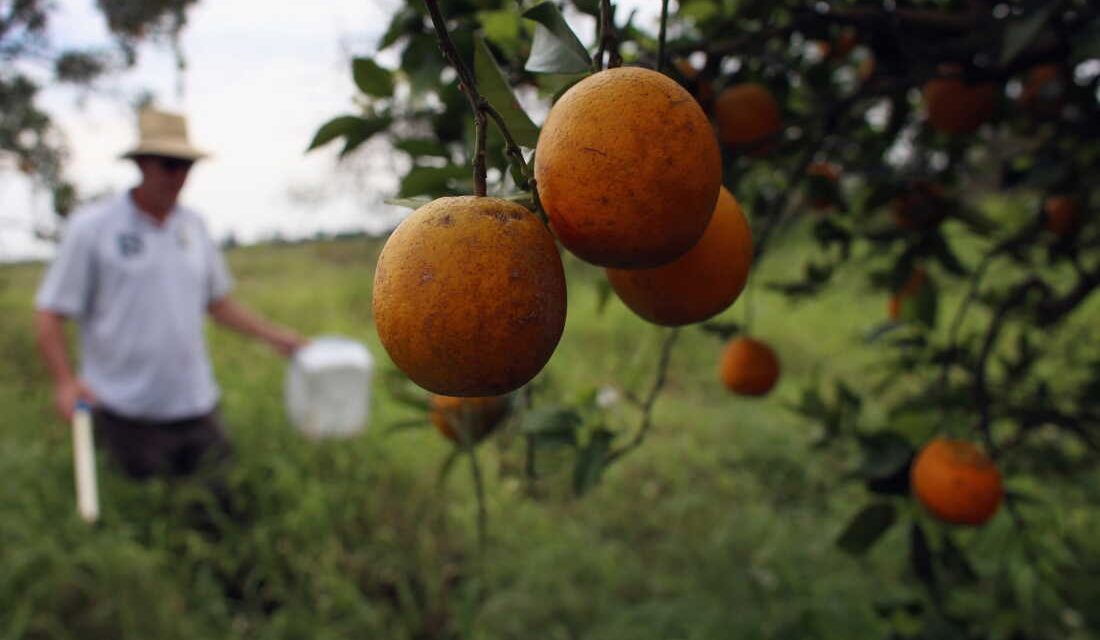
Guy Davies, an inspector with the Florida Division of Plant Industry, examines an orange tree for the Asian citrus psyllid. This insect spreads a bacterium responsible for ‘citrus greening,’ a serious disease affecting the trees. This scene took place in Fort Pierce, Florida, on May 13, 2013. Citrus growers in the state have begun planting genetically modified trees to resist this disease.
For years, growers have struggled against citrus greening. They have used tents and sprays in vain attempts to protect their crops. This bacterial infection has devastated Florida’s citrus production. The introduction of gene-edited trees represents a new hope. Earlier this year, the Environmental Protection Agency approved these modifications. Growers now watch closely to see if these trees can survive.
Citrus greening appeared in Florida in 2005. A small insect, the Asian citrus psyllid, spreads the disease. The bacterium attacks the tree’s immune system, leading to bitter, discolored fruit and eventually the tree’s death. No cure exists for the disease.
Ron English, whose family owned a citrus business in Valrico, Florida, witnessed their operation shutter in 2015 due to greening. “We had some of the best groves, but it all vanished,” English noted. Prior to the disease’s arrival, growers shipped about 300 million boxes of fruit each year. Matt Joyner, CEO of Florida Citrus Mutual, cites that they managed slightly over 15 million boxes this past season.
A Tampa-based company, Soilcea, utilized CRISPR gene-editing technology to develop a disease-resistant rootstock called CarriCea T1. This innovation helps maintain the tree’s immune function and reduces reliance on insecticides. Soilcea CEO Yianni Lagos emphasized the importance of focusing on the rootstock. “Signs of infection, like yellowing leaves, indicate significant root system damage,” he explained.
At Soilcea’s test field in Thonotosassa, Florida, the modified rootstock shows promising results. Trees with CarriCea T1 stand taller and appear healthier than those without it. “Look at the CarriCea rootstock, see the full leaves,” English pointed out. In contrast, a smaller tree beside it lacks this rootstock, showing disease symptoms.
The ultimate test for the CarriCea T1 trees lies in their fruit, which takes years to grow and evaluate for quality and taste. “The data looks good, but only after a decade can we fully assess how these trees will perform,” Lagos stated.
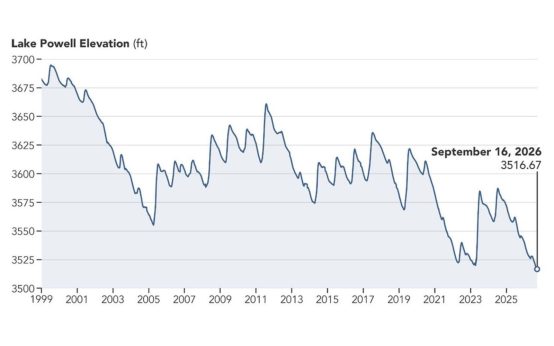 Satellite Images Reveal Lake Powell’s Dramatic Decline Over Nine Years
 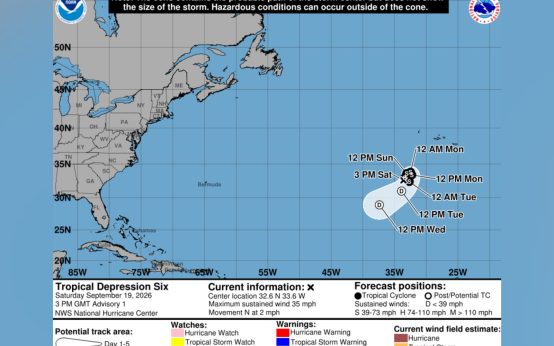 Tropical Depression Six Forms in the Atlantic Amid Quiet Hurricane Season
  Fat Bear Week: Celebrating Resilient Giants and Ecosystem Conservation
  Concerns Surface Over SpaceX Facility in Louisiana
  Understanding Pyrocumulonimbus Clouds Through NASA’s INSPYRE Mission
 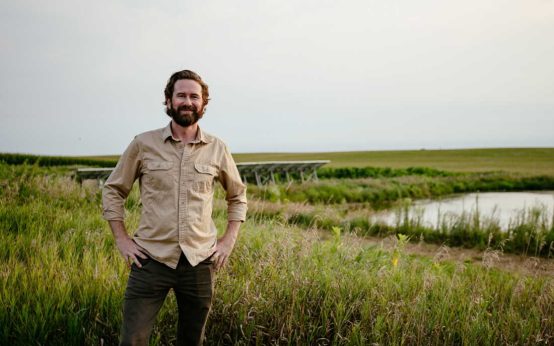 Transitioning from Pig Farming to Mushroom Production in Iowa