
Vice President Vance announced on Thursday that Microsoft faces new restrictions in hiring foreign workers for U.S. permanent resident status through employer-based programs. This action follows allegations against the company for misusing the permanent labor certification program, known as PERM, which facilitates the hiring of foreign employees for permanent U.S. positions.
The tech giant’s suspension from the PERM program aims to ensure fair employment practices. Vance emphasized a commitment to supporting investment in the American technology sector, but with a focus on prioritizing American workers for employment opportunities.
Vance cited significant use of both the PERM program and the H-1B visa program by Microsoft last year, alongside the laying off of numerous American employees. The H-1B visa allows U.S. employers to hire foreign professionals in specialized occupations.
In response, Microsoft stated that most of its U.S. workforce comprises American citizens. The company indicated that 80% of its H-1B applications last year involved extending or amending the status of current employees. Microsoft asserted that they only file H-1B petitions for candidates meeting strict visa criteria and offer competitive compensation within the tech sector.
Labor Secretary Keith Sonderling disclosed that other firms, including Adobe and Infosys, have also been suspended from the PERM program. For a more detailed report, visit TheHill.com.
In related developments, President Trump awarded Elon Musk the National Medal of Science in recognition of his contributions, likening him to a modern-day Thomas Edison. Meanwhile, the NFL has petitioned the Supreme Court regarding prediction market regulations, urging legal clarity amid conflicting rulings.
 Controversial Past of Colorado’s GOP Gubernatorial Candidate
  Obama Cautions Donors Amid Expanding Midterm Map
  How iOS, Samsung, and Pixel Phones Tackle Scams and Protect Users
  A Comprehensive Guide to Choosing Husqvarna Chain Saws
 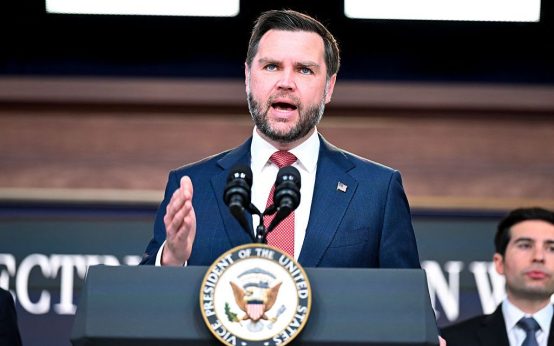 Vance Echoes Sanders on Immigration and Worker Protection
  FAA’s Challenges in Modernizing Air Traffic Management