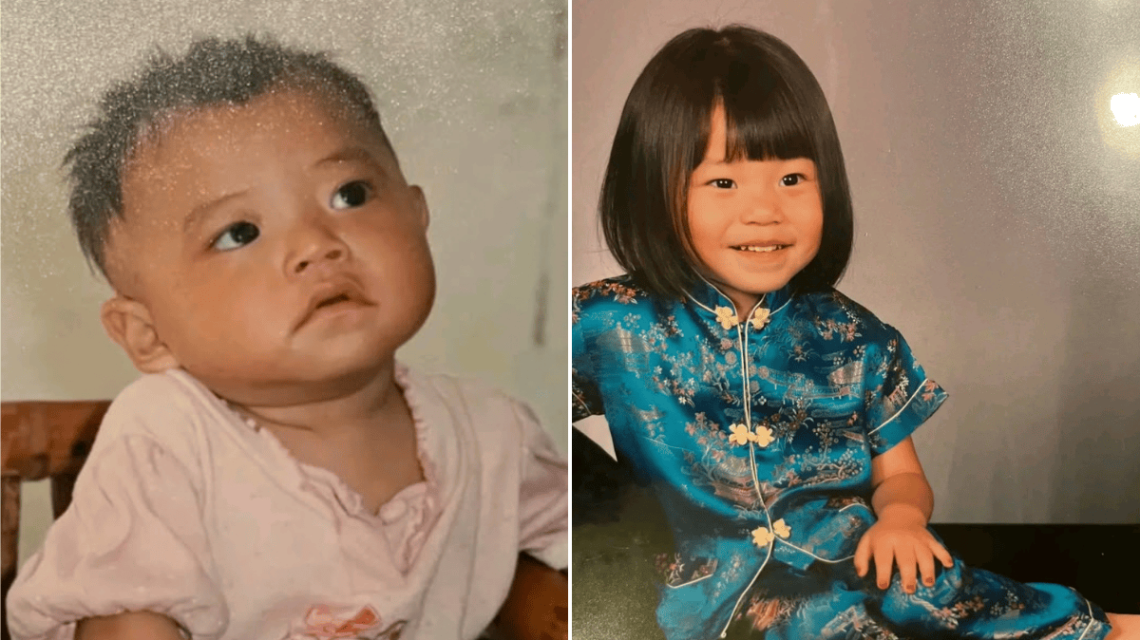
I grew up in Memphis, Tennessee, although my life began in China. I was left on a sidewalk in Nanchang, Jiangxi Province, only three days after being born. Finding my birth family seemed impossible for many years. That chapter of life felt closed, but that changed once I had children. Social media’s connectivity made the previously unattainable seem possible, prompting me to realize that my story deserved to be shared.
From early childhood, I knew I was adopted; there was no dramatic revelation or formal discussion. Adoption was a common topic in my family. However, I do recall encountering documents that referred to me as an ‘officially abandoned child’. Reading those words made it profoundly clear that my biological family had left me on a sidewalk, and for the first time, adoption felt difficult.
My adoptive mom held onto the belief that my biological family wished the best for me, seeking a better life. As a child, this notion comforted me. As an adult, doubt grew. While they might have loved me, it possibly looked different.
At 14 months old, I was adopted from an orphanage, and my health was poor. My mom feared I wouldn’t survive the night we met, as I suffered from pneumonia in both lungs and couldn’t turn my flattened head due to extended immobility. The crowded orphanage struggled to care for sick infants, and my mom believed our match saved my life. Care arrived because a family awaited me.
My childhood holds happy memories: autumn festivals, Christmas lights, beach trips, visits to Disney World, Thanksgiving gatherings, and reading Harry Potter. My grandmother frequently said, ‘Out of all the lovely little girls, God brought you from China as my precious angel’, and this sentiment shaped my upbringing. My family embraced me with love; I never felt isolated.
School presented challenges, with teasing about my adoption. However, awareness made the jokes cease. College was different—surrounded by new faces, I contemplated my Chinese heritage more seriously.
In childhood, I didn’t search for information on my biological family, though fantasies often arose. Imagining my birth mother in a yellow dress and siblings occupied my thoughts. I treated my history as static, fearing the pursuit of more knowledge. It wasn’t until college that I Googled my birth city, shocked to see modernity in Nanchang, contrary to the image of poverty and rurality instilled in me. Reflecting, I find it surprising how long it took to explore my birthplace, inhibited by self-restriction.
At age seven, I returned to China through a program for China’s lost girls. Visiting cities like Beijing, Shanghai, and Xi’an was astonishing, but the experience remained difficult to fully comprehend.
Now, my feelings about my abandonment are evolving. As I mature, I’m more heartbroken than content about the hardships my biological mother faced and her decision. The separation’s gravity intensifies, particularly after becoming a mother.
In 2021, my daughter’s birth shifted my perspective profoundly. Holding my blood relative for the first time was indescribable. A similar experience followed with my son. Before parenthood, infants weren’t in my life, and handling them made me realize my own tiny size at my separation. Imagining life without my own children for a moment, let alone forever, is impossible.
I grieved deeply during postpartum, alongside immense joy. Parenting transformed my understanding of adoption—I’m not solely an adopted child with minor links to Chinese culture. I am a Chinese mother raising Chinese children.
This role bears significance. My daughter is now in kindergarten, and together we’re discovering what being Chinese entails. We read, watch videos, and discuss adoption in age-appropriate manners. She knows I’m adopted but doesn’t fully grasp it yet. My goal is to teach her about China and acquaint our family with holidays, traditions, and foods that I’m learning.
For most of my life, my history felt like a blank slate not belonging to me, unworthy of investigation. Sharing my sparse information is daunting yet empowering.
I’m beginning to seek out my birth family. Partnering with another adoptee from the same orphanage, we’re arranging DNA tests and liaising with organizations like the Nanchang Project and Baobeihuijia to boost visibility once results emerge.
I hold many questions. I’d like to understand my family’s history, origins, and relative identities. If reunification doesn’t upset them, learning the abandonment’s reasons and if more factors influenced their decision than the one-child policy intrigues me. Mostly, I hope to comprehend their lives—our similarities, differences, and shared background.
Admittedly, I lack depth in comprehending the one-child policy’s intricacies, choosing ignorance. It’s distressing to learn of birth mothers and daughters’ experiences during that era, with the awareness my path might have varied starkly. I consider myself lucky—adoptive parents desired and loved me, and my extended family welcomed me warmly.
Reflecting on my potential life had I stayed in China, I doubt my circumstances would compare to my fortunate upbringing. At best, I may have felt unwanted; at worst, faced challenges akin to those families suffered during that time. Despite mourning the loss and unanswered questions surrounding my origins, I wouldn’t trade my current life.
If meeting my biological parents becomes reality, I want to convey: ‘I hope my life reflects your wishes when you released me.’ The past can’t change nor be wholly understood, but my freedom was weighted with consequences. Despite their motivations, they ventured a risk. I hope my life reflects that risk’s value.
Currently, I’m a stay-at-home mom preparing to re-enter the workforce. My youthful ambition was becoming a news producer for Good Morning America in New York City—believing it the ultimate aspiration. That dream has faded, replaced by a realization: this is my peak. My family, children, and present life fulfill me. It’s comforting and injects excitement for whatever follows.
 Investigation Underway in South Georgia for Fatal Shootings
  The Rise of AI: High-Tech Feudalism and Societal Impact
  Teaching My Daughter to Stand Up Against Bullying
  From Radicalization to Counter-Terrorism: Mubin Shaikh’s Journey
  Facing Pancreatic Cancer: Vicky Titcomb’s Journey
  Understanding Family Estrangement