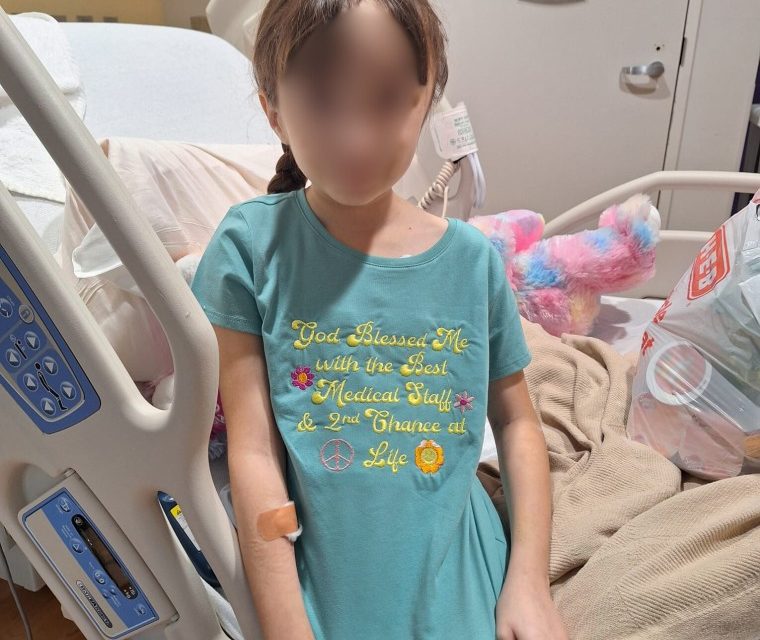
A mother, deported to Mexico, was denied a humanitarian request to return to the U.S. for her daughter’s specialized medical care. She had hoped for a different outcome after a long wait.
“It’s frustrating and difficult,” she expressed in Spanish from Mexico. Her ten-year-old daughter, recovering from a rare brain tumor, had her treatment interrupted when both parents were deported over a year ago. Three of her siblings, who are also U.S. citizens, moved with them.
The family’s anonymity is maintained due to safety concerns in their current location. Months of lifesaving treatment were disrupted when the girl, now 12, left the U.S. As her condition worsened in Mexico, she suffered a severe seizure, resulting in bruising.
“Instead of improving, my daughter’s health is regressing,” the mother expressed.
The girl experiences frequent muscle spasms, severe enough to disrupt sleep, and recurring dizziness and headaches. Her doctors in the U.S. confirmed through medical tests that her brain is not regenerating, a crucial recovery aspect.
The family’s requests for return under humanitarian parole were denied. The mother’s frustration is evident after U.S. Citizenship and Immigration Services and ICE decisions.
“As a parent, I want to do anything to help her,” she said, facing stress over her daughter’s worsening condition.
The Care Challenges in Mexico
In Mexico, finding medical care has been challenging. Her daughter’s rare condition and the lack of comprehensive medical history deter providers. Air travel is not an option due to her condition.
Medical records indicate a “novel” condition, and few specialists can provide the necessary care. The girl was reliant on a team of U.S. therapists for her recovery, but without them, previous progress has reversed.
“Her mental capacity now resembles that of a much younger child,” her mother said.
The mother, a former rehab technician and nursing assistant, uses her skills to care for her daughter but lacks necessary resources. Handling her daughter’s symptoms requires constant oversight.
Her eldest son remained in the U.S. and supports the family, sending medication and advocating for their case. He attended the State of the Union address with Rep. Adriano Espaillat, who supports the family.
The Texas Civil Rights Project works with the family. Attorney Danny Woodward emphasizes strategic reapplication for humanitarian parole due to high costs and ongoing Congressional outreach.
A Journey Interrupted
NBC News highlighted the family’s plight since February 2025, starting with an immigration checkpoint near the Rio Grande Valley. Despite prior successful passes, they were detained without reaching the necessary hospital.
“This family has no criminal record,” Woodward stated, referring to the expedited removal orders enforced by immigration officials.
The Department of Homeland Security offered no separation of U.S. citizen children unless chosen by their parents. Humanitarian parole was their hope for re-entry.
A comparison of humanitarian parole denials shows increased denials during Trump’s administration compared to Biden’s term. By September 2025, Trump’s administration had denied significantly more applications.
The USCIS reiterated parole’s intended case-by-case use, stopping broader abuses. Meanwhile, birthdays in Mexico remind the mother of her daughter’s survival and the ongoing challenges.
“A vulnerable U.S. citizen child cannot return for the care she needs without her family,” said Texas Civil Rights Project President Rochelle Garza.
 Orland Park Plans New Traffic and Emergency Measures
  Steve Lotysz: From Medinah’s Gates to Presidents Cup Artistry
  A Family’s Journey Through Cancer and Loss
  Texas Man Charged with Capital Murder in Shooting of 5-Year-Old
  The Unlikely Intrigue of a 1990 NBA Trading Card
  Far-Left Groups Allegedly Organize Protests in Austin