Chinese companies like Huawei are advancing in the AI chip market, challenging global leaders like Nvidia. In recent years, the competition over hardware and computing power between the U.S. and China has intensified.
Nvidia’s Struggles in China
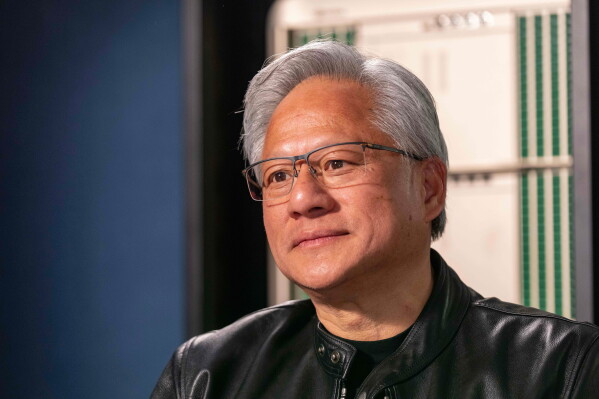
Jensen Huang, CEO of Nvidia, recently visited Beijing during a summit between U.S. President Donald Trump and Chinese leader Xi Jinping. Despite his prominence, Nvidia’s high-tech chips face difficulties in the Chinese market.
The U.S. imposed controls on exporting advanced technology to China, citing national security concerns. This affected Nvidia’s sales of its H200 AI chips.
Eventually, Trump allowed the sale of these chips, but China had already shifted towards local products like those from Huawei. Huang admitted the U.S. has lost its foothold in the Chinese AI chip sector.
Rise of Huawei and Chinese Chipmakers
In 2019, the U.S. halted Huawei and other Chinese companies from acquiring some powerful computer chips. This led local firms to develop their own capabilities. Huawei now leads in China’s AI chip market, with efforts from companies like DeepSeek to enhance chip functionality and affordability.
A Bernstein report estimated that Nvidia’s market dominance in China would drop to 8%, while Huawei’s share could grow to 50%. Huawei’s Ascend 950 series competes with Nvidia’s H200 chips, known for their power.
He Hui from Omdia notes, China now trusts its supply capabilities. Huawei even launched potent AI computing clusters despite U.S. export controls.
The Role of Nvidia in China
The global semiconductor supply chain is interconnected. No single nation can independently produce an advanced AI chip. In China, high demand exceeds supply for AI chips.
Cases of smuggling Nvidia’s AI chips into China highlight the demand for its technology. Nvidia creates top AI chips using Dutch company ASML’s machines. TSMC manufactures these chips, yet China cannot purchase Nvidia’s most advanced chips due to restrictions.
Some advanced technologies in China still depend on Nvidia chips. Chinese universities and major companies require them for research. Nvidia’s global sales keep rising, with expected revenue growth from $82 billion to $91 billion in a recent quarter.
Huawei’s Global Ambitions
DeepSeek, a competitor of OpenAI and Anthropic, developed an AI model adapted for Huawei’s Ascend chips. This suggests a push to replace Nvidia chips domestically.
Nvidia altered its H20 chips to comply with U.S. restrictions and continued selling them in China, but shipments declined. Nvidia’s CEO mentioned uncertainty about future revenue from H200 chip imports to China.
Huawei aims to expand its networking equipment and chip operations globally. It operates in over 170 countries and intends to extend digital connectivity worldwide. As China ramps up its chip production, it may capture market shares in Southeast Asia and elsewhere.
 Legal Battles Over Sports Betting and Addiction Claims
  Concerns About Rapid Advancements in Artificial Intelligence
  Leading AI Companies Face Antitrust Lawsuit for Alleged Coordination
  Documentary Critiques Elon Musk’s Ambitions
  ChatGPT’s Trusted Contact Feature Aims to Support Users in Distress
  Anthropic CEO Dario Amodei Warns of AI Risks in U.S.-China Relations