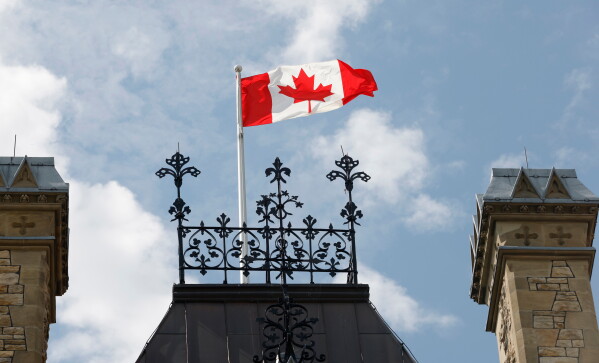
Mark Carney, the Canadian Prime Minister, has urged middle powers to resist economic coercion from more powerful nations. This call faces a major test now, as President Donald Trump has enacted new tariffs on Canadian goods. With negotiations collapsing on Friday, Canada walked away after Carney deemed the United States’ demands excessive for tariff relief. A 50% duty was imposed on $20 billion worth of Canadian exports on Saturday, prompting Carney to announce retaliatory actions starting September 8.
Carney’s decision marks a departure from other American allies who have avoided risking economic consequences in response to tariff pressures. The situation illustrates Carney’s argument that middle powers must withstand economic pressure from global powers such as the United States and China, even if it entails significant costs. Canada’s actions offer a glimpse into a world where longstanding alliances offer reduced protection, and economic ties themselves are leveraged as tools of influence. This development may shape international perceptions of Carney and influence the responses of other U.S. allies to the Trump administration’s policies.
“We’re going to hit back,” Carney said.
The trade conflict has also become a sovereignty test. Carney noted that Washington introduced terms that would have limited Canada’s ability to establish trade agreements with other countries in the final negotiation hours. He deemed this demand “unacceptable” and a “question of sovereignty.” British Columbia Premier David Eby criticized such a condition, saying it would reduce Canada to “the economic equivalent of the 51st state.”
Carney’s stance gained attention during his address at the World Economic Forum in Davos, Switzerland. He cautioned against a shift in international order, emphasizing that middle powers negotiating alone with great powers do so from a place of weakness. Trump’s rebuttal highlighted Canada’s dependence on the U.S., warning that Canada survives due to U.S. influence.
Historian Robert Bothwell expressed concerns about Canada’s vulnerability to U.S. influence, noting that no other nation faces as much risk from American actions as Canada. Carney sees the significance of retaining independence against Trump’s ambitions to absorb Canada. Despite the economic reliance on the U.S., Carney acknowledges the challenges of replacing customers and supply chains rooted in longstanding U.S. market connections.
U.S. Trade Representative Jamieson Greer contested Canada’s depiction of negotiation breakdowns. He claimed Ottawa introduced new terms and retreated from previous commitments even after Washington offered concessions.
Professor Nelson Wiseman from the University of Toronto views Canada’s response as a crucial test for Carney’s strategy. He questions whether this resistance will affect other countries’ decisions.
Ian Bremmer, president of the Eurasia Group, emphasized Canadians’ growing frustration with the Trump administration. This sentiment manifested during sports events where the U.S. national anthem faced boos. Manitoba Premier Wab Kinew warned Canadians to prepare for a prolonged standoff, suggesting Trump may weaken post-midterm elections.
“Last spring, I warned that America is trying to break us so that they can own us,” Carney said.
Carney has vowed to protect Canada’s independence despite U.S. pressures. The ongoing test not only challenges economic relationships but also the resilience of Canadian sovereignty and identity.
 Concerns in the U.S. Over French Riots
  US Vice President JD Vance Chooses Not to Endorse Netanyahu Amid Israeli Elections
  Rising Violence in Europe and Its Political Impact
  Christiane Amanpour to Leave CNN After Over Four Decades
  Ukrainian President Responds to U.S. Abandonment Amid Strained Relations
  Trump Sues BBC Over Documentary Alterations