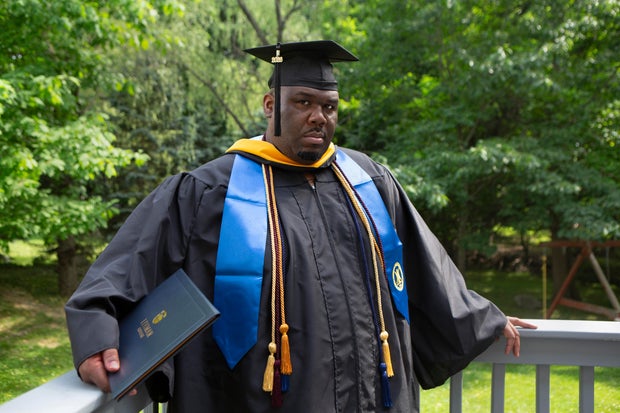
Benjamin Pinckney has long aspired to become a physician assistant. This goal solidified after a life-altering experience when he was hospitalized for gunshot wounds in his early twenties. A physician assistant’s advice and support during his recovery inspired him to pursue this profession.
After a career with New York City’s Department of Sanitation and as an Army Reserve medic, Pinckney graduated with honors from Lehman College with a Bachelor of Science degree. He hoped to begin physician assistant school soon but is concerned about new federal student loan limits potentially hindering his plans.
Impact of Loan Limits
Starting July 1, federal borrowing limits for graduate students are reduced under the One Big Beautiful Bill Act, signed by President Donald Trump. These changes aim to reduce educational costs and student loan debt. Critics argue the annual limit of $20,500 is insufficient, especially with the new definition of a “professional degree.”
“The treatment doesn’t match the problem,” says Todd Pickard, president of the American Academy of Physician Associates.
Enforcement of the new definition is temporarily blocked by a federal judge. Nonetheless, many graduate students will still need private loans, which often carry higher interest rates and limited repayment options, to cover tuition and living costs.
Diversity Concerns
Some fear the new limits will deter minorities and low-income individuals from pursuing graduate healthcare degrees, exacerbating current shortages in rural and primary care services. Olivia Trull, soon to start a physician assistant program that costs $137,000, shares concerns about potential debt burdens and the viability of her educational goals.
Broader Implications
While the caps aim to address high graduate school costs, some, like higher education economist Sandy Baum, note they don’t tackle the root issues effectively. Although a few programs have reduced tuition prices, significant widespread changes are not expected.
The limitations disproportionately affect Black students who historically borrow more than their peers. Students with pre-existing undergraduate debt face a total federal loan cap of $257,000 over their lifetime, hindering further educational pursuits.
Jasmine Vasquez, awaiting the birth of her child and accepted into a physician assistant program, opted to defer enrollment until 2027, hoping for change in her financial options. The emotional toll and uncertainty weigh heavily on students like her.
Overall Effects
Concerns continue over potential enrollment declines in healthcare programs, especially those unable to attract sufficiently diverse and numerous students. Long-term repayments under private loans might push graduates to pursue high-income specialties, deepening shortages in needed areas.
Pinckney remains uncertain about his future. He considers alternative education paths but clings to the hope of becoming a physician assistant. Inspired by the care he received years ago, he wishes to give back by impacting others’ lives positively.
 Understanding and Addressing the Complexity of Suicide
  Impact of Removing Tax-Exempt Status from Private Schools
  Recall of Meat Products from Star Meat Delivery Inc.
  Questions Arise After Presley Gerber’s Death in Rehab
  AFL Investigates Fairfax County Schools’ 9/11 Teaching Guidance
  Upcoming Concerns and Influence in Health Politics