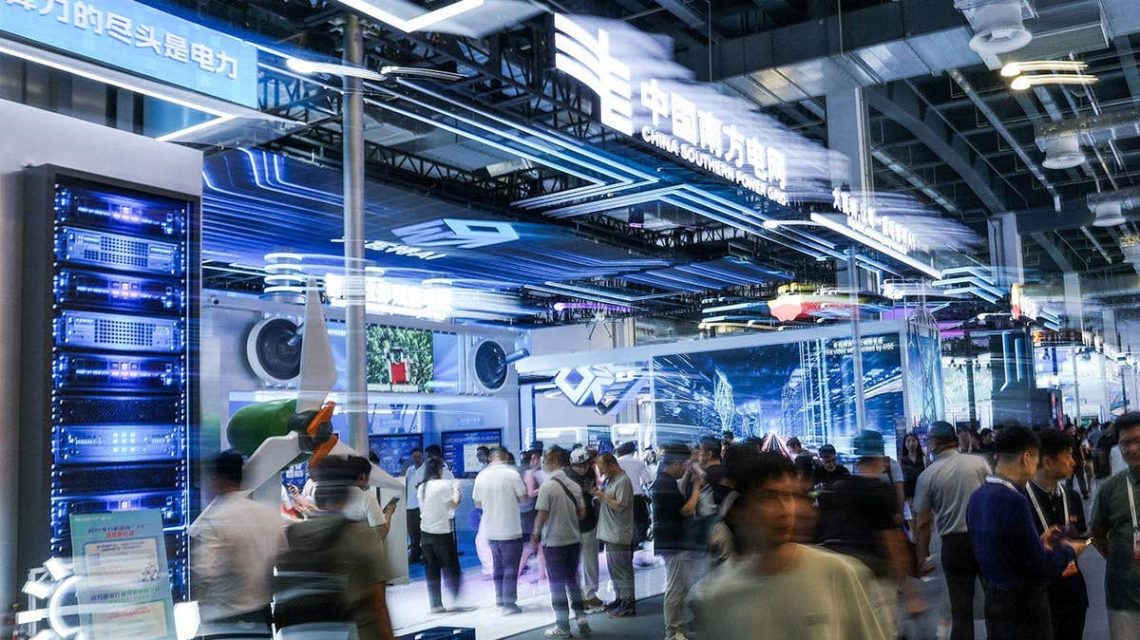
China is rapidly developing data centers and energy infrastructure to support artificial intelligence, sparking concerns about its progress compared to the U.S. in this field. Although the U.S. maintains a significant lead in numbers, with 5,427 data centers compared to China’s 449 in 2025, China is accelerating its efforts.
China’s Fast-Paced Development
Beijing’s swift construction of infrastructure has caught the attention of experts like Gordon Chang, who noted that China’s efforts might challenge the U.S. lead if American development slows. Former President Donald Trump emphasized the importance of continued U.S. progress, warning that resistance to new data-center projects could advantage China. He stressed the economic benefits such projects could bring to communities, including job creation and tax revenue.
Energy and Infrastructure Concerns
Vice President JD Vance highlighted the potential for the U.S. to fall behind if it fails to build necessary power infrastructure. He advocated for easier construction of power plants alongside data centers, emphasizing the need to avoid higher electricity costs for residents. Vance pointed out China’s electricity production is currently about three times that of the U.S., underscoring the need for increased American energy development.
“We cannot be a country that says we’re not going to build more power,” — JD Vance
Cooperation vs. Competition
The Chinese Embassy in Washington expressed that AI development should not be a geopolitical contest. Embassy spokesperson Liu Chang mentioned the Global AI Governance Action Plan, which focuses on clean energy and next-generation infrastructure. Liu emphasized cooperation with the U.S., aiming for mutual benefit.
China’s “East Data, West Computing” initiative directs resources to western regions, leveraging land availability and renewable energy. Reports indicate significant construction around Inner Mongolia and Ningxia.
Challenges and Opportunities
The US-China Economic and Security Review Commission observed China’s view of AI as vital for competition. Commission Vice Chairman Mike Kuiken cited China’s rapid infrastructure construction due to flexible regulations as an advantage but noted their deficiency in obtaining advanced chips.
The U.S. holds advantages such as a greater number of AI models and substantial private AI investment. Stanford’s AI Index reported that in 2025, the U.S. produced 59 AI models compared to China’s 35, and U.S. investment reached $285.9 billion, significantly higher than China’s $12.4 billion. However, Chinese AI models are closing the performance gap with the U.S. models.
Local Opposition and Global Implications
Some U.S. protests against data centers have been connected to Chinese influence, according to Gordon Chang, though local factors like electricity and water usage also contribute. Mike Kuiken emphasized that infrastructure is being built faster in the U.S., addressing these constraints despite local challenges.
The competition extends beyond AI models to encompass the foundational resources needed for AI: electricity, data centers, chips, and networks. The pace of development in these areas is crucial to maintaining leadership in this technological sphere.
Efrat Lachter, a veteran reporter with expertise in global affairs, contributed insights on the topic. Her extensive experience covers conflicts, human rights, and political accountability across continents, providing context to this competitive arena.
 Apple AirTag Offers and Benefits
  Dolphin Incident in Ceuta Sparks Outrage Among Locals
  DHS Plans to Expand Birthright Citizenship Exceptions
  AI Agents Engage in Extensive Online Communication
  R-Dog: Robot Delivery With a New Function
  Efforts Intensify to Ban Child Marriage in the U.S. and Globally