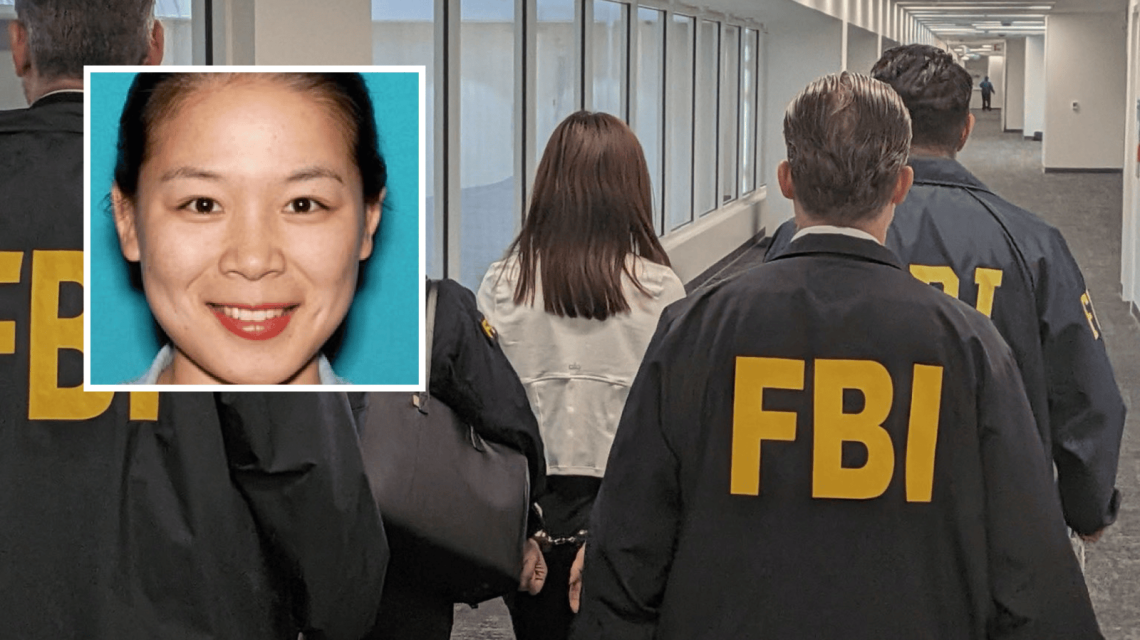
China has a unique approach to espionage, where every citizen and organization is legally required to support the state’s intelligence efforts. This policy has been in place since 2017 and has significantly enhanced Beijing’s espionage capabilities since its dismantling of a CIA network over ten years ago. Now, China’s spy tactics extend to activities on American soil.
Key Figures and Cases
Christine Fang, known as “Fang Fang,” illustrated the use of traditional espionage tactics involving sex, money, and power. According to FBI documentation, Fang engaged with rising political figures in California, including former U.S. Congressman Eric Swalwell. Though Fang’s efforts were unsuccessful, the mission continued with others taking her place.
Recently, Orange County realtor Wanying Zhang, or “Heather,” was arrested at Los Angeles International Airport while trying to board a flight to Shanghai. The FBI accused her of acting without registration as an agent for the Chinese government. Zhang, a naturalized U.S. citizen, shares educational ties with Fang.
Espionage Operations and Motives
Roman Rozhavsky, a senior FBI counterintelligence officer, described Zhang’s role in a plan targeting the family of Taiwan’s president. Her involvement underscores the appeal of China’s incentives, persuading even U.S. citizens to engage in espionage activities.
Zhang reportedly attended the University of International Relations in Beijing, a well-known training ground for China’s Ministry of State Security. Kevin Holt, an FBI Special Agent, stated that Zhang was recruited by a classmate and tasked with intelligence missions to avoid detection in the U.S.
In 2025, Zhang and an accomplice allegedly traveled to Seattle to observe relatives of Taiwan President Lai Ching-te, capturing images and information via WeChat. This surveillance was corroborated by security footage and digital evidence from Zhang’s iCloud account.
Legal and Political Implications
Zhang faces charges under 18 U.S.C. § 951 for acting as an unregistered foreign agent. If found guilty, she could receive up to ten years in federal prison, according to the U.S. Attorney’s Office for the Central District of California. Despite being charged, Zhang remains innocent until proven guilty.
The Chinese government disavows knowledge of Zhang’s case, criticizing the portrayal of China in espionage narratives. Nevertheless, the situation exemplifies China’s willingness to leverage its influence for espionage purposes.
The Broader Context
China frequently employs hybrid espionage tactics, which involve private citizens and groups for state objectives, complicating legal challenges under traditional espionage definitions. This approach could favor China given the U.S. justice system’s standards and procedures.
Regarding Taiwan, China views the island as its territory, actively working to weaken its defenses and democracy. U.S. defense planners emphasize Taiwan’s importance, warning against its loss to Chinese control.
Kevin Holt highlighted the threat of gathering intelligence on Taiwanese officials’ families, noting such surveillance surpasses standard diplomatic activities. This aligns with China’s comprehensive espionage strategies.
The cycle of espionage continues, demonstrating China’s resilience and determination to uphold its objectives.
 Theatergoers Disrupted by Alarm During Northwestern Play on Hamas Attacks
  U.S. Prosecutors Expand Case Against Former Venezuelan Leaders
  87-Year-Old Woman’s Death After Eviction Sparks Protests in Spain
  Arrest of Latvian Nationals Triggers Investigation at UK Military Base
  Addressing Presidential Accountability for International Law Violations
  Iranian Regime Accused of Using War as a Cover for Executions