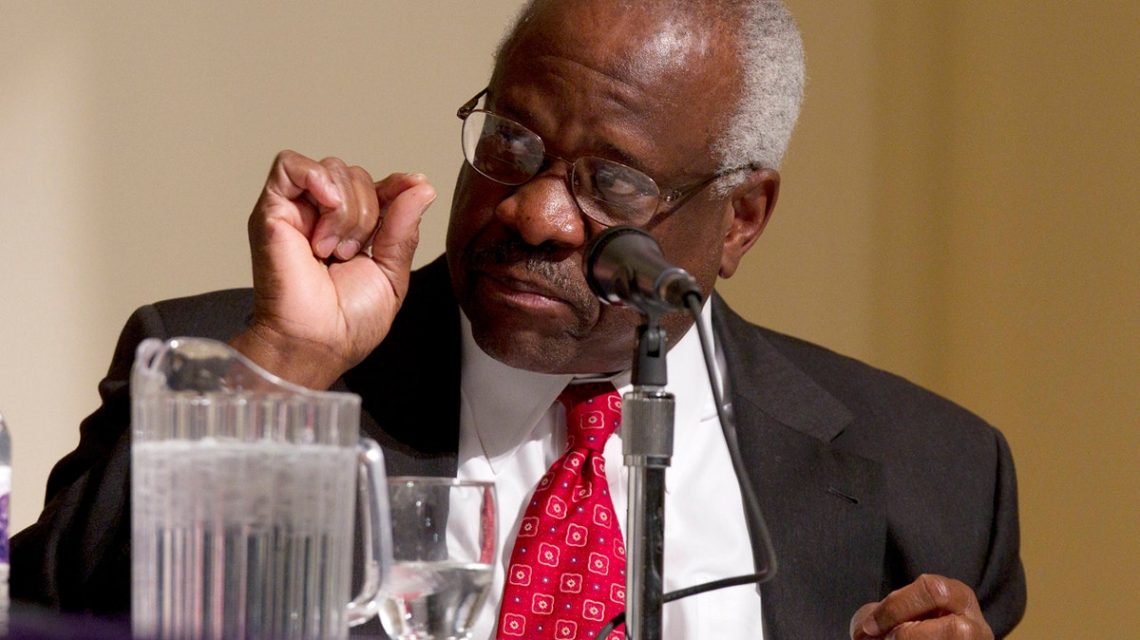
Supreme Court Justice Clarence Thomas recently dismissed the notion that Black Americans should adhere to specific political beliefs based on their race. This stance was made clear during an interview with Republican Texas Senator Ted Cruz.
“We had this saying, ‘only two things I have to do: stay Black and die,'” Thomas remarked, addressing the idea that his independence from racial norms is a contradiction. He expressed resistance to mandates dictating viewpoints due to skin color, highlighting that this deterministic assumption does not align with his personal values.
“I declined that invitation. So now, I am seen as a contradiction because I don’t fit the stereotypical perception,” he explained on the “Verdict with Ted Cruz” podcast.
Background and Personal Journey
Born in Georgia, Thomas experienced poverty in a segregated society. He grew up in Pin Point and later moved to Savannah with his grandparents. Initially, at the College of the Holy Cross, Thomas embraced left-wing Black nationalism. However, after his involvement in a violent protest in 1970, he shifted right, opting for self-reliance as taught by his grandfather.
The Risks of Deterministic Thinking
Thomas equated the pressure to adopt certain racial ideologies with the limitations imposed by racial segregation. He recalled his childhood experiences, pointing out, “When I was a kid, the Savannah Public Library was segregated. Would it be right if I were allowed but denied access to certain floors or stacks?” He argued against the restriction of ideas in the same way as the restriction of access was wrong in the past.
Thomas posed a rhetorical question, “If it was wrong to limit access to certain areas or books then, why is it now acceptable to criticize my choice of ideas and books to embrace?”
 U.S. Strategy Focuses on Economic Pressure Over Military Action in Iran
  Democratic Candidate Christina Bohannan Campaigns in Iowa
  Historic Opportunity for a Female UN Leader Faces Challenges
  Supreme Court Decision on Trump Administration’s Mail-In Ballot Order
 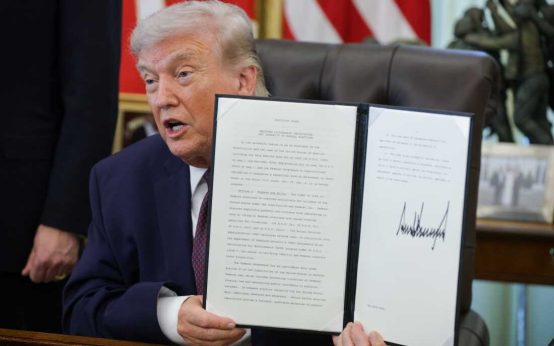 Supreme Court Pauses Ruling on Trump’s Mail-In Voting Directives
 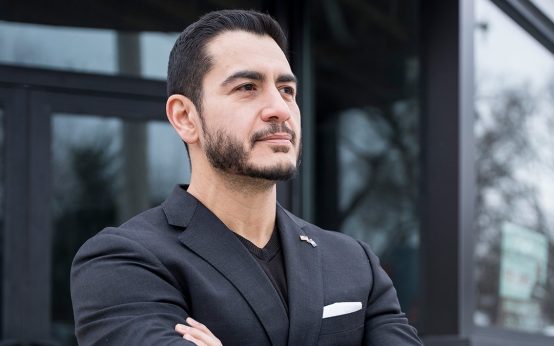 Michigan Senate Candidate Abdul El-Sayed Faces Backlash Over Remarks