Recent findings about a British naval drone unknowingly sending data to China highlight a pressing issue for U.S. policymakers. During a cybersecurity assessment, the U.K. Ministry of Defence discovered that a component in its naval drones was covertly transmitting information to China. The drone itself was British, but the hidden vulnerability stemmed from elsewhere.
China’s Espionage Tactics
Beijing employs strategies like intellectual-property theft, cyberespionage, and industrial policy to become essential to Western supply chains, then uses these connections to gather intelligence and create potential vulnerabilities. Typically, the response has been reactive, involving costly measures to remove and replace Chinese technology from infrastructure once threats are undeniable.
Automobiles: The Next Target
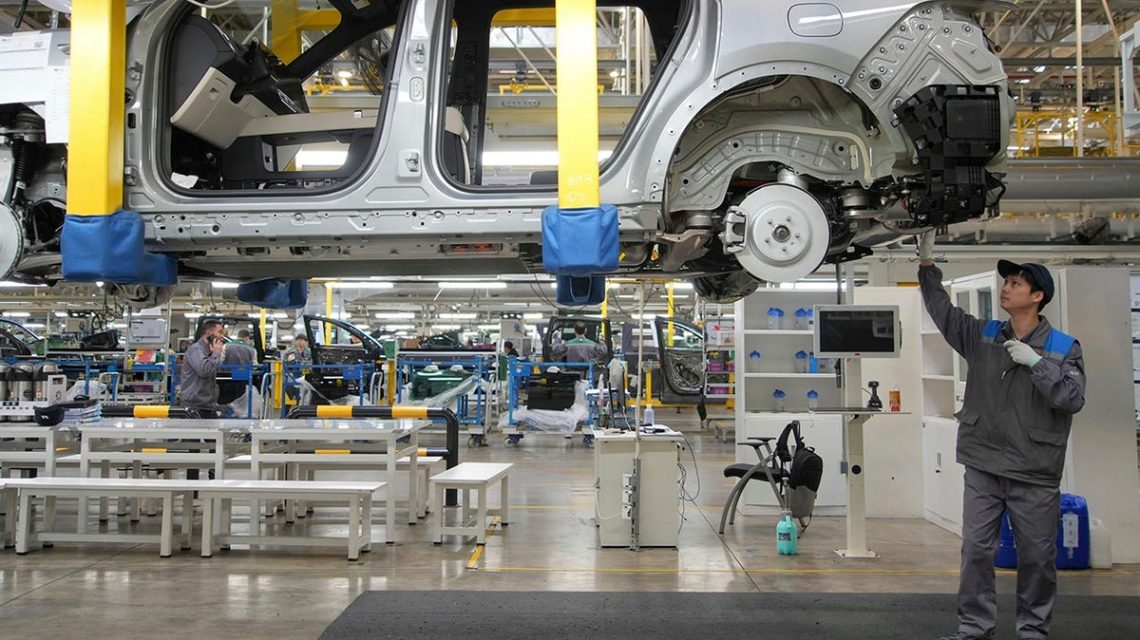
China plans to expand its espionage efforts to the automotive sector. It has become the world’s largest vehicle exporter, influencing not only the electric vehicle market but also the development of batteries, software, and connected technologies vital for modern cars.
Chinese automakers are making inroads into U.S. markets. Their growing influence poses a challenge to American manufacturers as cars become more interconnected. Vehicles now act as computers on wheels, equipped with cameras, microphones, sensors, and internet-connected components that can be manipulated if controlled remotely.
Potential Security Risks
Chinese autos on American roads could provide a direct surveillance tool. However, even without selling large numbers of vehicles, Chinese companies can gain a foothold through components manufactured for American, European, Japanese, or South Korean cars. If technologies at scale become exploited, they could map the movements of Americans, including the monitoring of military bases and critical infrastructure.
In times of conflict, these vulnerabilities might enable wide-scale disruption of transportation systems. To prevent this, Congress should consider the bipartisan Connected Vehicle Security Act, the work of Ohio Republican Sen. Bernie Moreno and Michigan Democrat Sen. Elissa Slotkin. This legislation builds on existing regulations limiting adversary-linked vehicles and components.
Measures Against Foreign Access
The Commerce Department determined that foreign access to automotive technologies could result in the collection of sensitive data and possible vehicle manipulation. While their rulemaking is a crucial step, a concrete act of Congress can solidify these national security measures.
The Connected Vehicle Security Act seeks to fortify supply chain protections, covering finished Chinese vehicles and the connected technologies embedded within them. It also focuses on software, electronics, and other critical communication equipment.
The Senate Commerce Committee unanimously advanced this legislation in July. Congress should aim to pass the act to the president as a preventative measure against future entanglements with Chinese technology.
American reliability on Chinese tech has often proved costly. Connected vehicles present a proactive opportunity to address potential dependencies before they solidify.
 U.S. and China to Discuss AI Transparency at Washington Summit
  Apple’s Latest Devices: iPhone 18 Pro, AirPods 5, and More
  Gen Z Voters: Shifting Political Landscape Ahead of 2026 Midterms
  Paramount’s Concessions in Warner Bros. Discovery Takeover
  FAA Embraces AI to Enhance Air Traffic Management with SMART System
  Tips for Maintaining VPN Connection While Traveling