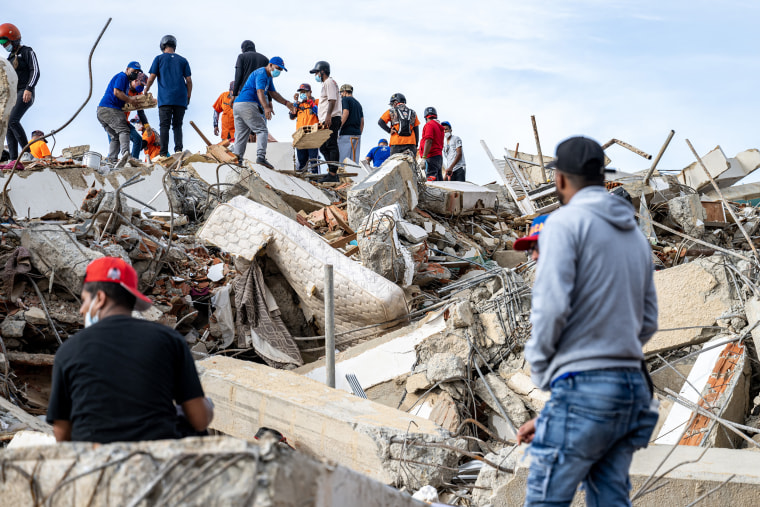
In recent months, South America experienced significant earthquakes that highlighted differences in governmental response and capability. Colombia’s recent 7.4-magnitude earthquake contrasted sharply with Venezuela’s response to back-to-back tremors in June.
Differences in Leadership and Response
In Venezuela, acting President Delcy Rodríguez delayed addressing the nation by nearly four hours. In contrast, Colombia’s President Abelardo de la Espriella, new in office, quickly established an emergency command post just an hour after the quake.
Venezuelans relied on international rescuers to manage shortcomings in local efforts. Colombia, with sufficient personnel, requested humanitarian supplies rather than foreign rescue teams.
“The differences between an authoritarian regime and a democratic system can be seen clearly in the institutions and in their capacity to respond to an emergency,” said Ronal Rodríguez, a Venezuela specialist at Colombia’s Rosario University.
Colombian Institutions and Political Transition
De la Espriella, without prior political experience, became president shortly before the earthquake. He faced challenges from predecessor Gustavo Petro, Colombia’s first leftist president, who initially alleged electoral fraud. Yet, the earthquake response showed the resilience of Colombia’s institutions, unaffected by political tension.
Colombia’s response engaged various institutions, aiding coordination with international agencies. President de la Espriella actively led efforts, visiting affected areas within 36 hours and maintaining effective communication.
Controversies and Challenges
Despite effective action, Colombia’s decision not to accept rescue teams globally attracted criticism. The Chinese ambassador expressed confusion over coordination efforts. Rugged terrain and communication disruptions also hindered efficient casualty reporting.
Local authorities reported higher casualties than the government’s official toll, with an independent database listing over 4,100 unaccounted people.
Venezuelan Response Under Scrutiny
Venezuela’s government faced challenges projecting authority. Delays and incomplete casualty reports added to public distrust, exacerbated by competing power claims among officials.
Rodríguez’s report failed to account for the destruction in the epicenter, highlighting inadequacies in the government’s response. Political repression further diminished trust in official information.
The Importance of Resources
Even if Venezuela’s response had been better orchestrated, infrastructural differences played a role. Geographical factors added complexity, as Venezuelan earthquakes struck heavily populated areas at night, while Colombia’s struck rural regions during the day.
Colombia’s prompt action included utilizing live media coverage, quick deployments, and effective resource allocation, contrasting with Venezuela’s struggles due to economic crises and mass migration.
Juan Mogollon, a Venezuelan in Florida, illustrated this by comparing responses. His relatives trapped in Cali had immediate assistance, highlighting the efficacy of Colombia’s preparedness compared to Venezuela’s previous struggles.
 Concerns Arise Over Rodrigues-Birkett in Race for UN Secretary-General
  Turkey’s Strategic Moves in a Changing Middle East
  Google Earth Images Reveal Destruction in Gaza
  Sudan Defies U.S. Ceasefire Amid Visa Dispute
  DHS Warns Migrant Caravan Heading to U.S.-Mexico Border
  Adam Brody and Hollywood’s Political Climate