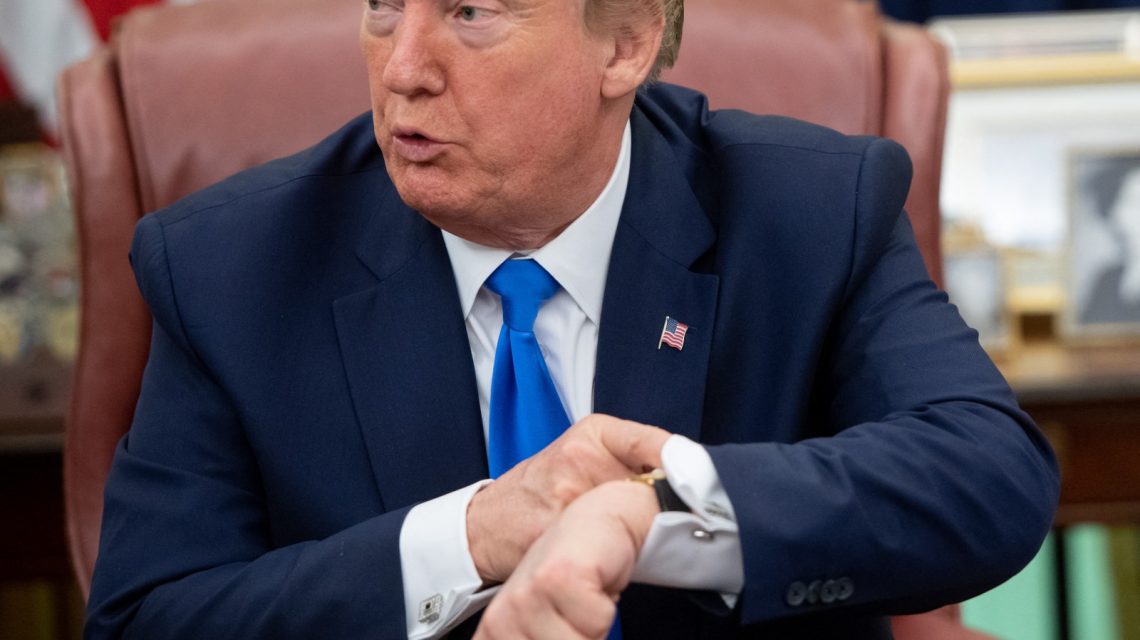
Americans face the imminent task of adjusting their clocks as Daylight Saving Time (DST) ends. However, President Donald Trump has advocated for making DST permanent, suggesting that the upcoming time change could be the last. On November 1, most Americans will set their clocks back one hour, returning to Standard Time. Trump’s recent push to legislate permanent DST revives a long-standing debate that has repeatedly stalled in Congress.
Efforts to End Time Changes
Previous congressional attempts to eliminate seasonal clock changes include the Sunshine Protection Act. This legislation passed the Senate in 2022 but did not receive a House vote. While there is bipartisan support for change, the likelihood of nationwide implementation remains uncertain.
Trump’s Position on Daylight Saving Time
President Trump has encouraged lawmakers to revisit DST legislation that proposes permanent adoption. If implemented, Americans would no longer change clocks each spring and fall. Proponents of permanent DST cite benefits such as extended evening daylight, aiding businesses and recreational activities. Critics caution against the potential drawbacks of darker winter mornings on health and safety.
In April, Trump urged lawmakers on Truth Social to “push hard for more Daylight at the end of a day,” calling clock changes a “VERY COSTLY EVENT” for the government. In May, he expressed determination to see the Sunshine Protection Act become law. His renewed interest has reintroduced the topic just before the scheduled clock change.
Upcoming Clock Change
No changes are expected before the November 1 time shift at 2 a.m. local time. Without new legislation signed into law, Americans will set clocks back by one hour on that date. Enacting permanent DST would require further planning and not take effect immediately.
The winter solstice, the shortest day of the year, illustrates the practical effects. Currently, the sun rises at 6:55 a.m. in Los Angeles, 7:15 a.m. in Chicago, and 7:17 a.m. in New York City under Standard Time. Without change, sunrise would occur later, impacting school children and commuters. Meanwhile, sunsets would extend by an hour.
Legislation Prospects
Despite White House attention, prediction market traders doubt rapid congressional action. On Kalshi, there is a 15% chance that permanent DST legislation will become law before January 1, 2027. Longer-term forecasts show less than a 50% likelihood by 2029. Although markets do not determine outcomes, they reflect participants’ views on event probabilities.
Public Opinion on DST
Public sentiment is more favorable towards ending the twice-yearly switch. A February YouGov survey shows 64% of Americans support eliminating clock changes, while 16% oppose it. When asked which system they preferred, 43% favored permanent DST, compared to 28% who preferred permanent Standard Time.
Support crosses party lines, with many Democrats, independents, and Republicans backing the idea. DST expert David Prerau warns that permanent DST could mean dark mornings for workers and children in many areas. During a prior attempt at permanent DST in 1974, it was repealed due to public dissatisfaction with dark mornings.
Ongoing Debate
While many Americans desire change, experts remain divided. Permanent DST advocates highlight extended evening light and economic advantages. Conversely, sleep researchers argue that permanent Standard Time aligns better with natural sleep cycles and offers more morning sunlight in winter.
 Majority of Americans Disapprove Renaming Lake Ontario
  Massachusetts Senate Primary: Markey vs. Moulton
  Massachusetts Governor Race and Election Updates
  Marine Corps Officer Sues Government Over Retirement Pay Dispute
  Chief Justice Roberts Quotes Churchill in Supreme Court Dissent on White House Ballroom
  New York Leaders Accuse Trump Administration of Withholding Funds