
Researchers have discovered marine life thriving on ancient whale graveyards in the southeastern Indian Ocean. These graveyards form when whale carcasses settle on the ocean floor, providing sustenance to surrounding creatures. This graveyard, uncovered at depths of up to 23,000 feet, covers the largest area and is the deepest and oldest found to date.
The size and bone chemistry of whales create unique underwater habitats, explained Xikun Song, a biologist at the Chinese Academy of Sciences’ Institute of Deep-sea Science and Engineering. Locating these graveyards poses challenges due to the ocean’s depth, Song noted.
In 2023, scientists used deep-sea submersibles to explore the site. They collected samples and mapped the necropolis, finding five whale carcasses and fossils. These included skulls from beaked and baleen whales, with some bones dating back 5.3 million years.
“The potential number of specimens is astounding,” stated paleontologist Stephen Godfrey of Calvert Marine Museum, who was not part of the research.
Numerous creatures, including sea cucumbers, squat lobsters, and saltwater clams, inhabit the carcasses. Many of these species may be undocumented, according to the journal Nature.
The study attributes the preservation of bones to factors such as their density, location, and mineral coating. These factors help bones withstand degradation over millions of years. Scientists speculate that some whales died naturally, while others might have succumbed from exhaustion or illness. The area’s V-shaped geography possibly directed carcasses to their final resting place.
These findings offer insights into life in harsh environments. They reveal how organisms adapt to extreme conditions, such as high pressures and lack of light, said paleontologist Giovanni Bianucci from the University of Pisa in Italy.
The Associated Press Health and Science Department reported this research with support from the Howard Hughes Medical Institute’s Department of Science Education and the Robert Wood Johnson Foundation.
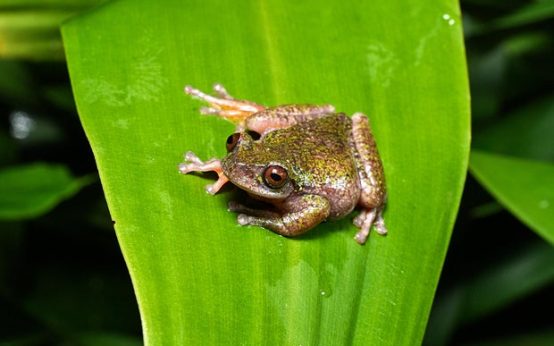 Discovery and Risks Facing Costa Rica’s New Frog Species
 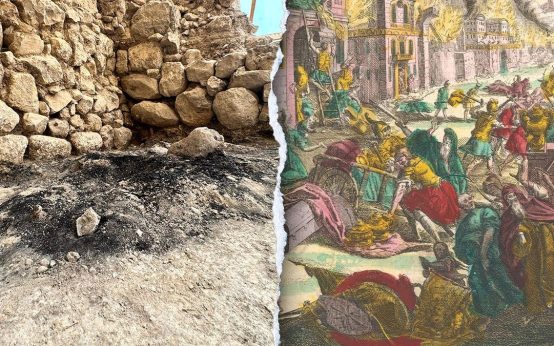 Archaeologists Discover Ancient Beams in Jerusalem Linked to Solomon’s Temple
  Scientists Capture Unprecedented Images of the Sun’s Surface
  Detailed Solar Surface Images Offer New Insights
  Unplanned Lunar Collision Highlights Space Debris Challenges
  High-Resolution Video Reveals Detailed Structures on the Sun’s Surface