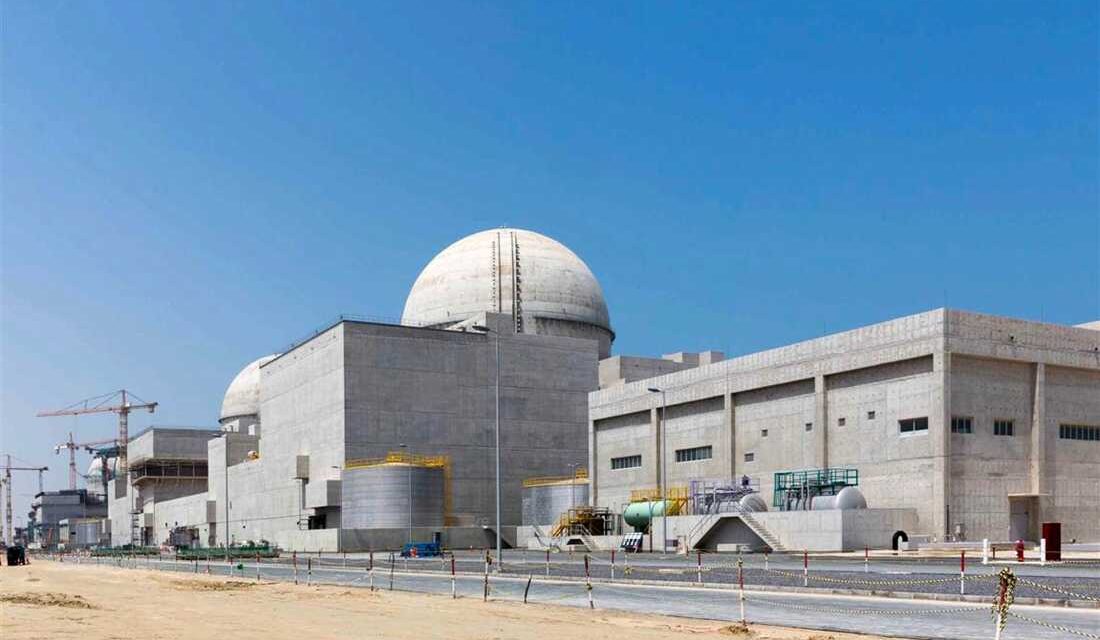

A drone strike ignited a fire near the UAE’s sole nuclear power station on Sunday. Authorities labeled it an ‘unprovoked terrorist attack.’ Though blame was not assigned, it spotlighted the threat of renewed conflict as the U.S. and Iran appeared ready for hostilities. No injuries or radioactive releases were reported.
The UAE, which hosts Israeli air defenses, recently accused Iran of drone and missile strikes. Tensions have escalated around the Strait of Hormuz, an essential energy passage controlled by Iran and under a U.S. naval blockade.
US President Donald Trump issued a warning to Iran on social media, requiring rapid action or else face consequences. Iranian military advisor Mohsen Rezaei stated that their forces remain vigilant while diplomatic talks continue. Efforts toward a stable ceasefire have faced challenges as fighting persists between Israel and Hezbollah in Lebanon despite claims of ceasefire.
Barakah Plant’s Role in UAE Energy
The UAE Defense Ministry stated that three drones crossed the western border from Saudi Arabia, with two intercepted. Investigations into the source are ongoing. Shiite militias in Iraq allied with Iran have previously conducted drone assaults in the region. Anwar Gargash, an advisor to the UAE president, deemed the attack a significant escalation on social media.
Saudi Arabia condemned the incident and revealed it intercepted three drones from Iraqi airspace. The $20 billion Barakah Nuclear Plant, operational since 2020 and constructed with South Korean collaboration, fulfills about 25% of the UAE’s energy needs. The nuclear regulator confirmed no impact on safety, with all units operating normally. The International Atomic Energy Agency reported the fire damaged an electrical generator, prompting one reactor to switch to backup power. It marked the first attack on Barakah during the conflict.
Nuclear Programs Compared
The UAE’s nuclear sector differs from those in Iran and Israel. With a ‘123 agreement’ signed with the U.S., the UAE commits to no domestic uranium enrichment or spent fuel reprocessing. All uranium is imported. Contrastingly, Iran’s nuclear activities have been contentious, nearing weapon-grade uranium enrichment and suspected historical military aspects, while often limiting U.N. inspector access. Israel, reputedly the only nuclear power in the area, has remained silent on possessing atomic weapons. During the conflict, Iran targeted near Israel’s Dimona nuclear site.
Recent conflicts have increasingly targeted nuclear facilities, as seen in Russia’s 2022 Ukraine invasion. During the Iran conflict, there were unconfirmed reports of attacks on Iran’s Bushehr plant, without any actual damage or radioactive leakage.
Unstable Ceasefire Context
Sources, including an Israeli military officer, indicate Israel and the U.S. discuss potential military actions. Anonymity was requested due to the sensitivity of military plans. Israeli Prime Minister Netanyahu expressed readiness for any situation concerning Iran, while Iranian state TV escalated rhetoric, with presenters showcased with firearms as a sign of readiness to defend the nation.
 News Highlights: Guilfoyle Scandal, Turek vs. Hinson, Trump Heads to Alaska
  U.S. Faces Challenges in Global AI Race Against China
  Houthi Rebels: Iran’s Key Ally in the Middle East
  White House Requests Resignation of U.S. Ambassador Kimberly Guilfoyle
  Ambassador Guilfoyle Asked to Resign Amid Allegations
  US Withholding Funds Endangers Chemical Weapons Oversight