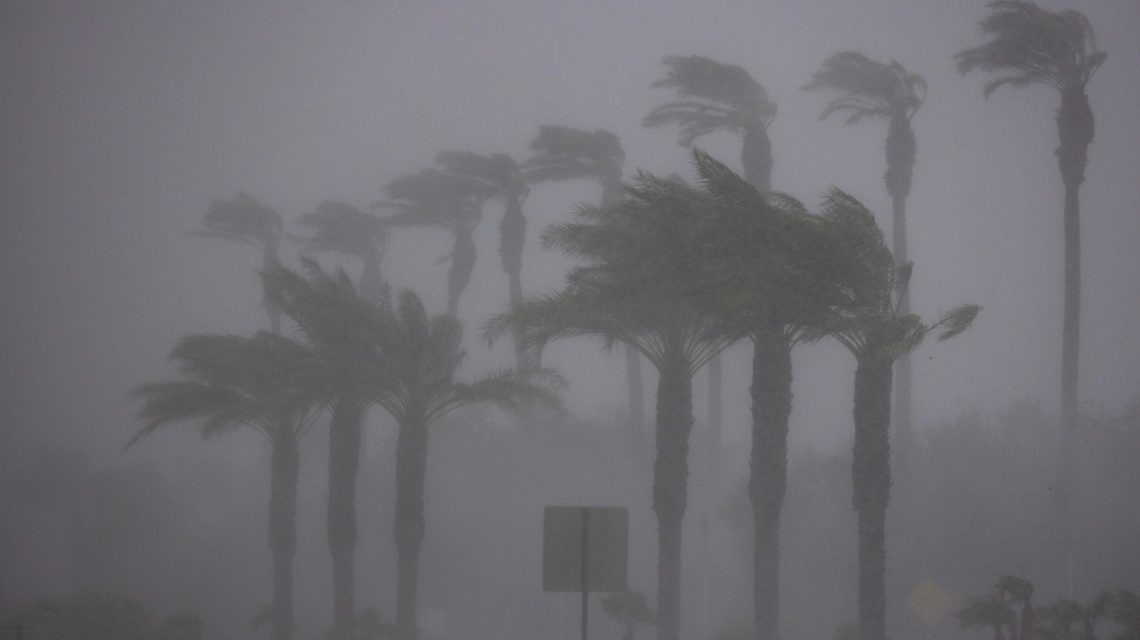
Experts predict that California and the Southeast might experience significant impacts from El Niño this winter. A meteorologist from the National Oceanic and Atmospheric Administration’s (NOAA) Weather Prediction Center (WPC) shared these insights with Newsweek.
El Niño is gaining strength across the Pacific Ocean and may bring severe weather to the U.S. over the next several months, extending into early 2027. Although its effects might spread nationwide, certain states could face particularly harsh storms this year. Strong El Niños can result in extreme weather, including flooding, violent storms, droughts, and record-breaking heat in different parts of the world.
The NOAA’s WPC indicates a greater than 90 percent chance that this year’s El Niño will be especially strong, affecting millions of Americans.
Understanding El Niño
El Niño represents the warm phase of the El Niño-Southern Oscillation (ENSO), a recurring climate pattern influenced by interactions between the Pacific Ocean and the atmosphere. Its opposite, La Niña, signifies the cool phase. This pattern is marked by unusually warm sea-surface temperatures in the Pacific, leading to stormier conditions in the Southern U.S. and drier conditions in some northern areas. It can also influence hurricane activity.
Tony Fracasso, a meteorologist with the WPC, explained to Newsweek that the sea surface temperatures in the eastern Pacific, particularly off the coasts of South and Central America, are currently above normal and are expected to remain so throughout winter.
Historically strong El Niño events have been linked to significant weather extremes. For example, the 1997-98 Super El Niño caused widespread flooding in California and Peru, while the 2015-16 event corresponded with global temperature records and broad climate disruptions.
States Most Affected
Fracasso identified California and the Southeast as regions likely to experience more intense storms caused by El Niño. He noted that the phenomenon could alter the storm track and increase warm air over the U.S., keeping colder air at bay. While past El Niños haven’t always brought substantial rain or snow to California, the state has generally encountered more precipitation during such events over the past 75 years.
In the South, wetter conditions are common. Gulf states and potentially the Carolinas could see increased rainfall this year. Although El Niño often brings warmer temperatures, cold air and snow remain possibilities, particularly north around the Great Lakes, which might see drier conditions.
NOAA’s August 13 discussion anticipated that El Niño would continue to strengthen through year-end, predicting a 69 percent chance of a historic event more intense than former El Niños dating back to 1950.
Other Western states, including Nevada, Utah, Colorado, New Mexico, and Arizona, could also face heightened snowfall in winter, as noted by Newsweek.
Predictions of ‘Unprecedented’ Events
Jeff Berardelli, a meteorologist with WFLA-TV in Tampa, mentioned in a recent post that El Niño could intensify soon. He remarked that such an episode would be unprecedented in human observation.
According to Berardelli, a major push of west winds in the Tropical Pacific will likely increase warming, with peak temperatures rising about 4.0° Celsius above normal.
For the southern U.S. and Florida, this means a strong subtropical jet stream will develop by late fall, resulting in frequent fronts, severe weather, and weekly rainfall. California is also expected to benefit from increased rainfall in the winter.
The NOAA describes a subtropical jet stream as a fast-flowing band of westerly winds high in the atmosphere, usually near 30 degrees latitude in both hemispheres.
The ‘Super El Niño’
This year’s El Niño has been characterized as a ‘Super El Niño,’ a term reserved for particularly powerful events. Previously used in 2015 and 2016, it was associated with unusually high Pacific Ocean temperatures.
Fracasso noted that many aspects of this year’s strong El Niño remain unknown. He explained that unpredictable oceanic and atmospheric interactions make modeling challenging, leaving some elements of the phenomenon not fully understood.
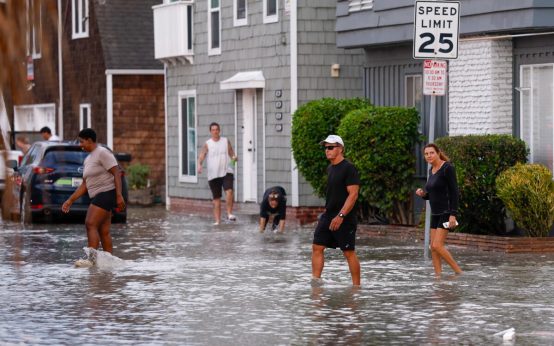 Forecast of Extreme Weather Follows Coastal Flooding in Southern California
 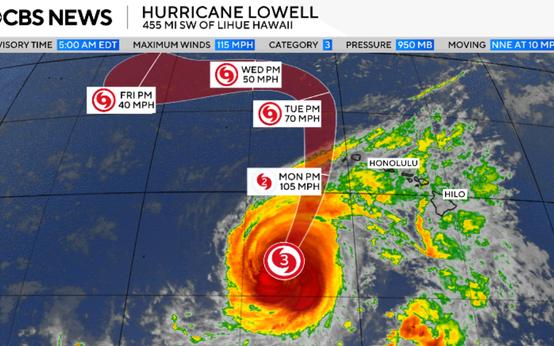 Hurricane Lowell Approaches Hawaii with Intense Winds and Rainfall
  Arizona’s Heat Crisis and the Risks for Mobile Home Residents
  Nation Faces Unprecedented Wildfire Destruction in Recent Years
  Trump Orders Review of Gray Wolf Protections Amid Rancher Concerns
  Beachgoers to Benefit from Malibu Land Donation in Coastal Commission Dispute