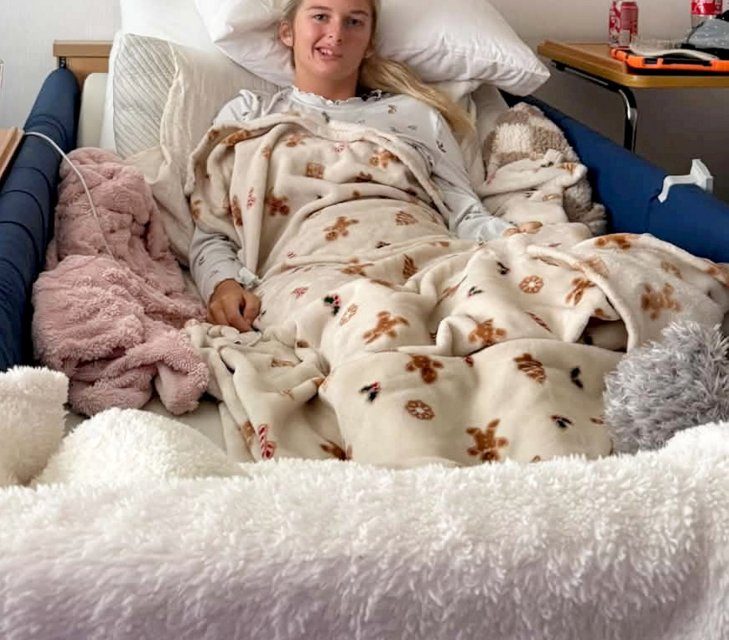
A seemingly healthy young woman named Lillie Thorne, aged 22, has found herself unable to walk after waking to discover half of her face paralyzed. Initially, she was diagnosed with Bell’s palsy, but her condition quickly deteriorated. Days later, she also lost her ability to speak and walk.
Lillie, from Barrow-in-Furness, Cumbria, now lives with her grandparents following her diagnosis of Functional Neurological Disorder (FND). Her family is raising money for private treatment due to a lack of NHS funding.
Initial Diagnosis and Treatment
Lillie first sought medical attention at Furness General Hospital, where she received a diagnosis of Bell’s palsy. Bell’s palsy often results in temporary facial paralysis. She was given steroids and advice that recovery could take six months.
However, her condition worsened. Within days, she experienced slurred speech and seizures. Subsequent tests ruled out a stroke, and doctors administered antiviral medication thinking she might have Ramsey Hunt disease. Yet her health continued to decline, and she ultimately lost the ability to walk and speak by early October.
Living with FND
Extensive medical evaluations led to a diagnosis of FND, a condition where the brain’s ability to send and receive signals is disrupted. This disorder affects tens of thousands in the UK, according to FND Action. Lillie’s aunt, Ashleigh, underscores the randomness and mystery of the condition.
Lillie was released from the hospital on October 22. While she has made some progress in regaining speech, she still experiences seizures and cannot walk independently. Physio sessions have been arranged in hopes of restoring her mobility.
Efforts for Specialized Care
In order to afford private consultation and specialized rehabilitation services in Leeds, the family launched a crowdfunding campaign. Lillie does not qualify for specialized NHS services available in Liverpool, hence the need for private healthcare.
Lillie and her family are hopeful that additional treatments will help her regain full mobility and speech, enabling her to live more independently.
FND treatment typically involves a team of specialists focused on helping patients regain control over bodily movements. Unfortunately, local Integrated Care Boards (ICB) do not fund any specialist centers, presenting a financial challenge for Lillie’s family.
 Navigating Pet Insurance After a Pet’s Illness
 Understanding ADHD in Adults: A Closer Look
 Recall of ValuHealth Extra Strength Pain Relief Acetaminophen Due to Labeling Error
 Rare Condition Claims Life of NYC Marathon Runner
 Growing Threat of Fungal Infections in a Warming World
 Representative DeLauro’s ‘Medicare for America Act’: Details and Prospects