In the winter of 2015, Dr. Tom Chiller was alerted to a new challenge by public-health officials in Britain. A mysterious fungus was causing severe infections at a major London hospital, defying efforts to eradicate it. This yeast, known as Candida auris, was spreading from patient to patient, prompting drastic measures like partial hospital shutdowns.
Initially, Chiller was baffled. Candida species are known for causing common fungal conditions, such as thrush and vaginal yeast infections, and sometimes severe infections. But no Candida species, nor any fungus, had been known to transmit so readily among humans.
“You have a yeast acting like bacteria? It was weird,” Chiller recalls.
Candida auris was first identified in 2009 in a Japanese patient’s ear. Unlike other fungi, it can survive in warmer temperatures and salty environments, making areas like the ear, armpit, and groin prime sites for growth. Its resilience to antifungal drugs and disinfectants, and easy spread via physical contact, make it particularly troublesome.
By 2015, Candida auris was beginning to garner attention, yet much about it remained unknown. While infections were reported in several countries, it hadn’t seemed a major threat, and no cases were in the U.S.
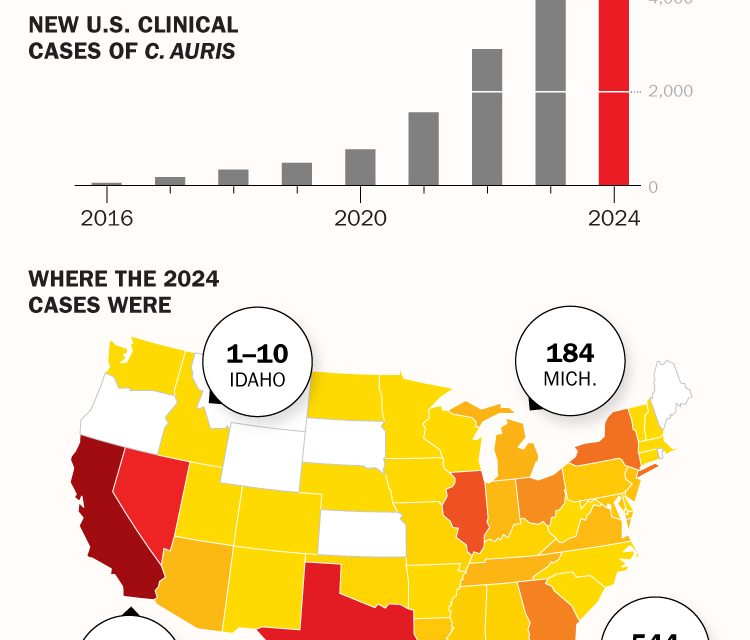
Today, Candida auris is acknowledged as a high-priority threat by the World Health Organization (WHO). The fungus has infected thousands globally and now proliferates in the U.S., where the Centers for Disease Control and Prevention (CDC) lists it among top-priority drug-resistant pathogens.
As Chiller notes, “In some U.S. states, it’s endemic now.” He addresses a concerning trend: fungi are increasingly exploiting opportunities to infect humans, facilitated by human activities. Factors like warming climates and medical practices contribute to their proliferation.
Candida auris, evolving in salty marine ecosystems, tolerates high temperatures up to 107°F. This adaptability suggests climate change as a driving force behind the emergence and evolution of dangerous fungi. Changing weather patterns and excessive antifungal use in agriculture and medicine aid their resistance.
Fungi are universal, with an estimated 6 million species existing worldwide, yet only around 300 cause diseases in humans. Typically, human bodies ward off fungi with heat and immunity, but warming climates force fungi to adapt.
Fungal diseases are increasingly affecting animals and plants, and now humans. A new fungal disease is afflicting South American cats and humans, while certain molds previously limited to plants now infect people. Andrej Spec, a fungal-disease specialist, emphasizes the growing human vulnerability due to medical progress, noting the increased risk among immunocompromised individuals.
Developing medical interventions for autoimmune diseases and conditions like cancer result in weakened immune systems, increasing susceptibility to fungal infections. Additionally, invasive medical devices provide entry points for fungi.
Even seemingly well individuals fall victim to fungal diseases. Ryan Zwick, a healthy young nurse, battled Candida auris after contracting COVID-19, highlighting the invasive nature of these fungal infections.
Candida auris, first a rare affliction of sick and elderly individuals, is now extending its reach, affecting varied populations and causing diverse illnesses. Doctor’s report increasing cases among younger, generally healthy individuals.
The spread of Candida auris parallels other pathogens like MRSA. Chiller initially sought to understand its presence stateside but the CDC found no historical cases.
Collaboration with global health officials revealed that Candida auris emerged from separate strains across different continents simultaneously, suggesting climate change’s role in its rise.
Research by Dr. Arturo Casadevall shows fungi adapt rapidly to warming temperatures, shifting to warmer environments for survival. Fungi, which cause diseases in plants, insects, and cold-blooded animals, may increasingly threaten mammals due to these adaptations.
Valley fever and Histoplasma infections are rising in regions previously unaffected, while new drug-resistant ringworm species emerge. In Brazil, Sporothrix brasiliensis has spread through cat infections, potentially affecting humans globally.
With Candida auris as a “shot across the bow of humanity,” experts like Chiller advocate heightened awareness. Understanding threats, ensuring proper diagnosis, and developing effective treatments are crucial.
False negatives in diagnoses pose challenges, as seen with Arizona’s Valley fever. Continued research aims to provide improved diagnostic tools.
The race against fungi demands proactive measures. As a mycology pioneer attests, the scope of fungal illnesses requires broader recognition and action to mitigate impacts. Early diagnosis aids survival, and ongoing efforts seek to combat these emergent threats.
 Representative DeLauro’s ‘Medicare for America Act’: Details and Prospects
 Understanding Life Insurance: Costs and Options
 Lifestyle Intervention Reverses Type 2 Diabetes in Study
 Immature Neurons in the Brain May Hold Key to Alzheimer’s Resilience
 Caffeine Consumption on an Empty Stomach: Effects and Opinions
 Understanding the Debate on Hydroxyapatite Toothpaste