
Last June 16, armed immigration officers forcibly entered an auto body shop in Oxnard. Juan Carlos Ramirez, a U.S. citizen, recorded as they arrested his father. According to a claim he later filed, agents pepper-sprayed Ramirez, slammed him onto two vehicle hoods, punched his face, and kneed his side. Local attorney Vanessa Valdez condemned Ramirez’s arrest at an Oxnard City Council meeting. She then faced a similar situation in July during a raid at Glass House Farms.
Despite identifying herself as a legal observer, Valdez said agents or possibly National Guard members used tear gas and fired rubber bullets at her. She filed a claim after crawling to safety, alleging severe pain and injuries. Ramirez and Valdez are part of many seeking compensation for damages during President Trump’s immigration policies. Valdez seeks costs for medical visits, lost wages, anxiety medication, and therapy.
Public records and legal documents reviewed by The Times show claimants across the country are seeking at least $260 million. Homeland Security spokesperson Lauren Bis stated ICE officers adhere to high professional standards and react to protect themselves and the public. Bis claimed law enforcers faced attacks during the Glass House Farms incident and acted in self-defense with Ramirez.
Legal experts note that attempting redress through the Federal Tort Claims Act is one of the few available avenues. It allows individuals to claim financial compensation for wrongs like physical injuries or property damage by federal employees. Jonathan Feinberg, an attorney specializing in cases of abuse, anticipates substantial payouts.
Individuals must request a review by the responsible agency before suing in federal court. The Times found claims from nearly 80 people filed since 2025 beginning stages of the review. Recent advocacy efforts prepare practice advisories for attorneys filing tort claims. Experts expect lawsuits will increase as more claims advance.
Cases reflect broader legal challenges. Despite laws allowing suits against state officials for rights violations, actions against federal agents are limited. Democrats in California are working on legislation to address financial damages for violations. Similar laws exist in states like Maryland and Connecticut.
Tort claims represent an alternative, though outcomes are uncertain. Agencies often cite exceptions like “discretionary function exception” to shield from liability. Actions stemming from policy decisions complicate claims. Attorney Benjamin Zipursky identifies challenges in distinguishing between policy judgments and excessive force.
In Minnesota, attorney John Burris is handling tort claims stemming from immigration enforcement. Burris relates current events to the period before the Rodney King beating. Public attitudes towards police actions have shifted as more individuals question enforcement perspectives.
Public disapproval rose when federal agents in Minneapolis shot two U.S. citizens, Renee Good and Alex Pretti. Other incidents reveal extreme outcomes, with lawyers pursuing tort claims on behalf of affected families. New claims emerge regularly, and individuals like Marimar Martinez in Chicago and Mahmoud Khalil reflect ongoing issues with enforcement actions.
Willy Wender Aceituno experienced a similar ordeal when ICE agents arrested him in Charlotte, N.C. Injured during the encounter, Aceituno is now pursuing a tort claim amidst fears of targeted actions.
Lawyers report some clients refrain from seeking claims due to deportation fears. Others rely on crowdfunding for financial support, as legal processes are uncertain. Jose Pineda, a client of Lawyers for Civil Rights, recounts his detaining after ICE officers in Boston questioned his status without valid cause. The incident caused significant personal and financial stress.
Pineda’s experience illustrates the ongoing impact of enforcement actions. His claim details the harm he suffered, highlighting the challenges individuals face with federal policies.
 City Takes Legal Action Against Troubled D.C. Property
  Chris Hansen Joins Sting Operation in Louisiana
 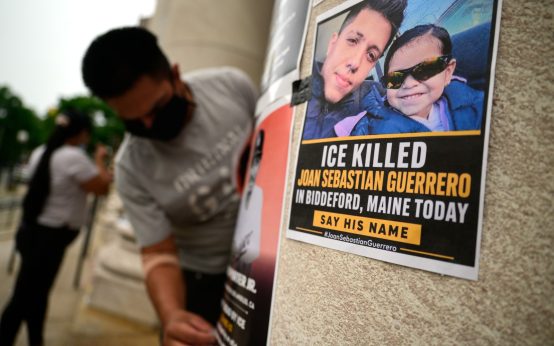 House Committee Examines Fatal ICE Shootings
  Home Distilling Faces Legal Challenges
  Alex Murdaugh’s Lawyers Demand Key Evidence Release
  Juror’s Stand in Lindsay Clancy Trial Leads to Mistrial