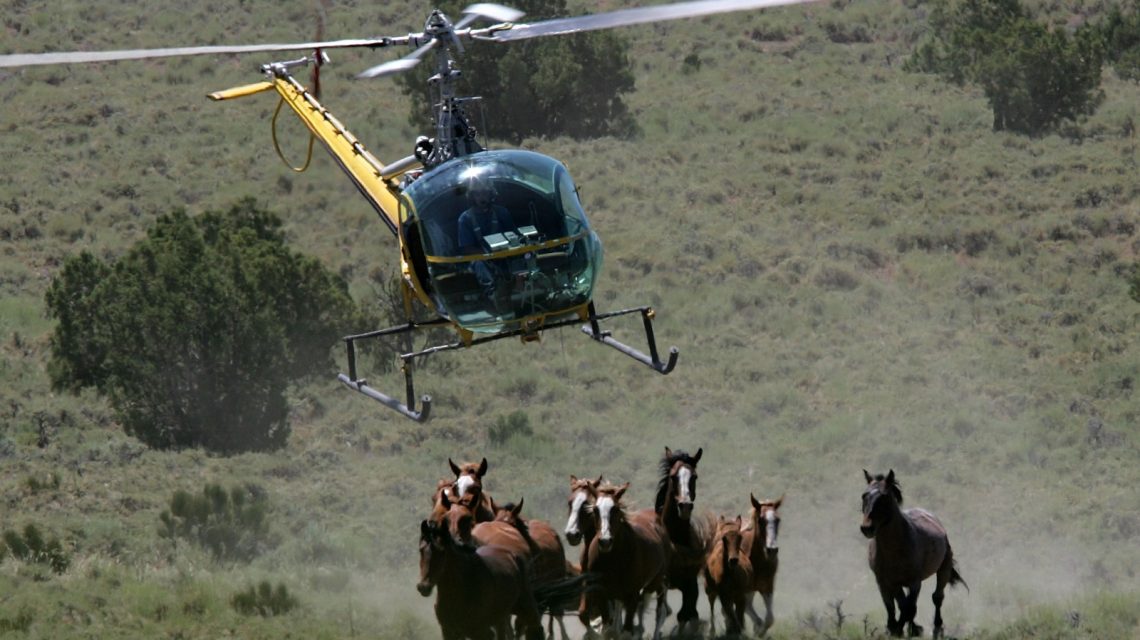
Federal sales of protected wild horses have sharply increased under the Trump administration. This has raised concerns among animal welfare groups. They worry that these horses might enter slaughter channels after being sold through a government program.
Program Scrutiny
A New York Times investigation examined the Bureau of Land Management’s (BLM) Sale Authority program. Under this program, horses not adopted during three one-week adoption listings can be designated as unadoptable and offered for sale. Sold horses lose statutory protections retained by adopted horses. Although initial buyers must agree not to slaughter or sell them to someone intending to do so, critics suggest that restriction can be circumvented when a horse is resold to an intermediary not bound by the agreement.
The report found that horse sales surged after Trump took office. BLM sold about 3,700 horses in 2025, more than double the previous year’s total, according to bureau records cited by the Times.
Wild Horse Population
Currently, about 73,000 wild horses roam federal public lands in the West. Another 58,000 are housed in BLM holding facilities, costing roughly $100 million annually. The government estimates saving about $56 million by avoiding years of care for horses sold in 2025. The Department of the Interior states that removing excess animals through adoption or sale programs is part of its responsibility to maintain healthy herds and reduce taxpayer costs.
The Department of the Interior asserted to Newsweek that BLM does not sell or send wild horses or burros to slaughter. Allegations of legal violations or sales agreement breaches are reviewed and referred to law enforcement as needed.
The mission of protecting wild horses and burros has been a federal duty under the Wild Free-Roaming Horses and Burros Act of 1971. In 2004, Congress directed BLM to sell excess animals while safeguarding against commercial processing.
Sales Increase
Patricia Miller, executive director of American Wild Horse Conservation, noted a correlation between increased Sale Authority use and plans for additional roundups. Her organization tracked this program after seeing efforts to move horses out of long-term holding facilities.
Miller highlighted the use of the Freedom of Information Act to reveal the program’s extensive usage. She expressed concern over sizeable group sales to buyers not vetted.
The Sale Authority program faced renewed criticism after a federal court ruling in 2025 led BLM to pause the Adoption Incentive Program. Animal rights groups alleged animals from this program entered slaughter channels. A federal judge noted such outcomes were traceable to agency actions, prompting a pause for review.
Vetting Concerns
A critical issue for critics revolves around horse buyers. Miller cited Brandon Jones, an Ohio livestock trader, as a central figure in a Times investigation. Jones reportedly received hundreds of horses through the program. He denied selling horses to slaughter, claiming they were sold to good owners.
The Department of the Interior emphasized that most adopters or purchasers care well for their animals. Volunteers, sanctuaries, and rescue groups reported seeing horses sold through the Sale Authority program in “kill pens.” These are locations where horses are gathered before being sold to slaughter buyers.
BLM insists buyers must agree not to sell horses to slaughter. However, critics contend this restriction is tough to enforce once a horse changes hands to an intermediary.
Fertility Control Debate
The controversy has revived a debate on managing wild horse populations. Animal welfare groups argue that the government prioritizes roundups and sales over fertility control.
Miller criticized the government for failing to implement fertility control measures, resulting in repetitive roundups. BLM acknowledges fertility control’s importance but notes its limitations, such as the need for boosters and its effectiveness in smaller herds. Studies indicate that 75% of mares must be treated to significantly impact population growth.
BLM also cites the difficulty of accessing larger herds in remote areas for treatment.
Management Challenges
The issue underscores the broader challenges faced by federal land managers. The U.S. Forest Service and BLM manage wild horse territories across millions of acres. Rapidly growing horse populations exert pressure on resources and habitats, especially when populations exceed management targets.
The Forest Service uses gathers and fertility-control vaccines to manage herds. U.S. Geological Survey researchers study population dynamics and ecological impacts.
Animal advocates argue that rising horse sales reflect a broader failure to address population growth’s root causes. Miller noted that Sale Authority was initially for older or difficult-to-place horses. However, younger animals are increasingly being pushed through the program.
As sales rise, the debate centers on the fate of sold horses and whether the government is adequately controlling future population growth.
 Nor’easter Threatens U.S. Coastal Areas Amidst Quiet Hurricane Season
  Southern California Faces Santa Ana Winds and Elevated Wildfire Risks
  Santa Ana Winds and Wildfire Risks in Southern California
  Historic Preservation Advocates Battle Changes Threatening Landmark Protections
  Alaska’s Soil and Agricultural Challenges
  Southern California Faces Santa Ana Winds and Fire Risks