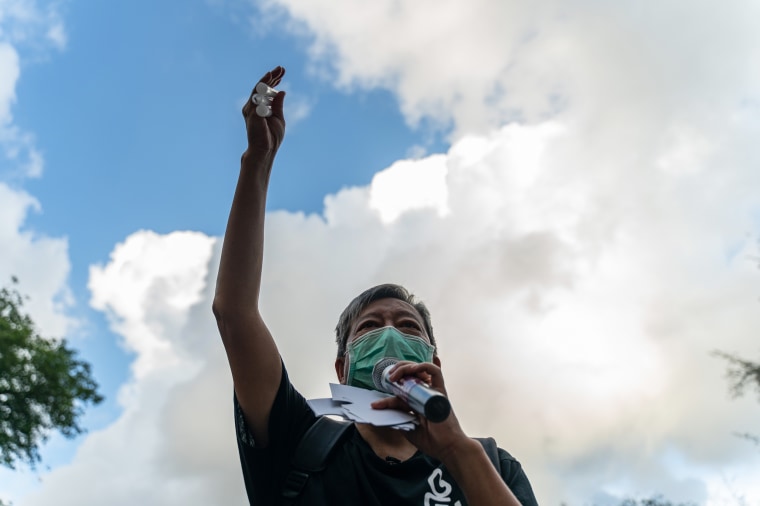
In Hong Kong, two former organizers of a long-standing vigil commemorating the 1989 Tiananmen Square crackdown were convicted in a national security case. Lee Cheuk-yan and Chow Hang-tung, former leaders of the Hong Kong Alliance in Support of Patriotic Democratic Movements of China, faced charges in 2021. They were accused of inciting subversion under the national security law, carrying a maximum sentence of 10 years. Both pleaded not guilty, and the alliance was found guilty as well.
For over three decades, the alliance held an annual candlelight vigil, the only large-scale public commemoration of Tiananmen Square on Chinese territory. The event, attracting tens of thousands each year, was banned in 2020 due to the Covid-19 pandemic shortly before the security law was enacted.
Observers argue that the trial highlights a decline in freedom of expression in Hong Kong, a former British colony that returned to Chinese control in 1997. Both Lee, aged 69, and Chow, 41, have been imprisoned since their charges.
A full judgment will be available online later, as the judges have yet to provide reasons for the conviction. Eric Lai from the Georgetown Center for Asian Law noted that inciting subversion is commonly used in mainland China to criminalize human rights activists, similar to what occurred with Nobel Peace laureate Liu Xiaobo.
Authorities bolstered security at the court ahead of the verdict. The prosecution claimed that the case focused on the alliance’s call to incite others to overthrow China’s Communist Party leadership, citing their demand to ‘end one-party rule.’
Lee stated their objective was to promote democracy, allowing citizens to decide their leaders without a dictatorship. Chow defended herself, arguing that ‘ending one-party rule’ meant ending unrestricted power. She criticized the standards for justice in this case.
During the trial, which advanced faster than anticipated, Albert Ho, another defendant, pled guilty, potentially leading to a reduced sentence. Lee and Chow, expected to seek leniency in a future hearing, may be sentenced alongside Ho.
Despite drizzling rain, citizens queued outside the court early to secure a place inside. Tang Ngok-kwan, a former alliance member, was prevented from joining the line due to carrying ‘sensitive’ materials linked to the June 4 anniversary.
The 1989 crackdown, which saw military actions in Beijing, was pivotal in China’s history. It solidified the decision that economic reform would not be matched by political openness. The event led to the deaths of hundreds, possibly thousands.
After Covid-19 restrictions eased, pro-Beijing groups replaced the vigil site with a carnival around the Tiananmen anniversary. Beijing claims the 2020 security law was essential for Hong Kong’s stability, resulting in the arrest of several leading activists, including media tycoon Jimmy Lai. Under new political conditions, many civil society groups, including the alliance, have dissolved.
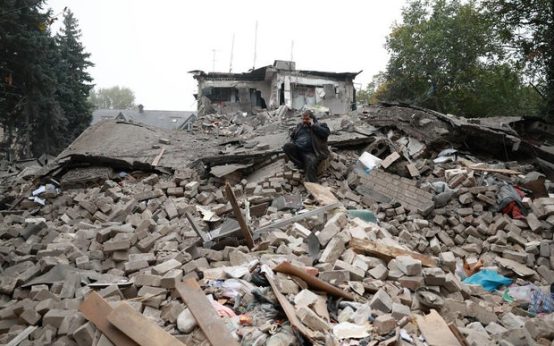 Russian Strikes and Diesel Deal Spark Controversy
 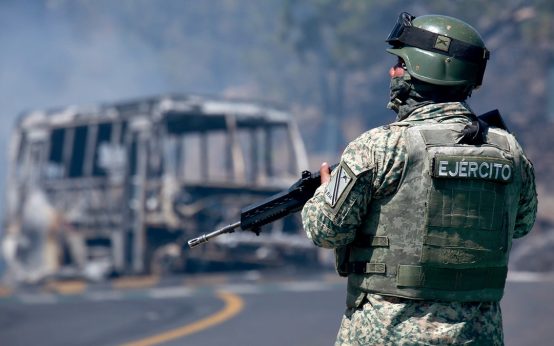 Cartels Facing New Challenges in the Americas
  Increasing Number of Americans Seek Luxembourg Citizenship Amid Political Tensions
 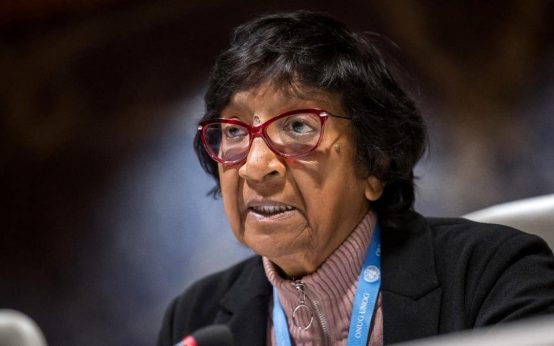 Jack Keane Defends Israel Amid UN Criticism, Pillay’s Nobel Victory
  Empire State Building Honors Fox News’ 30th Anniversary
  Investigating the Far-Left Influence Behind France’s Student Protests