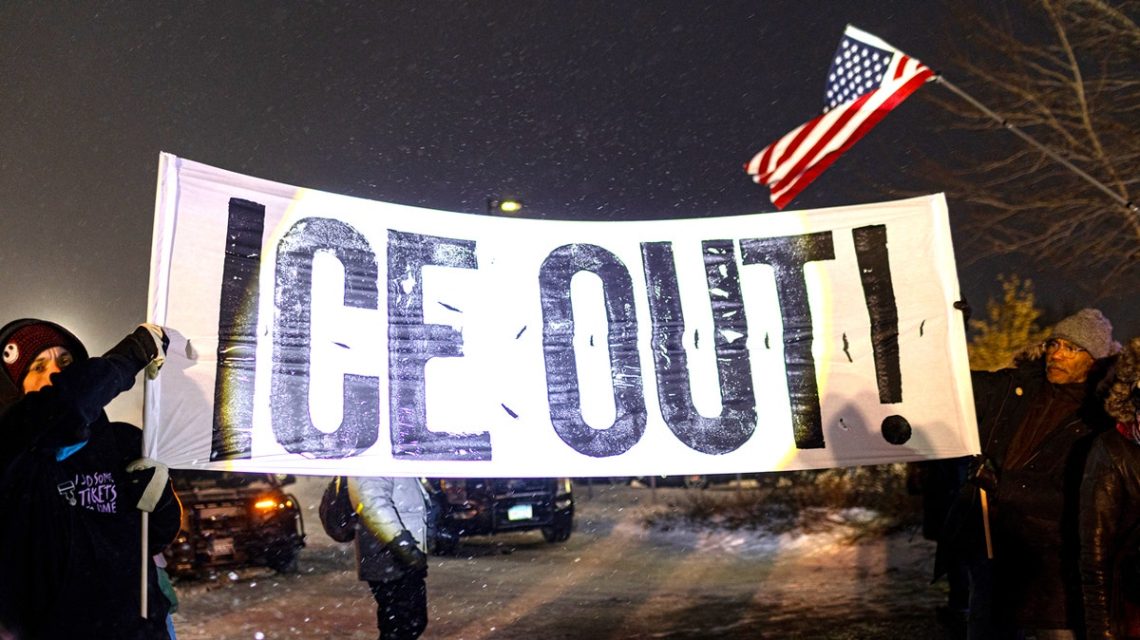
The Department of Homeland Security (DHS) and Minnesota officials are at odds over whether a federal or state court should prosecute an ICE agent accused of assault. This stems from allegations that Gregory Morgan Jr., an Immigration and Customs Enforcement (ICE) agent, pointed a gun at motorists during a traffic incident after federal immigration operations in the Twin Cities.
Federal Protections and State Charges
Morgan faces two charges of second-degree assault. His legal defense, supported by federal agencies, states that the Supremacy Clause of the U.S. Constitution shields him from state prosecution. This clause implies that federal law overrides conflicting state laws. Courts occasionally protect federal officers from state prosecution when acting within their official duties. However, Minnesota prosecutors argue that these protections are not applicable in this case. They claim Morgan’s actions did not constitute a legitimate law-enforcement duty.
Legal Battle over Jurisdiction
The debate between Hennepin County prosecutors and federal authorities has turned into a broader examination of legal protections for federal officers. Minnesota prosecutors want the case tried in state court, whereas Morgan, backed by the federal government, seeks a federal court hearing. The Department of Justice filed to have Senior Trial Attorney Paul Quast represent the United States in the matter.
A DHS spokesperson remarked that Minnesota’s actions amount to a political stunt, asserting that states lack the authority to prosecute federal officers performing official duties.
This statement came as Hennepin County Attorney Mary Moriarty’s office requested a federal judge to dismiss Morgan’s attempt to transfer the case to a federal jurisdiction. State prosecutors maintain that Morgan’s alleged actions during a highway confrontation were unrelated to his federal duties.
The Incident Details
The prosecutors’ filing, backed by the Institute for Constitutional Advocacy and the Washington Litigation Group, argues no connection exists between the alleged assault and Morgan’s responsibilities as an ICE agent. They state Morgan’s immigration enforcement powers did not cover confronting motorists on a Minnesota highway.
Reports indicate that Morgan and his partner drove on the highway shoulder, a move allegedly made to avoid rush-hour delays. When a Cadillac blocked their path, Morgan purportedly pulled beside it, drew a handgun, and pointed it at its occupants. A 911 caller reported having a gun, believed to be a Glock, aimed at his face, and witnesses later confirmed feeling threatened.
Morgan, represented by attorney Ryan Pacyga, filed for case removal last week. He claims his actions were during federal duties, also stating he and his partner feared “imminent bodily harm.” Court documents show Morgan was returning to the Whipple Federal Building at Fort Snelling following the Operation Metro Surge when the incident on Highway 62 unfolded.
Another Incident Under Scrutiny
Morgan’s case is part of a broader legal conflict linked to Operation Metro Surge. Hennepin County later charged another ICE agent, Christian Castro, with multiple assault counts regarding a separate incident that caused protests in north Minneapolis.
Elaine Mallon, writing for Fox News Digital and Fox Business, covered this situation focusing on national politics. Requests for comment were made to the Justice Department, Moriarty’s office, and Pacyga.
 Far-Left Groups Allegedly Organize Protests in Austin
  Michigan Senate Nominee Abdul El-Sayed Criticized for Remarks on Reproductive Rights
  Poll Reveals Voter Preferences Between Socialist Democrats and MAGA Republicans
  Challenges of Electing a Female President: Insights from ‘The View’
  Upcoming Concerns and Influence in Health Politics
  Rep. Donalds Distances Himself from Trump as Florida Governor Race Tightens