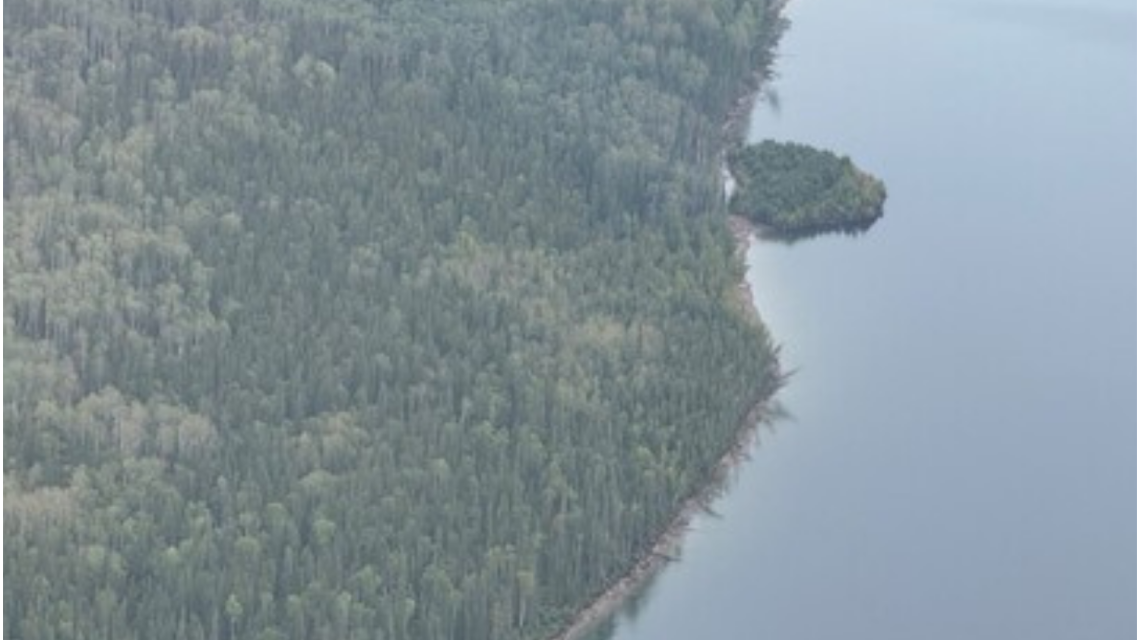
A floating island that puzzled observers after seeming to disappear from one of Canada’s largest reservoirs has been found. BC Hydro announced that the floating island on British Columbia’s Williston Reservoir drifted roughly 30 kilometers (about 19 miles) over 15 days. It was located along the shoreline of the reservoir’s Ospika Arm after surfacing near Finlay Bay and then vanishing.
BC Hydro spokesperson Bob Gammer revealed there had been no eyewitness sightings for weeks. The island wasn’t missing; it had drifted across the reservoir. Satellite imagery, observations from small aircraft, and reports from boaters confirmed its location.
Timeline of Events
The mystery began on July 21 when satellite imagery showed a tree-covered floating island west of Finlay Bay. By August 13, BC Hydro had received reports and images from boaters, but the island was no longer in its original spot. On August 15, satellite imagery showed the island on the Ospika Arm. The location was confirmed on August 31, and the discovery announced on September 2.
Understanding Floating Islands
A floating island is a mass of vegetation, soil, and organic material that floats on water. While small floating islands are common, large ones supporting mature trees are rare. One theory suggests that logs and debris accumulated over years in a sheltered part of the reservoir, forming a stable floating mass as vegetation took root.
This phenomenon interests researchers who aim to understand how large floating islands form and move. Gammer stated the importance of verifying unusual reports before drawing conclusions in today’s age of AI.
Island’s Journey and Size
The island traveled about 30 kilometers (19 miles) from its original location based on satellite imagery and observations. The discovery was confirmed weeks after capturing imagery on August 15, as real-time imagery is unavailable. The island doesn’t affect the operations of the W.A.C. Bennett Dam.
BC Hydro estimates the island is about 459 feet long and 230 feet wide, covering around 9,800 square meters––similar to two NFL football fields. It supports mature trees and established vegetation, appearing like a conventional island despite floating freely.
Visitor Guidelines
BC Hydro welcomes people to photograph the island from boats or drones but advises against landing on it due to its unstable composition of logs and decaying debris.
Gammer noted that finding the island answered one question while raising others. BC Hydro will continue monitoring as researchers study this natural phenomenon.
 Python Hunter Helps Capture Record-Breaking Snake in Puerto Rico
  Environmental Concerns Halt Tree Removal at East Potomac Golf Links
  West Virginia’s Nuclear Proposal Faces Local Opposition
  Texas Data Centers Face Criticism Over Water Use Reporting
  First Offshore Mining Lease Sale by U.S. Government
  Unseasonal Warmth Delays Fall Foliage and Brings Impacts