Top finance officials from the world’s wealthiest economies gathered in Paris on Monday with the aim of addressing the economic repercussions from the conflict in Iran. This war has resulted in surging global energy prices and slowed down economic growth.
The timing of the meetings is crucial for both the global economy and the United States. Despite a year of imposing tariffs on Western allies and threatening further actions, the Trump administration now seeks support from the Group of 7 nations to stabilize an economic crisis of its own creation.
During the two-day summit, finance ministers plan to discuss several key issues including sanctions policy, illicit financial activities, and potential future aid for Ukraine.
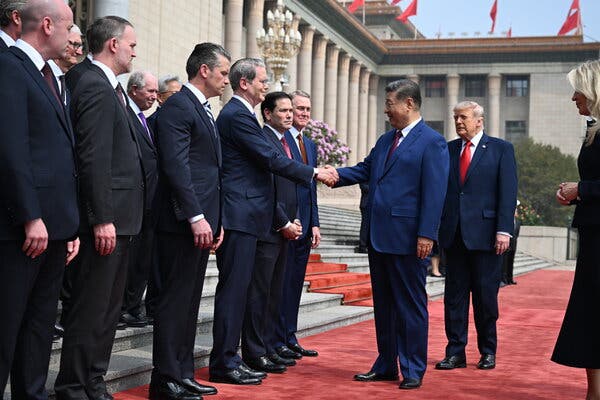
Prior to the summit, President Trump met Xi Jinping, China’s leader, in Beijing to explore avenues for strengthening ties between the largest global economies. Although President Trump usually favors bilateral negotiations, the issues surrounding Iran and China’s control over critical minerals compel the U.S. to rely on traditional allies. This task is complicated by Trump’s criticism and threats toward America’s closest allies such as Europe and Canada.
“I think there’s one lesson to be taken from the last six months, is that the law of the fittest doesn’t work,” stated Roland Lescure, France’s finance minister, in an interview with The New York Times before the summit.
Lescure emphasized that reopening the Strait of Hormuz, obstructed by Iran since the war’s inception, requires international cooperation. He also highlighted that China’s mineral export restrictions demand a global response.
 Karoline Leavitt on Trump’s Tense Calls with Putin and Xi
 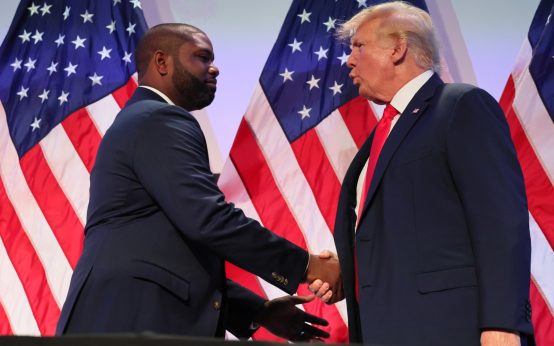 Florida Governor Race: Byron Donalds Adjusts Campaign Approach
 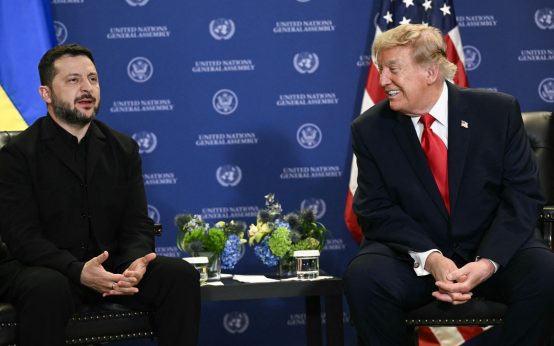 Trump Meets Zelensky and Plans for U.S.-China Relations
  Tight Senate Race in Maine as Susan Collins Faces Criticism
 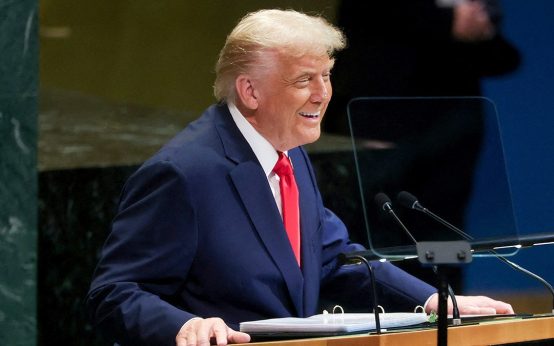 Trump’s Vision on Iran, AI, and Global Security at the UN
  Noncitizens Charged with Voter Fraud in the U.S.