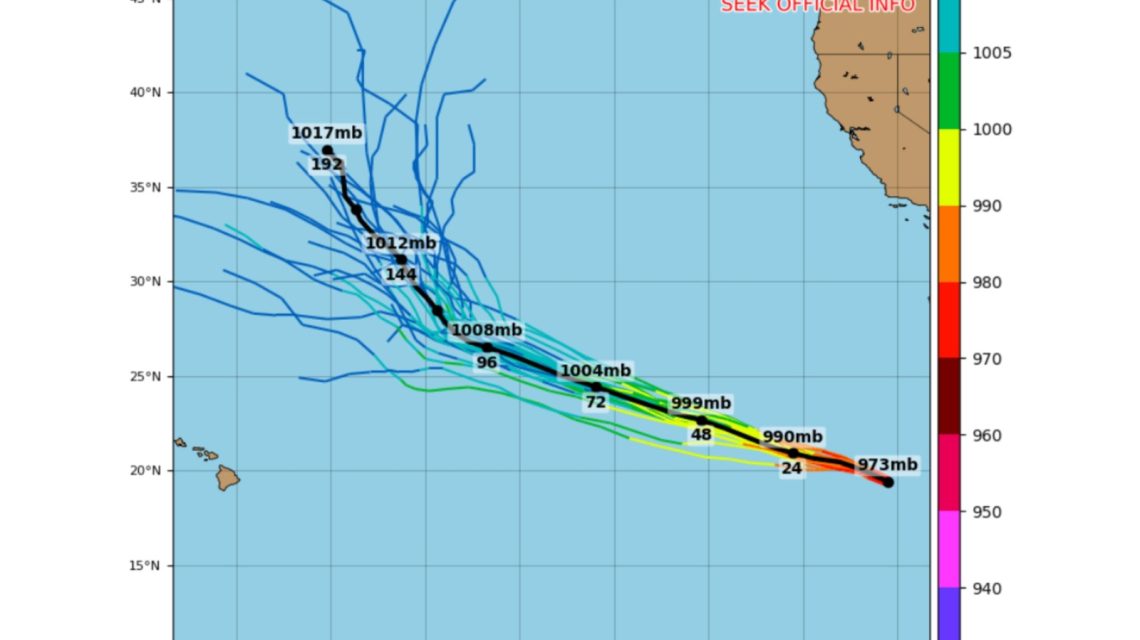
Hurricane Genevieve, the eastern Pacific’s first Category 5 storm since 2024, is predicted to weaken as it moves west-northwest, according to meteorologists. Originating from a tropical depression on July 24, Genevieve rapidly intensified, reaching Category 5 status with winds of 160 mph.
Genevieve’s intensification was notable, particularly when compared to the dramatic strengthening seen in hurricanes like Patricia in 2015. Despite not matching Patricia’s record pace, Genevieve’s development placed it among the region’s most intense hurricanes in recent years. The last Category 5 hurricane in the basin was Kristy in 2024.
The National Hurricane Center (NHC) reported that as of Thursday, Genevieve had reduced to a Category 2 storm, with winds of 100 mph. The agency expects it to weaken further, transitioning into a post-tropical state over the weekend. The storm’s trajectory has it moving west-northwest at about 9 mph.
Swells generated by Genevieve are forecast to impact parts of southern California and the Baja California Peninsula, creating hazardous surf and rip currents. Residents and visitors in these regions are advised to follow safety recommendations:
- Check local advisories before entering the water.
- Swim only in areas with lifeguards.
- Avoid the ocean if red flags or surf warnings are posted.
- In a rip current, float and swim parallel to the shore until free.
- Keep children and inexperienced swimmers out of rough surf areas.
According to AccuWeather, the eastern and central Pacific basins are likely to see numerous tropical storms and hurricanes this year due to the effects of El Niño. This climate pattern contributes to warmer sea-surface temperatures, which favor storm development. AccuWeather forecasts 17 to 22 named storms, with as many as 13 hurricanes and up to 8 major hurricanes.
The National Oceanic and Atmospheric Administration (NOAA) supports this outlook, predicting an above-normal season. It estimates a 70% chance for this scenario, with expectations for 15 to 22 named storms. The NHC has also released the 2026 storm name list for the eastern Pacific, which includes names like Amanda, Boris, and Cristina, among others.
 How Little Brown Bat Genes Are Outsmarting a Fungal Killer
  Criminal Investigation Underway at Lineage Cold Storage Warehouse
  Potential of Advanced Nuclear Power in Meeting U.S. Energy Demands
  U.S. Military Exercises in Arctic Highlight Strategic Shifts
  Supreme Court to Hear Landmark Cases on Climate Change and Immigration
  The Growing Threat of Lone Star Ticks on Martha’s Vineyard