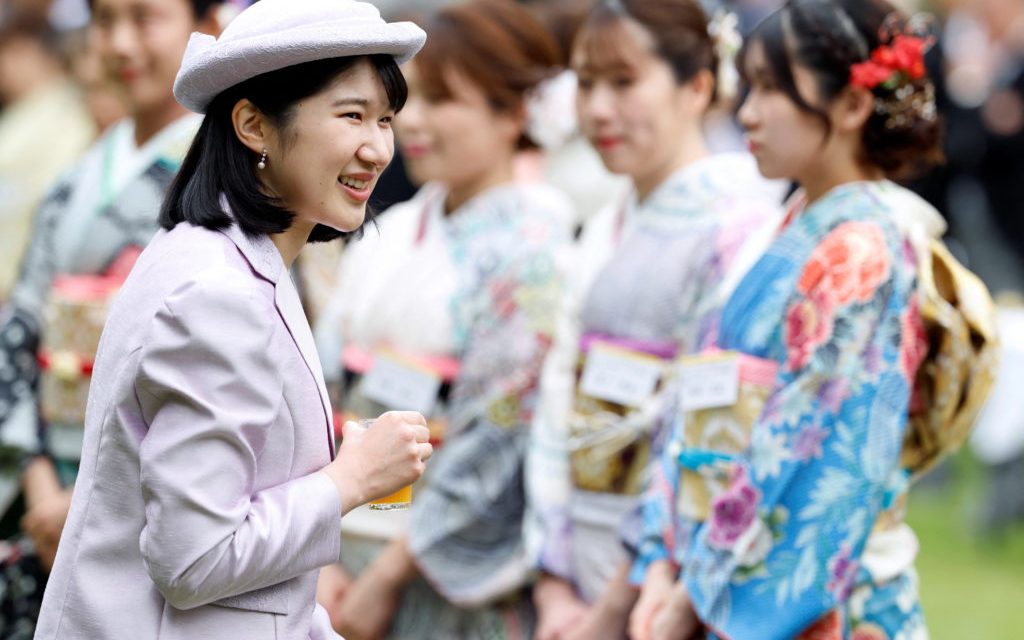
Japan’s parliament has made historic changes to the 19th-century Imperial House Law, allowing only male descendants through the paternal line to ascend the throne. This decision has raised fears about the future of the shrinking imperial family.
The new rules not only enable the adoption of distant male relatives to secure the lineage but also allow princesses to retain their royal status after marrying commoners. Currently, Emperor Naruhito’s popular daughter, Princess Aiko, is ineligible for succession because she is female.
The male-only succession rule means that after the emperor, his younger brother and then his nephew, Prince Hisahito, who is 19, would be next in line. The emperor’s 90-year-old uncle follows them.
With its focus on male successors, the Imperial House has only five male adults in a family of 16, as there are no children besides Hisahito. Prime Minister Sanae Takaichi advocates for this male lineage system, citing it as crucial to the emperor’s authority. Although an emperor’s mother may be a commoner, only men with royal blood can be heirs according to the revised law.
“This is a declaration to prevent female monarchs and uphold the male line at all costs,” said Hideya Kawanishi, a monarchy expert at Nagoya University.
The Imperial Household Agency’s chief, Buichiro Kuroda, has vowed to support the imperial family’s adaptation to these changes, considering their feelings.
Historically, Japan has had eight female monarchs, with the last reigning in the 18th century. The 1890 law first emphasized paternal-line succession, and Friday’s changes have sparked protests, as many see them as exclusionary. Chizuko Ueno, a feminist scholar, criticizes Prime Minister Takaichi, highlighting the contradiction in her supporting male-only succession.
After Aiko’s birth, her mother, Empress Masako, faced immense stress, linked to pressure to produce a male heir. The changes continue to reflect a preference for male heirs, despite Japan’s broader aging and shrinking population.
Among emerging proposals, one in 2005 suggested allowing female monarchs but was set aside after Hisahito was born. Emperor Naruhito’s two potential male successors include his older brother and nephew. Naruhito’s uncle, who is also in line, is 90 years old.
The adoption of distant male relatives — from branch families who renounced their status in 1947 — is another contentious point. Critics, like Yoshinori Kobayashi, question this measure’s fairness and practicality.
Meanwhile, Princess Aiko and other unmarried princesses have attracted public support. These reforms now allow them to maintain their royal duties even if they marry commoners, although their spouses and children would not hold royal status.
Mako, Aiko’s cousin, recently gave up her status to marry a commoner and move to New York, demonstrating a different path chosen by some royal family members. Feminist scholars like Ueno suggest such decisions highlight the challenges within imperial life.
As Japan navigates these changes, there is substantial public support for Princess Aiko as a future monarch. Many remember the role of female emperors in history, and some fear Friday’s decisions undermine legacy efforts by former Emperor Akihito to modernize the monarchy.
Emperor Naruhito also alluded to potential public displeasure, hoping the discussions would lead to an agreeable resolution. Alongside these revisions, Japan has passed a controversial law against desecrating the national flag, which some criticize as an effort to suppress dissent.
 Trump’s Vision on Iran, AI, and Global Security at the UN
  Lithuanian Leader Seeks U.S. Military Commitment Amid Rising Russian Threats
  Italian PM Giorgia Meloni Skips UN General Assembly Amid Growing Tensions
  Calls Grow for Ireland’s Soccer Team to Boycott Matches Against Israel
  New U.S. Military Bases Planned in Greenland Amid Strategic Security Deal
  Twitch Streamer Hasan Piker Discusses Controversial Commentary